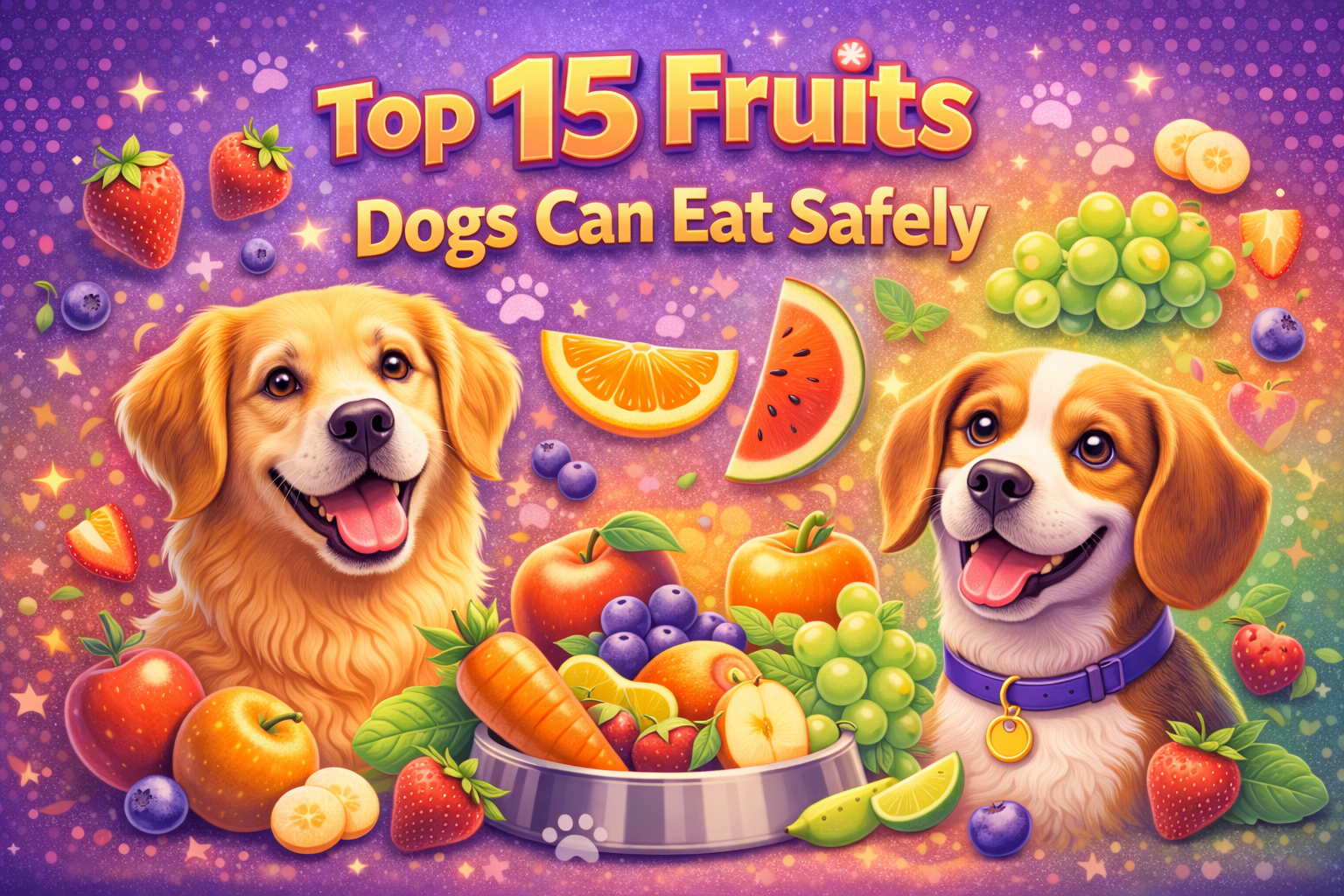
Wondering which fruits dogs can eat safely? You’re not alone — it’s one of the most Googled dog nutrition questions, and for good reason. The wrong fruit (like grapes) can send your dog to the emergency vet, while the right ones can boost their immune system, support digestion, and make the perfect low-calorie treat.
In this vet-informed guide, you’ll find the top 15 fruits that are safe for dogs, exactly how to serve them, how much to give, and the fruits you should never feed your dog — no matter what. We’ve also included a simple nutritional table, a quick-reference safety chart, and answers to the most common questions dog owners have.
🐾 Quick Answer: The safest fruits for dogs include apples (no seeds), blueberries, bananas, watermelon (no rind or seeds), mango (no pit), and strawberries. Always serve in small portions and avoid grapes, raisins, and cherries entirely.
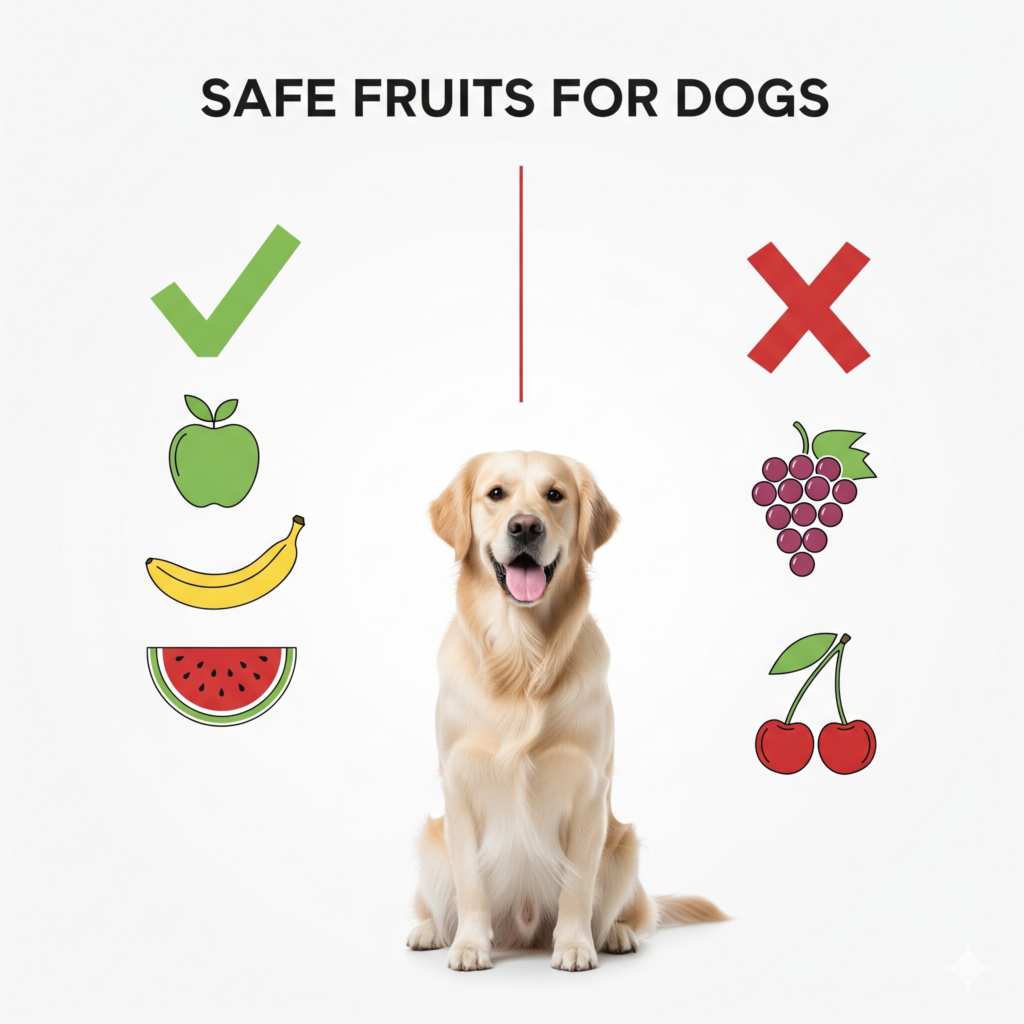
Why Can Dogs Eat Fruit?
Dogs are omnivores — they can digest both animal protein and certain plant-based foods. According to the American Kennel Club (AKC), many fruits are safe for dogs and offer genuine health benefits when served correctly.
Fruits provide dogs with:
- Natural antioxidants — protect cells and reduce inflammation
- Dietary fiber — supports healthy digestion and bowel regularity
- Vitamins A, C, and B6 — support immune function, eyesight, and energy
- Hydration — high-water fruits like watermelon help prevent dehydration
- Low-calorie energy — a better treat than processed commercial snacks
That said, fruits contain natural sugars (fructose). This means they should be occasional treats, not daily staples — generally no more than 10% of your dog’s daily caloric intake. Dogs with diabetes or weight issues should have fruit limited or avoided unless a vet approves.
Want to understand the full picture of what’s safe and what isn’t? Read our detailed guide on foods that are toxic for dogs.
Top 15 Fruits Dogs Can Eat Safely
Each fruit below is listed with its key benefits, proper serving tips, and any important warnings.
1. 🍎 Apples
Apples are one of the most popular and healthiest fruits for dogs. They’re crunchy, low in fat, and packed with fiber and vitamins A and C. Many dogs love the satisfying crunch. Apples are also a great way to freshen your dog’s breath naturally.
- Benefits: Vitamin A, Vitamin C, dietary fiber, low calorie
- Serving tip: Remove all seeds and the core — apple seeds contain trace amounts of cyanide, which is toxic to dogs. Slice into thin pieces.
- Safe amount: 1–2 slices per day as a treat
👉 Read our in-depth guide: Can Dogs Eat Apples?
2. 🫐 Blueberries
Blueberries are often called a superfood for dogs — and rightfully so. They’re packed with antioxidants that support brain health and cell protection, especially important for aging dogs. Their small size makes them easy and safe to serve.
- Benefits: Antioxidants, Vitamin C, Vitamin K, fiber, manganese
- Serving tip: Serve fresh or frozen. Frozen blueberries make excellent summer treats or training rewards.
- Safe amount: 3–10 berries depending on dog size
👉 See our full breakdown: Can Dogs Eat Blueberries?
3. 🍌 Bananas
Bananas are soft, naturally sweet, and easy on sensitive stomachs. They’re a favorite treat for dogs recovering from digestive issues because of their gentle composition. However, their high natural sugar content means moderation is key.
- Benefits: Potassium, Vitamin B6, Vitamin C, fiber, magnesium
- Serving tip: Peel fully and slice into rounds. You can freeze slices for a cooling treat.
- Safe amount: A few slices; half a banana for large dogs
4. 🍉 Watermelon
Watermelon is 92% water, making it one of the best hydrating fruits for dogs on hot days. It’s low in calories, sweet, and rich in vitamins. Most dogs absolutely love it.
- Benefits: Vitamin A, Vitamin B6, Vitamin C, potassium, lycopene
- Serving tip: Always remove the rind (can cause digestive blockage) and all seeds. Cut into 1-inch cubes.
- Safe amount: A few cubes; dogs over 30 lbs can have a cup
5. 🍓 Strawberries
Strawberries are sweet, juicy, and full of immune-supporting nutrients. They also contain a natural enzyme that may help whiten your dog’s teeth over time. A fun and healthy snack choice.
- Benefits: Vitamin C, antioxidants, fiber, manganese
- Serving tip: Remove the stem and hull. Slice into small pieces for small dogs. Always serve fresh, not canned or syrup-packed.
- Safe amount: 1–3 strawberries depending on dog size
6. 🥭 Mango
Mango is a tropical powerhouse loaded with vitamins. Dogs tend to love the sweet, soft flesh. It’s particularly good for dogs that need an immune or energy boost.
- Benefits: Vitamin A, Vitamin B6, Vitamin C, Vitamin E, fiber
- Serving tip: Always remove the pit — it’s a choking hazard and contains trace cyanide. Peel the skin and cut the flesh into small cubes.
- Safe amount: A few small cubes; mango is high in sugar
7. 🍍 Pineapple
Pineapple contains bromelain, a natural enzyme that aids protein digestion. It’s also said to help deter dogs from eating their own feces (coprophagia) — an added bonus! The flesh is perfectly safe; the tough outer skin is not.
- Benefits: Vitamin C, Vitamin B6, bromelain, manganese, antioxidants
- Serving tip: Remove the hard outer skin and core. Serve only the soft inner flesh in small chunks.
- Safe amount: 2–3 chunks as an occasional treat
8. 🍐 Pears
Pears are a gentle, fiber-rich fruit ideal for dogs with sensitive digestion. They’re not as commonly recommended but are perfectly safe when prepared correctly.
- Benefits: Vitamin C, Vitamin K, fiber, copper
- Serving tip: Remove the core and all seeds — pear seeds contain cyanogenic glycosides, just like apple seeds. Cut into small wedges.
- Safe amount: 1–2 thin slices
9. 🍑 Peaches
Fresh peaches (not canned) make a wonderful summer treat. They’re soft, sweet, and contain nutrients that support immunity and eyesight. The biggest risk is the pit.
- Benefits: Vitamin A, Vitamin C, fiber, potassium
- Serving tip: Always remove the pit — peach pits contain cyanide and are a serious choking hazard. Never serve canned peaches (high added sugar).
- Safe amount: A few thin slices
10. 🍊 Oranges
Oranges are safe for dogs in small amounts and provide a solid hit of Vitamin C. However, many dogs dislike the strong citrus smell, and the high acid content can upset sensitive stomachs. Serve sparingly.
- Benefits: Vitamin C, potassium, fiber
- Serving tip: Remove all peel, seeds, and the white pith. Only serve the inner flesh. One segment at a time is plenty.
- Safe amount: 1–2 segments maximum; avoid for dogs with diabetes
11. 🍈 Cantaloupe
Cantaloupe is sweet, hydrating, and rich in beta-carotene — great for eye health. Like all melons, it’s best served cold in summer to help keep dogs cool and hydrated.
- Benefits: Vitamin A (beta-carotene), Vitamin C, B vitamins, fiber, high water content
- Serving tip: Remove the rind and seeds. Cut into 1-inch cubes.
- Safe amount: A few cubes; cantaloupe is moderately high in sugar
12. 🫛 Honeydew Melon
Honeydew is a mild, refreshing melon that most dogs enjoy. It’s very hydrating and low in calories relative to its sweetness. A good option for warm weather.
- Benefits: Vitamin C, Vitamin B6, potassium, hydration
- Serving tip: Remove rind and seeds. Serve in small bite-sized cubes.
- Safe amount: A few cubes, occasional treat only
13. 🫐 Cranberries
Cranberries are rich in antioxidants and are sometimes recommended for dogs with urinary tract health concerns. They can be served fresh or dried — but always plain, with no added sugar.
- Benefits: Antioxidants, Vitamin C, fiber, urinary tract support
- Serving tip: Fresh or plain dried cranberries only. Never serve cranberry sauce or juice with added sugars or sweeteners (especially xylitol, which is toxic).
- Safe amount: A few fresh berries or a small pinch of dried
14. 🥝 Kiwi
Kiwi is packed with Vitamin C and has a refreshing tart flavor. It’s safe for dogs in small quantities. The skin is technically edible but can be hard for dogs to digest, so it’s best removed.
- Benefits: Vitamin C, Vitamin K, Vitamin E, potassium, fiber
- Serving tip: Peel the kiwi fully. Remove seeds if possible. Cut into small rounds.
- Safe amount: 2–3 small slices as a treat
15. 🫐 Raspberries
Raspberries are low in sugar and calories, making them one of the better fruit options for overweight dogs or seniors. They do contain trace amounts of naturally occurring xylitol, but at levels so small that a few berries pose no realistic risk. Still, don’t overdo it.
- Benefits: Antioxidants, Vitamin C, manganese, fiber, low calorie
- Serving tip: Serve fresh or thawed frozen raspberries. No more than a small handful at once.
- Safe amount: Maximum 6–10 berries per sitting
Nutrition & Benefits at a Glance
| Fruit | Key Nutrients | Best For | Key Warning |
|---|---|---|---|
| Apple | Vitamin A, C, fiber | Digestion, immunity | Remove seeds & core |
| Blueberry | Antioxidants, Vitamin C, K | Brain health, aging dogs | None — very safe |
| Banana | Potassium, B6, fiber | Energy, digestion | High sugar — limit portions |
| Watermelon | Vitamins A, B6, C, lycopene | Hydration, hot days | Remove rind & all seeds |
| Strawberry | Vitamin C, antioxidants | Immunity, dental health | No canned versions |
| Mango | Vitamins A, B6, C, E | Immunity, coat health | Remove pit always |
| Pineapple | Bromelain, Vitamin C, B6 | Digestion, protein absorption | Remove tough skin |
| Pear | Vitamin C, K, fiber | Digestion | Remove seeds & core |
| Peach | Vitamin A, C, fiber | Eyesight, immunity | Remove pit — contains cyanide |
| Orange | Vitamin C, potassium | Immunity boost | Remove peel & pith; high acid |
| Cantaloupe | Beta-carotene, Vitamins A, C | Eye health, hydration | Remove rind & seeds |
| Honeydew | Vitamin C, B6, potassium | Hydration | Remove rind & seeds |
| Cranberry | Antioxidants, Vitamin C | Urinary tract support | No sweetened versions |
| Kiwi | Vitamins C, K, E | Immunity | Peel skin fully |
| Raspberry | Antioxidants, Vitamin C, fiber | Weight-conscious dogs | Limit to 10 berries max |
Fruits Dogs Should Never Eat
⚠️ WARNING: The following fruits are toxic to dogs. Even small amounts can cause serious health problems including kidney failure, heart issues, or death. Never feed these to your dog.
| Fruit to Avoid | Why It’s Dangerous |
|---|---|
| Grapes & Raisins | Can cause sudden, severe kidney failure — even a single grape can be fatal in some dogs. The toxic compound is still unknown, making any amount unsafe. |
| Cherries | Cherry pits, stems, and leaves contain cyanide. The flesh alone may cause digestive issues. Not worth the risk. |
| Avocado | Contains persin, which is toxic to dogs in large amounts. The pit is also a severe choking hazard. |
| Figs | Fresh figs can cause severe allergic reactions and digestive problems in many dogs. |
| Starfruit (Carambola) | Contains neurotoxins that can cause neurological symptoms and kidney damage in dogs. |
| Fruit with xylitol | Any fruit product sweetened with xylitol (an artificial sweetener) is extremely dangerous — causes rapid insulin release and liver failure. |
If your dog ate any of these fruits, contact your vet immediately or call the ASPCA Animal Poison Control Center (888-426-4435). This is a 24/7 hotline for pet poisoning emergencies.
For a complete guide to dangerous foods, read: Foods That Are Toxic for Dogs.
How to Serve Fruit to Your Dog Safely
Even safe fruits for dogs can cause problems if served incorrectly. Follow these guidelines every time:
Step-by-Step Safe Fruit Feeding Guide
- Wash all fruit thoroughly — even organic fruit may carry pesticide residue or bacteria
- Remove all seeds, pits, and rinds — these are the most common sources of toxicity and choking hazards
- Peel the skin when in doubt — skins can be hard to digest or harbor residue
- Cut into small, bite-sized pieces — sized appropriately for your dog’s size to prevent choking
- Introduce one new fruit at a time — wait 24–48 hours to observe any reaction before serving again
- Watch for signs of digestive upset — vomiting, diarrhea, gas, or lethargy after eating fruit means stop and consult your vet
- Never replace meals with fruit — fruits should supplement a complete and balanced dog diet, not replace it
🌡️ Serving Size Rule: Treats — including fruit — should make up no more than 10% of your dog’s total daily calories. For a 20 lb dog eating ~700 calories/day, that’s about 70 calories worth of treats maximum.
Fresh vs. Frozen vs. Canned Fruit — Which is Best?
| Type | Safety | Notes |
|---|---|---|
| Fresh fruit | ✅ Best choice | Maximum nutrients, no additives — always wash |
| Frozen fruit | ✅ Good choice | Great summer treat; check no added sugar or syrup |
| Canned fruit | ⚠️ Avoid | Almost always contains added sugars, syrups, or preservatives harmful to dogs |
| Dried fruit | ⚠️ Use caution | Very high sugar concentration; raisins (dried grapes) are fatally toxic — check ingredients |
| Fruit juices | ❌ Avoid | Too much concentrated sugar; may contain xylitol or additives |
For more guidance on meal planning around safe ingredients, see our seasonal meal adjustments for dogs guide.
Can Puppies Eat Fruit?
Yes, puppies can eat some of the fruits on this list — but with extra caution. A puppy’s digestive system is still developing, which means they’re more sensitive to new foods.
- Start with the most gentle options: banana, blueberries, or small pieces of apple
- Serve even smaller portions than you would for an adult dog
- Wait 2–3 days between introducing different fruits
- Avoid high-acid fruits like oranges until after 6 months of age
- Always consult your vet before adding new foods to a young puppy’s diet
For a full nutritional plan for your puppy, check our best homemade dog food recipes for sensitive stomachs — many of these work well for puppies too.
Frequently Asked Questions
No fruit should be fed every single day in large amounts. However, small quantities of blueberries, apple slices (no seeds), or banana can be offered several times a week without concern for most healthy adult dogs.
Blueberries are widely considered the best fruit for dogs because they’re packed with antioxidants, low in calories, and easy to serve without any preparation beyond rinsing. Apples (without seeds) and watermelon (without rind/seeds) are close runners-up.
Fruits should be occasional treats rather than daily staples. While small amounts won’t harm a healthy dog, daily fruit feeding can lead to excess sugar intake, weight gain, and digestive issues over time.
Grapes and raisins are the most dangerous — they can cause sudden kidney failure even in tiny amounts. Cherries (especially the pits and stems) and avocados are also toxic. Starfruit and figs should also be avoided.
Yes! Frozen blueberries, watermelon chunks, and banana slices make excellent summer treats. Just make sure the frozen fruit contains no added sugars, syrups, or artificial sweeteners.
Fruit treats should represent no more than 10% of your dog’s daily caloric intake. For a small dog (under 15 lbs), that might be 1–2 blueberries or a single apple slice. For larger dogs, a few chunks of watermelon or half a banana is appropriate.
Yes — fruits like apples, pears, and blueberries contain dietary fiber that supports healthy gut motility. However, too much fiber at once can cause loose stool or gas. Introduce new fruits slowly.
No. Mango skin is tough to digest and can cause gastrointestinal upset. Always peel the mango fully before serving, and remove the pit completely as it’s both a choking hazard and contains small amounts of cyanide.
Yes, in small amounts. Bananas are bland, soft, and gentle on the digestive system — which is why they’re often recommended alongside the “BRAT diet” (bananas, rice, applesauce, toast) for dogs recovering from stomach issues. Always check with your vet first.
It’s best to remove the green hull and stem before serving. While not acutely toxic, they can be a mild digestive irritant and are a potential choking hazard for small dogs.
Final Thoughts
Sharing fruit with your dog is one of the easiest ways to offer a healthy, natural treat that you both can feel good about. The top 15 fruits dogs can eat safely — apples, blueberries, bananas, watermelon, strawberries, mango, pineapple, pears, peaches, oranges, cantaloupe, honeydew, cranberries, kiwi, and raspberries — all deliver real nutritional value when served properly.
The golden rules are simple: always remove seeds, pits, and rinds; serve fresh or frozen (never canned); keep portions small; and watch your dog after introducing any new food. When in doubt, ask your vet — especially if your dog has existing health conditions like diabetes or kidney disease.
Looking for more ways to improve your dog’s diet? Browse our complete Dog Food Guide or learn how to improve your dog’s gut health naturally with whole-food approaches.
Veterinary Disclaimer: This content is for informational purposes only and does not constitute professional veterinary advice, diagnosis, or treatment. Always consult a licensed veterinarian before making significant changes to your dog’s diet, especially if your dog has underlying health conditions. If your dog consumes a toxic food, contact your vet or the ASPCA Animal Poison Control Center immediately at 888-426-4435.
Medical Disclaimer
This content is for informational purposes only and is not a substitute for professional veterinary advice, diagnosis, or treatment.
2 thoughts on “Top 15 Fruits Dogs Can Eat Safely”