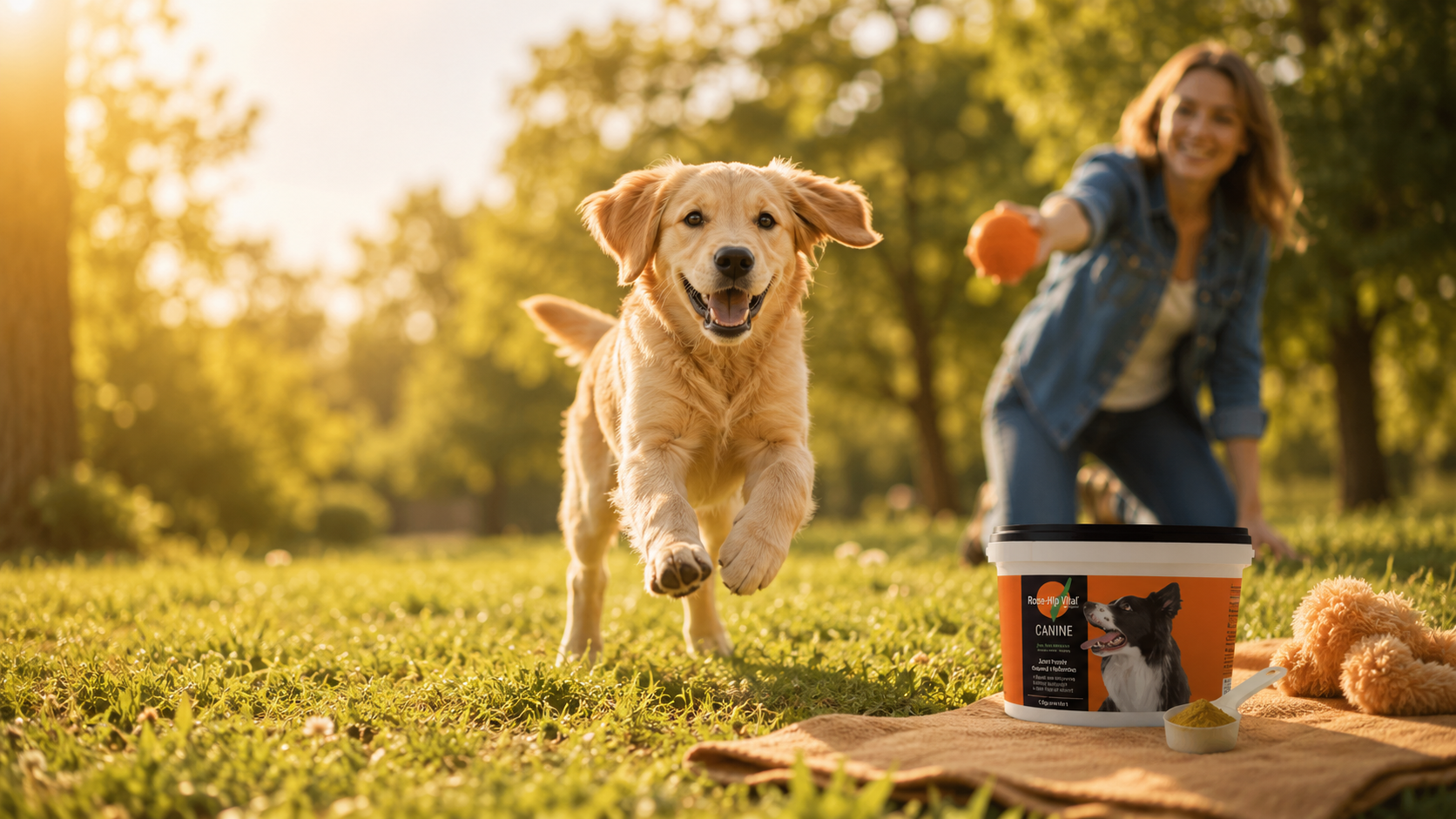
Most owners do not start thinking about their dog’s joints until the dog is old, or until a limp shows up after a big weekend of fetch. That instinct makes sense, but it gets the timing backwards. Joint problems in dogs, especially active ones, tend to build up quietly for years before anything looks wrong on the outside. If you have a young dog who is always on the move, the best time to think about their joints is now, not once they start slowing down. That is especially true if your dog is the type who never seems to tire, because that same energy is putting real load through the same joints every single day.
Why “My Dog Is Young, He’s Fine” Is a Risky Assumption
It is an easy assumption to make, because a two-year-old dog sprinting after a ball looks like the picture of health. But cartilage does not send out warning signs the way muscles or skin do. Small amounts of wear from jumping, twisting, and repetitive running can accumulate for years before a dog shows any stiffness at all, and by the time you notice a limp, the joint has usually already absorbed a fair amount of damage. Active dogs are not exempt from this. If anything, they are putting more repeated load through their joints every week than a dog who mostly naps on the couch, which is exactly why prevention matters more for them, not less. I would go as far as saying activity level is a better predictor of future joint trouble than age is, at least in the first several years of a dog’s life.
The Types of Dogs Who Benefit Most From Early Support
Some dogs carry more joint risk than others, and it is worth knowing where your dog sits. Large and giant breeds are prone to it simply because of the weight their joints carry through growth and adulthood. Working and sporting dogs, the ones doing agility, flyball, hunting, or long trail runs most weekends, put far more repetitive stress through their hips, elbows, and stifles than an average pet dog. Breeds with a known tendency toward hip or elbow dysplasia carry extra risk regardless of activity level. If your dog fits into any of these groups, or several of them at once, that is a reasonable signal to start paying attention earlier rather than later. It does not mean something is wrong. It just means the odds are a little different for your dog than for the average pet down the street.
What Is Actually Happening Inside an Overworked Joint
Every time a joint absorbs impact, from a hard landing off a jump or a fast direction change chasing a ball, there is a small amount of microtrauma to the cartilage and a short burst of inflammation as the body responds. One instance of this is nothing to worry about. Repeated day after day, though, that inflammation can start to outpace the joint’s ability to repair itself, and the cartilage and synovial fluid that are supposed to cushion the joint gradually take on more damage than they can recover from between sessions. It is a slow process, which is exactly why it is so easy to miss until it has already progressed.
Practical Ways to Protect Joints Early
A lot of the most useful prevention has nothing to do with what you feed your dog. Building up exercise intensity gradually, rather than going from a quiet week straight into a big hike or a full agility session, gives joints time to adapt. Keeping your dog at a healthy weight matters more than most owners realise, since every extra kilo adds load to hips and knees with every step. Surface choice counts too. Repeated hard landings on concrete are tougher on joints than the same jumps onto grass or dirt. A proper warm-up before high-intensity activity, and rest days between big efforts, give tissues time to recover rather than compounding the same small injuries session after session.
Where Nutrition Fits Into a Prevention Plan
Alongside exercise management, some owners also look at nutritional support as one piece of a broader prevention approach. GOPO®, a compound found in rosehips, has been studied for its role in supporting joint comfort and reducing inflammation, and it is the active ingredient in a handful of canine joint supplements, including Rose-Hip Vital Canine. It is not a substitute for good exercise management or a healthy weight, and it will not undo the effects of overtraining on its own. But for owners of active dogs who want to support joint health from more than one angle, it is a reasonable option to research and discuss with a vet, alongside the practical changes that matter just as much.
What Early Action Actually Buys You Long-Term
None of this guarantees your dog will never develop joint problems, because genetics and bad luck play a role too. What early attention does is stack the odds in your dog’s favour. Dogs who are managed thoughtfully from a young age tend to maintain better mobility later in life, show milder symptoms if arthritis does develop, and often need fewer interventions down the track. That difference tends to show up as an extra few years of easy movement in a dog’s senior life, which is not a small thing if you have ever watched an older dog struggle to get up off the floor. It is a trade worth making while your dog is still young enough for it to count.
Start While It Still Feels Optional
Right now, while your dog is young and moving well, joint care probably feels optional. That is exactly the window worth using. Building good habits around exercise, weight, and recovery while your dog is fit gives them a real head start, and it is a far easier position to be in than trying to manage a joint problem after it has already taken hold.