7-Day Balanced Dog Meal Plan
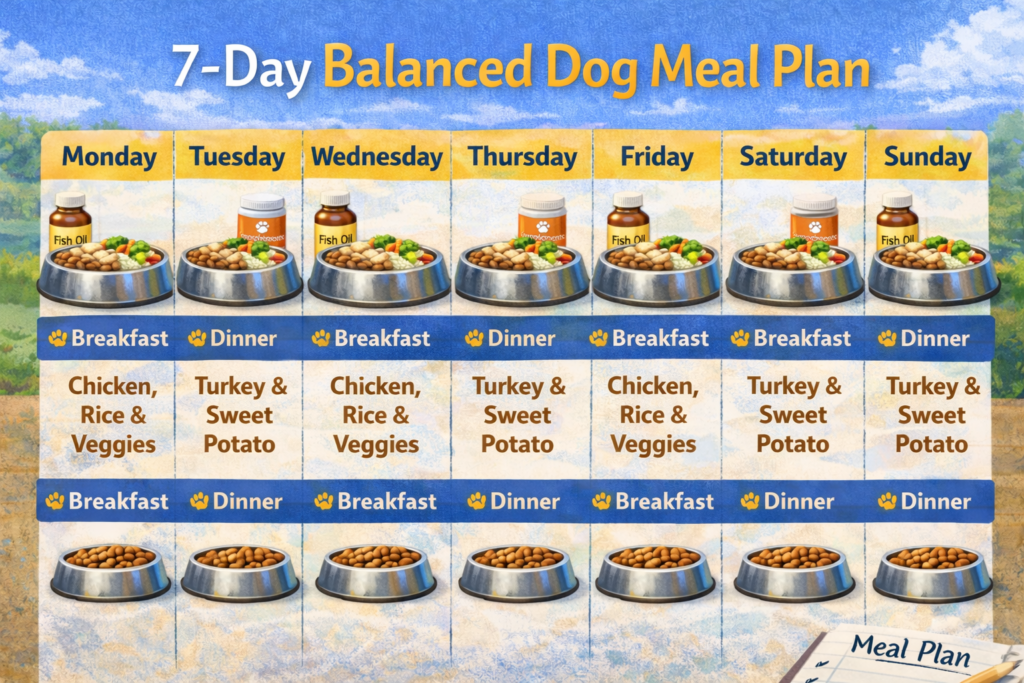
A 7-day balanced dog meal plan should include lean proteins (chicken, turkey, beef), digestible carbohydrates (rice, oats, sweet potato), healthy fats, and vegetables. Each day should cover protein, fat, and fiber needs based on your dog’s weight and activity level.
Introduction: Why Dogs Thrive on Meal Plans
Consistency is one of the most underrated factors in canine health. Dogs do not just benefit from good food — they benefit from predictable, structured feeding that keeps their digestive system running smoothly, maintains stable blood sugar, and prevents behavioral issues related to hunger or overeating.
A 7-day balanced dog meal plan gives you a framework to rotate proteins, introduce variety, and ensure that your dog receives the full spectrum of nutrients across the week — rather than relying on a single food source every single day.
This plan is designed for an average adult dog weighing between 25 and 40 pounds. Adjust portion sizes based on your dog’s specific weight using our portion guide (linked below).
Nutritional Requirements to Keep in Mind
| Nutrient | Daily Requirement | Best Sources | Why It Matters |
| Protein | 18–25% of diet | Chicken, turkey, beef, eggs | Muscle, immune, enzyme function |
| Fat | 5–15% of diet | Fish oil, chicken fat, eggs | Energy, coat, brain health |
| Carbohydrates | 30–50% of diet | Rice, oats, sweet potato | Energy and digestive bulk |
| Fiber | 2–4% of diet | Pumpkin, peas, carrots | Gut motility and weight control |
| Calcium | Adequate daily | Bone meal, eggshell, dairy | Bone and teeth strength |
| Omega-3 Fatty Acids | Daily or every other day | Fish, fish oil, flaxseed | Inflammation control, skin |
| Vitamins A, D, E | Via food or supplement | Sweet potato, eggs, fish oil | Immune, bone, vision health |
The 7-Day Meal Plan
Day 1 — Monday: Chicken and Rice
Breakfast: 1/2 cup cooked white rice + 2 oz boiled chicken breast, shredded + 1 tablespoon steamed peas
Dinner: 1/2 cup dry kibble + 2 oz chicken + 1 tablespoon plain pumpkin puree
Nutrition Focus: Digestive reset day. Plain proteins and easily digestible carbs help establish a clean baseline for the week.
Day 2 — Tuesday: Turkey and Sweet Potato
Breakfast: 2 oz ground turkey (cooked, no seasoning) + 1/4 cup mashed sweet potato + handful of green beans
Dinner: 1/2 cup dry kibble + splash of warm water + 1 tablespoon fish oil
Nutrition Focus: Sweet potato adds beta-carotene and fiber. Turkey is lower in fat than beef, making it gentle on the stomach.
Day 3 — Wednesday: Eggs and Oats
Breakfast: 1 scrambled egg (no butter, no salt) + 1/4 cup cooked plain oats + 1 tablespoon grated carrot
Dinner: 2 oz boiled chicken + 1/3 cup cooked brown rice + steamed broccoli florets (small amount)
Nutrition Focus: Eggs provide complete protein and biotin. Oats offer soluble fiber for gut health.
Day 4 — Thursday: Beef and Vegetables
Breakfast: 2 oz lean ground beef (drained) + 1/3 cup cooked rice + 1 tablespoon frozen mixed peas and carrots (thawed)
Dinner: 1/2 cup dry kibble + 1 oz cooked beef + drizzle of fish oil
Nutrition Focus: Beef is rich in zinc, iron, and B12. Keep portions moderate as it is higher in fat than chicken.
Day 5 — Friday: Salmon and Rice
Breakfast: 1.5 oz canned salmon (in water, drained) + 1/3 cup white rice + 1 tablespoon pumpkin
Dinner: 1/2 cup dry kibble + sliced raw carrot as a dental-healthy side snack
Nutrition Focus: Salmon is a top omega-3 source. Use once or twice per week — not daily — to avoid mercury buildup.
Day 6 — Saturday: Chicken and Vegetables Medley
Breakfast: 2 oz shredded chicken + 1/4 cup cooked peas and green beans + 1 tablespoon plain yogurt (probiotic boost)
Dinner: 2 oz chicken + 1/3 cup sweet potato mash + 1 teaspoon coconut oil (small dogs) or 1 tablespoon (large dogs)
Nutrition Focus: Yogurt adds probiotics for gut flora balance. Coconut oil supports skin and coat.
Day 7 — Sunday: Rest and Reset Day
Breakfast: 1/2 cup dry kibble + 1 scrambled egg + warm water added to soften
Dinner: 2 oz turkey + 1/4 cup rice + 1 tablespoon pumpkin + fish oil drizzle
Nutrition Focus: Lighter day to give digestion a gentle break before starting the rotation again.
Quick Reference: Full Week at a Glance
| Day | Morning Protein | Carbohydrate | Vegetable/Add-on | Evening |
| Mon | Chicken | White rice | Peas + pumpkin | Kibble + pumpkin |
| Tue | Turkey | Sweet potato | Green beans | Kibble + fish oil |
| Wed | Egg | Oats | Carrot + broccoli | Chicken + brown rice |
| Thu | Beef | White rice | Peas + carrots | Kibble + beef |
| Fri | Salmon | White rice | Pumpkin | Kibble + carrot |
| Sat | Chicken | Sweet potato | Peas + yogurt | Chicken + coconut oil |
| Sun | Egg | Kibble base | Pumpkin | Turkey + rice + fish oil |
Recommended Tools and Supplements
| Product | Why We Recommend It | Where to Buy |
| Zesty Paws Omega-3 Fish Oil | Add to any meal for skin, coat, and joint support | Amazon.com |
| Merrick Grain-Free Kibble | Quality dry base to supplement home-cooked days | Chewy.com |
| Instinct Freeze-Dried Toppers | Convenient protein topper for busy evenings | Amazon / Chewy |
Frequently Asked Questions
A: Look for consistent energy, healthy stool, a shiny coat, and steady weight. For a verified balance, consult a veterinary nutritionist.
A: Yes. Cook proteins and grains in bulk on Sunday, portion into daily containers, and refrigerate for up to 4 days. Freeze the rest.
A: Introduce new ingredients slowly over 5 to 7 days, mixing a small amount with familiar food and gradually increasing the proportion.
A: Yes. Home-cooked meals often lack calcium and certain vitamins unless specifically supplemented. Add bone meal or eggshell powder for calcium.
A: This plan is designed for adult dogs. Puppies need higher protein and calcium. Consult your vet for puppy-specific meal planning.
A: Yes, but scale portions up based on weight. Use our Portion Guide by Dog Weight article for specific calorie needs.
Affiliate Disclosure: This article may contain affiliate links. If you purchase through these links, we may earn a small commission at no extra cost to you.
Medical Disclaimer: This content is for informational purposes only and is not a substitute for professional veterinary advice, diagnosis, or treatment.