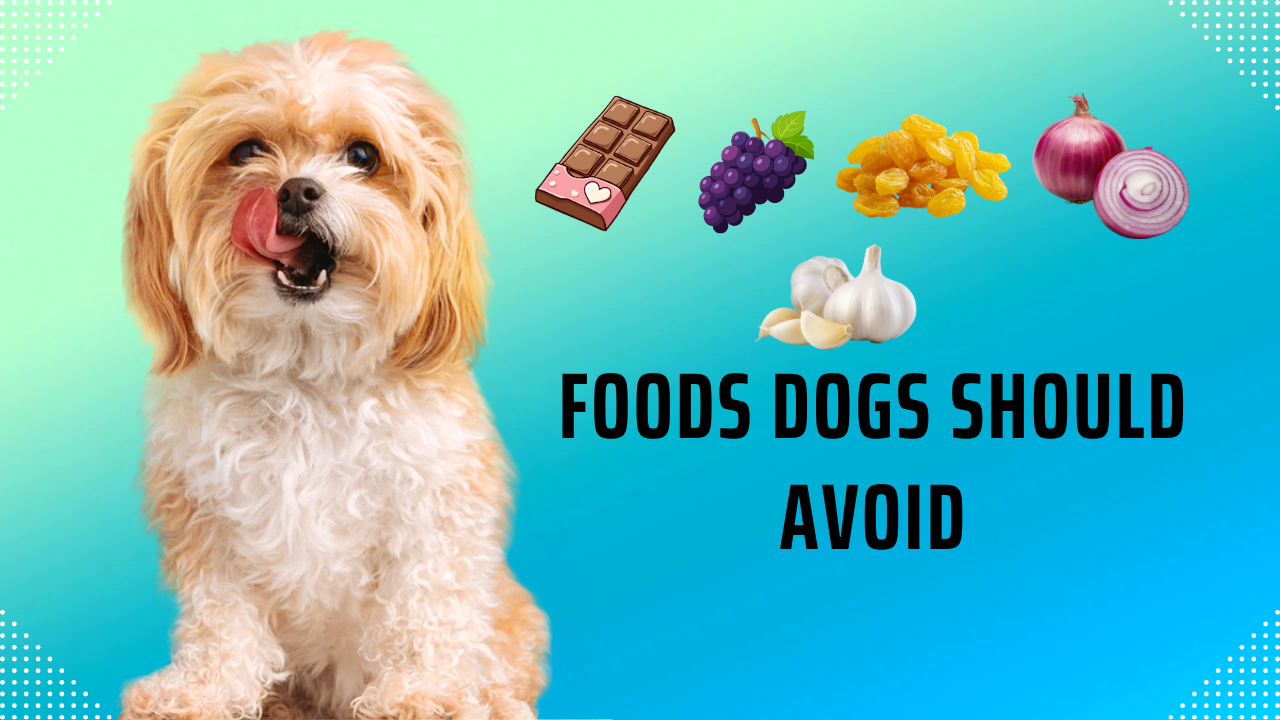
Some of the most dangerous things for your dog are sitting right in your kitchen. Foods dogs should avoid include everyday human staples — chocolate, grapes, onions, garlic, and xylitol — that can cause serious harm or even death in dogs, sometimes in surprisingly small amounts.
This guide covers every major toxic food, explains exactly why each one is dangerous, describes the symptoms to watch for, and tells you what to do if your dog has already eaten something harmful.
⚠️ Quick Reference: Foods Dogs Should NEVER Eat
- Chocolate — contains theobromine; toxic to the nervous system
- Grapes & Raisins — can cause acute kidney failure
- Onions & Garlic — destroy red blood cells; causes anemia
- Xylitol — artificial sweetener; causes blood sugar crash and liver failure
- Alcohol — causes nervous system depression; potentially fatal
- Macadamia Nuts — cause weakness, tremors, and vomiting
- Avocado — contains persin; causes vomiting and heart damage
- Cooked Bones — splinter and cause internal punctures
- Caffeine — stimulates nervous system; causes seizures
- Raw Yeast Dough — expands in stomach; produces toxic ethanol
If your dog has eaten any of the above, contact your vet or the Animal Poison Control Center immediately.
The Most Dangerous Foods for Dogs (Detailed Guide)
Dogs metabolize food very differently from humans. What passes harmlessly through our digestive systems can trigger a toxic cascade in a dog’s body. Below is a complete breakdown of the most harmful foods — including why they’re dangerous and what symptoms to expect.
🚫 1. Chocolate — High Toxicity
Chocolate is one of the most well-known and genuinely dangerous foods for dogs. It contains two harmful compounds: theobromine and caffeine. Dogs process theobromine far more slowly than humans, allowing it to build up to toxic levels in the bloodstream.
Toxicity by type (most to least dangerous):
- Baking/dark chocolate — highest theobromine content
- Semi-sweet chocolate
- Milk chocolate
- White chocolate — lowest, but still not safe
Symptoms: Vomiting, diarrhoea, restlessness, excessive thirst, rapid breathing, muscle tremors, seizures. Symptoms can appear within 6–12 hours of ingestion.
Severity: Even a small amount of dark or baking chocolate can be lethal to a small dog. Always treat chocolate ingestion as a veterinary emergency.
🚫 2. Grapes and Raisins — Extreme Toxicity
Grapes and raisins are deceptively dangerous. Despite years of research, the exact toxic compound responsible has not yet been definitively identified — but the damage they cause is well documented: acute kidney failure.
There is no known “safe” amount. Some dogs have developed kidney failure after eating just a handful of grapes. Raisins are even more concentrated and therefore more dangerous by weight.
Symptoms: Vomiting (usually within hours), lethargy, loss of appetite, abdominal pain, decreased urination, and — in serious cases — complete kidney shutdown within 24–72 hours.
Important: Grape juice, raisin bread, and fruit cake containing raisins are equally dangerous. Never feed any grape product to a dog. See our full guide on what dogs can and cannot eat for more fruit safety guidance.
🚫 3. Onions and Garlic — High Toxicity (Cumulative)
All members of the Allium family — including onions, garlic, leeks, shallots, and chives — are toxic to dogs. They contain organosulfur compounds (thiosulfates) that damage red blood cells, causing a condition called haemolytic anaemia.
Crucially, this toxicity is cumulative — small amounts fed regularly over time can be just as harmful as one large exposure.
All forms are dangerous: raw, cooked, dried, and powdered. Garlic powder and onion powder found in seasonings, sauces, and baby food are particularly risky because they’re highly concentrated.
Symptoms: Pale gums, weakness and lethargy, rapid breathing, reduced appetite, reddish or brownish urine, collapse. Symptoms may be delayed by several days after ingestion.
🚫 4. Xylitol — Extreme Toxicity
Xylitol is an artificial sweetener increasingly common in human food products. For dogs, it’s one of the most acutely toxic substances they can ingest. It triggers a rapid and severe drop in blood sugar (hypoglycaemia) and can cause liver failure at higher doses.
The amount of xylitol in just five pieces of sugar-free gum can be enough to seriously harm or kill a medium-sized dog.
Hidden sources of xylitol — always check labels:
- Sugar-free gum and mints
- Some brands of peanut butter (always check before giving peanut butter to your dog)
- Sugar-free baked goods, yogurt, and ice cream
- Some vitamin supplements and chewable medications
- Mouthwash and toothpaste
Symptoms: Vomiting, loss of coordination, weakness, collapse, seizures. Onset can be as fast as 15–30 minutes after ingestion.
🚫 5. Alcohol — Extreme Toxicity
Dogs are far more sensitive to alcohol than humans. Even small amounts of beer, wine, spirits, or alcohol-containing foods can cause ethanol poisoning — affecting the brain, liver, and kidneys simultaneously.
Hidden alcohol sources: Raw bread dough (the yeast ferments inside the warm stomach and produces ethanol), rum-soaked fruit cake, tiramisu, and other alcohol-containing desserts.
Symptoms: Vomiting, disorientation, loss of coordination, difficulty breathing, low body temperature, coma, and death in severe cases. There is no antidote — treatment is supportive care only.
🚫 6. Caffeine — High Toxicity
Caffeine belongs to the same methylxanthine family as theobromine (found in chocolate). In dogs, it over-stimulates the nervous and cardiovascular systems, causing dangerous effects even at relatively low doses.
Sources: Coffee, tea, energy drinks, cola, some medications, chocolate (combined source), coffee-flavoured ice cream.
Symptoms: Restlessness, hyperactivity, rapid heart rate, muscle tremors, seizures. Onset is typically within 1–2 hours.
🚫 7. Macadamia Nuts — High Toxicity
Macadamia nuts are uniquely toxic to dogs, though the mechanism is still not fully understood. Even a small amount — as few as six nuts in a medium-sized dog — can cause noticeable symptoms.
Symptoms: Weakness (particularly in the hind legs), vomiting, tremors, fever, and inability to walk. Symptoms typically appear within 12 hours and may last up to 48 hours. While fatalities are rare, the distress caused is significant and veterinary assessment is always recommended.
🚫 8. Avocado — Moderate to High Toxicity
Avocado contains a fungicidal compound called persin, which can be toxic to dogs in larger amounts. The flesh is the least concentrated source, but the skin, pit, and leaves contain much higher levels.
The avocado pit also poses a significant choking and intestinal blockage risk due to its size.
Symptoms: Vomiting, diarrhoea, abdominal discomfort, difficulty breathing (in severe cases), and fluid accumulation around the heart.
🚫 9. Cooked Bones — Serious Physical Hazard
While raw bones can be appropriate in some feeding plans (always with veterinary guidance), cooked bones should never be given to dogs. The cooking process causes bones to become brittle and prone to splintering into sharp shards that can:
- Cause choking or get lodged in the throat
- Puncture the oesophagus, stomach, or intestines
- Cause internal bleeding requiring emergency surgery
Particularly dangerous: chicken bones, pork bones, and any small cooked bones. This is a common and avoidable emergency — if you’re interested in raw feeding, see our Best Raw Dog Food Australia guide for safe approaches.
🚫 10. Raw Yeast Dough — High Toxicity
Raw bread dough containing yeast is dangerous for two reasons. First, the dough continues to rise inside the dog’s warm stomach, causing painful bloating and potentially life-threatening gastric distension. Second, as the yeast ferments, it produces ethanol — leading to alcohol poisoning alongside the bloating.
Symptoms: Swollen abdomen, severe discomfort, vomiting, disorientation, difficulty breathing. This is a veterinary emergency.
Less Obvious Foods Dogs Should Avoid
Beyond the well-known dangers, several foods catch owners off guard — either because they seem harmless or because the risk is context-dependent.
Salt and Heavily Salted Foods
Excessive salt intake causes sodium ion poisoning in dogs. This includes salty snacks like crisps, pretzels, salted popcorn, and processed meats. Symptoms include excessive thirst and urination, vomiting, diarrhoea, tremors, and — in severe cases — seizures.
Nutmeg
Nutmeg contains myristicin, a compound toxic to dogs in significant amounts. Found in baked goods, eggnog, and seasonal foods. Symptoms include hallucinations, seizures, and elevated heart rate.
Raw or Green Potatoes
Raw potatoes contain solanine, a glycoalkaloid poison. The green parts of potato plants (skin, stems, and leaves) have the highest concentration. Baked or boiled plain potatoes in small amounts are generally safe, but raw or green potatoes are not.
Certain Mushrooms
While many mushroom varieties are safe, some wild mushrooms are severely toxic to dogs — including Amanita phalloides (Death Cap). Don’t let your dog forage mushrooms on walks. Symptoms of mushroom poisoning range from vomiting and diarrhoea to liver failure and death.
Mouldy or Spoiled Food
Mouldy food can contain mycotoxins — particularly tremorgenic mycotoxins produced by common moulds — which cause muscle tremors and seizures in dogs. Keep bins securely closed and never offer dogs food that’s past its best.
Cherries
Cherry pits, stems, and leaves contain cyanide. While the fleshy fruit itself isn’t toxic, the choking risk and the cyanide in the pit make cherries a food to avoid entirely.
Tomatoes (Green Parts)
Ripe red tomatoes are generally safe in small amounts, but the green parts of the tomato plant — stems, leaves, and unripe tomatoes — contain solanine and tomatine, which are toxic to dogs.
Table Scraps and Fatty Foods
Even non-toxic fatty table scraps can cause pancreatitis — a painful and potentially serious inflammation of the pancreas. Fatty meats, gravy, fried food, and buttery leftovers are common culprits. Pancreatitis can range from mild discomfort to life-threatening illness.
Safe vs Dangerous Foods: Quick Reference Table
| ✅ Generally Safe (in moderation) | 🚫 Dangerous — Avoid | ⚠️ Depends on Preparation |
|---|---|---|
| Plain cooked chicken | Chocolate | Tomatoes (ripe flesh = OK; green parts = no) |
| Carrots | Grapes & Raisins | Potatoes (cooked plain = OK; raw = no) |
| Blueberries | Onions & Garlic | Eggs (cooked = OK; raw = risk of salmonella) |
| Watermelon (seedless, no rind) | Xylitol | Peanut butter (xylitol-free only) |
| Plain cooked rice | Alcohol | Mushrooms (shop-bought = OK; wild = dangerous) |
| Pumpkin (plain, cooked) | Macadamia Nuts | Bones (raw with vet guidance = OK; cooked = no) |
| Cucumber | Avocado | Dairy (small amounts OK for most dogs) |
| Cooked salmon (boneless) | Caffeine | Fruit (stone fruits safe without pits) |
| Plain yogurt (no xylitol) | Cooked bones | |
| Apple (no seeds or core) | Raw yeast dough |
For a full guide on what dogs can eat, read our companion article: Human Foods That Are Safe for Dogs. You might also find our Can Dogs Eat Pineapple? guide useful for specific fruit questions.
Ingredients to Always Check on Labels
Many dangerous substances don’t show up as obvious foods — they hide in ingredient lists. When buying treats, peanut butter, or any packaged food you plan to share with your dog, scan for:
- Xylitol (also listed as “birch sugar” or “wood sugar”)
- Onion powder / garlic powder (common in stock cubes, seasonings, sauces)
- Propylene glycol (used in some semi-moist treats; toxic to cats, use caution in dogs)
- Artificial sweeteners (not all are as toxic as xylitol, but always verify)
- Alcohol-based flavourings
Choosing a vet-recommended commercial dog food and AAFCO-compliant treats eliminates most of this guesswork. See our Top 10 Dog Food Brands guide for safe, trusted options.
Signs Your Dog Has Eaten Something Toxic
Symptoms of food poisoning in dogs vary depending on the substance, quantity, and your dog’s size. Watch for any combination of the following, especially if you suspect your dog has eaten something it shouldn’t have:
Early Warning Signs (Act Quickly)
- Vomiting or dry heaving
- Diarrhoea (especially if bloody)
- Excessive drooling or pawing at the mouth
- Sudden lethargy or weakness
- Loss of coordination or stumbling
- Rapid or laboured breathing
Serious Symptoms Requiring Emergency Care
- Seizures or muscle tremors
- Collapse or inability to stand
- Pale, white, or bluish gums
- Extreme bloating of the abdomen
- Loss of consciousness
If you notice any serious symptoms, do not wait to see if they improve. This is a medical emergency.
What To Do If Your Dog Eats Something Toxic
Acting quickly and calmly makes a real difference in outcomes. Follow these steps:
- Stay calm — panicking doesn’t help you or your dog
- Remove access to the food immediately — stop further ingestion
- Identify what was eaten — note the food, the approximate quantity, and when it was consumed
- Call your vet immediately — even if your dog seems fine, call for guidance
- Contact the Animal Poison Control Center if your vet is unavailable
- Do NOT induce vomiting unless explicitly instructed to by a veterinary professional — for some toxins this makes things worse
- Do not give food or water until advised by your vet
Key numbers to save in your phone now:
- ASPCA Animal Poison Control Center: (888) 426-4435 (US)
- Pet Poison Helpline: (855) 764-7661 (US)
- Your local emergency vet clinic number
Everyday Prevention: Keeping Your Dog Safe
The best approach to toxic food dangers is prevention — making it impossible for your dog to access harmful items in the first place.
At Home
- Use child-lock bins or bins with secure lids in the kitchen
- Keep handbags and backpacks out of reach (gum, mints, and medications are common hazards)
- Store chocolate, grapes, and raisins in high cupboards or sealed containers
- Never leave unattended food at dog-nose height
- Teach children in the household not to share their food with the dog
When Guests Visit
- Brief guests before they arrive — “please don’t feed the dog anything”
- Be especially vigilant during holidays: Christmas cake (raisins, alcohol), Easter chocolate, Halloween candy (xylitol in sweets), and barbecue foods (cooked bones, onions) are all common seasonal hazards
- Keep the dog away from food tables during parties
Choosing Safe Treats
Instead of human food scraps, choose properly formulated dog treats with transparent ingredient lists. For dogs on specific diets — such as underweight dogs needing calorie-dense food — our Best Dog Food for Weight Gain guide recommends vet-approved options. And if you want to understand portion sizes and daily calorie needs, our Dog Food Calculator is a free tool that helps you feed your dog the right amount every day.
Special Considerations: Puppies and Senior Dogs
Puppies
Puppies are more vulnerable to toxic foods than adult dogs because of their smaller body weight and developing organ systems. The same toxic dose that might cause mild symptoms in a large adult dog can be critical in a puppy. Keep puppy areas completely clear of any human food items. For guidance on age-appropriate feeding, browse our Dog Food Guide.
Senior Dogs
Older dogs with reduced kidney or liver function may process toxins even less efficiently than healthy adults, making the risks higher. Senior dogs should be monitored closely and kept strictly on vet-approved diets and treats.
Wet vs Dry Food and Food Safety
Many dog owners ask whether wet or dry food is safer in terms of ingredient risks. The format itself doesn’t create safety risks — but wet food with real meat ingredients and dry food with complex additive lists can both contain hidden hazards if not carefully sourced. Always read labels regardless of format. For a full comparison, see our Wet vs Dry Dog Food guide.
Frequently Asked Questions
The highest-risk foods are chocolate, grapes and raisins, xylitol (artificial sweetener), onions and garlic, alcohol, macadamia nuts, raw yeast dough, and cooked bones. Even a small amount of these can cause serious harm or death in some dogs.
Yes — grapes and raisins are among the most dangerous foods for dogs. The exact toxic compound hasn’t been identified, but they can cause acute kidney failure. There is no known safe amount, and some dogs have had severe reactions to just a few grapes.
Yes. Garlic is toxic to dogs in all forms — raw, cooked, and powdered. It damages red blood cells and can cause haemolytic anaemia. The effects are cumulative, so even small amounts fed regularly over time can be harmful.
Plain peanut butter without xylitol is generally safe for dogs in small amounts. Always read the label — some brands use xylitol as a sweetener, which is extremely toxic to dogs. Look for varieties with only peanuts (and optionally salt) in the ingredient list.
Chocolate contains theobromine and caffeine, both toxic to dogs. Symptoms include vomiting, diarrhoea, restlessness, rapid breathing, tremors, and seizures. Treat any chocolate ingestion as a potential emergency and contact your vet immediately, providing details of the type and amount consumed.
No. Onions are toxic to dogs in all quantities and forms. The toxicity is cumulative, meaning small amounts over time can be as dangerous as a single large exposure. Onion powder found in seasonings and sauces is particularly concentrated and risky.
Avocado contains persin, which can be toxic to dogs, particularly in the skin, pit, and leaves. The fleshy fruit itself is less concentrated but still not recommended. The pit also poses a serious choking and blockage risk.
Contact your vet immediately — even if your dog seems fine. Note what was eaten, how much, and when. Do not induce vomiting unless specifically directed by a veterinary professional. Keep the ASPCA Poison Control number saved: (888) 426-4435.
No. Cooked bones splinter easily and can cause choking, internal lacerations, or blockages requiring emergency surgery. Raw bones with veterinary guidance can be appropriate in some diets — but cooked bones should always be kept away from dogs.
Yes — regularly feeding table scraps can cause digestive upset, weight gain, nutritional imbalance, and pancreatitis. Even “plain” table scraps are often seasoned with onion, garlic, or salt. The safest approach is to stick to proper dog food and approved treats.
Final Thoughts
Understanding foods dogs should avoid is one of the most important things you can do as a dog owner. Many of the most dangerous items are ordinary household foods that dogs can easily access.
The key takeaways:
- Keep the highest-risk foods — chocolate, grapes, xylitol, onions, garlic, alcohol — completely out of your dog’s environment
- Always read ingredient labels before sharing any human food or packaged product
- Save your vet’s number and a poison control hotline in your phone now, before you need it
- Feed your dog a complete, balanced commercial diet and vet-approved treats to eliminate guesswork
- When in doubt, don’t feed it
For more guidance on keeping your dog healthy and well-nourished, explore our full Dog Food Safety category, check our Human Foods That Are Safe for Dogs companion guide, or browse all our articles in the Healthy Dogs Meals blog.
Medical Disclaimer: This content is for informational purposes only and is not a substitute for professional veterinary advice, diagnosis, or treatment. If you suspect your dog has consumed a toxic substance, contact your veterinarian immediately.
One thought on “Foods Dogs Should Avoid: Complete Toxic Foods List (2026 Vet Guide)”