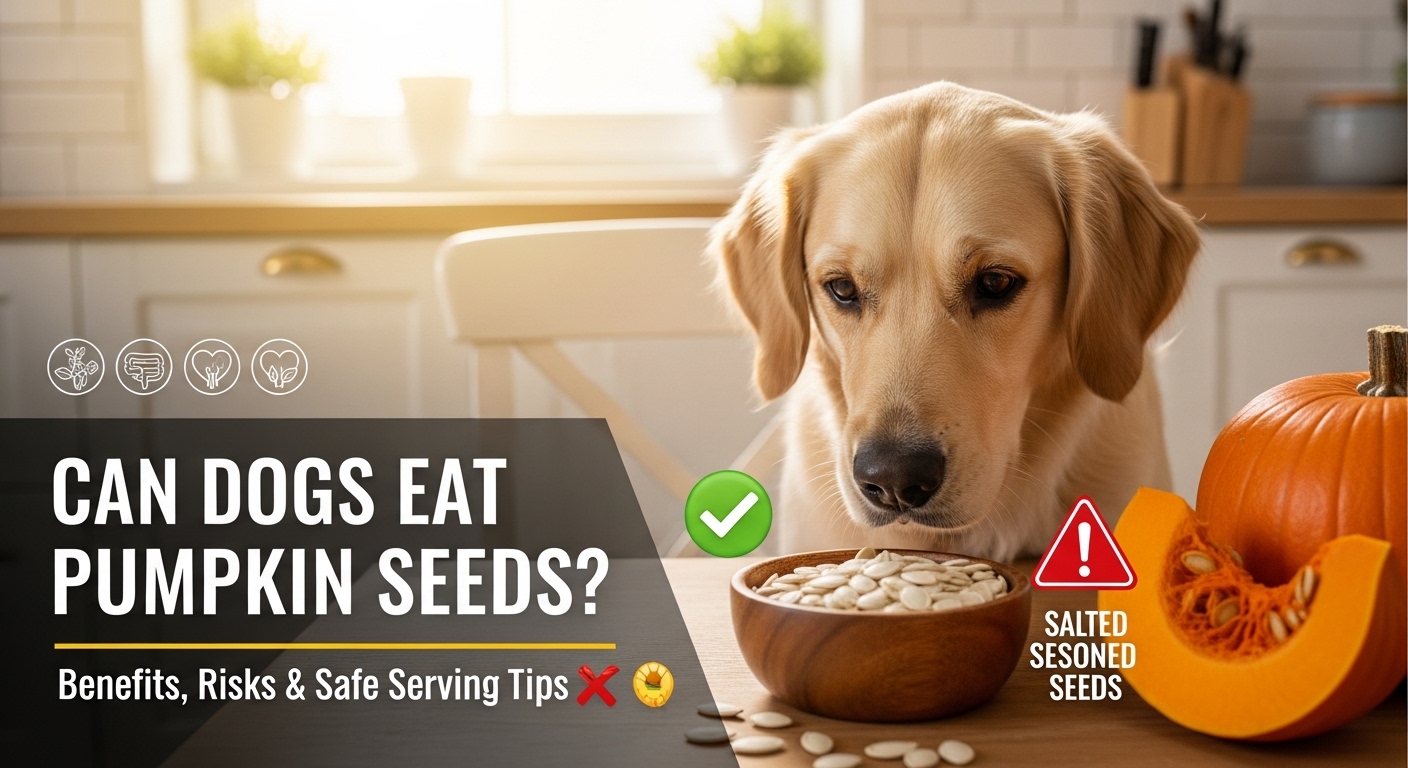
Yes — dogs can eat pumpkin seeds, but only when prepared correctly and given in small amounts. Plain, unseasoned, shell-free pumpkin seeds are non-toxic to healthy adult dogs and offer a modest nutritional boost. However, the store-bought salted or oiled kind can genuinely harm your dog, and pumpkin seeds are not a proven dewormer — one of the most persistent myths in dog nutrition.
This vet-informed guide covers everything a dog owner needs to know: the real science on benefits, the risks most articles skip, exact serving sizes by dog weight, a step-by-step safe preparation method, and honest answers to the most common questions.
🐾 Quick Answer: Plain, shell-free, dry-roasted pumpkin seeds are safe for dogs in small amounts — roughly 1 seed per 10 lbs of body weight as an occasional treat. They contain fiber, zinc, magnesium, and omega-3 fatty acids. Salted, oiled, or seasoned seeds are harmful and must be avoided. Pumpkin seeds do not reliably deworm dogs. For digestive support, plain pumpkin puree is a better and more vet-recommended choice.
Are Pumpkin Seeds Safe for Dogs?
Yes. According to PetMD, dogs can eat pumpkin seeds — with or without the shell — and the seeds themselves are non-toxic. Dogster, whose content is reviewed by licensed veterinarians, confirms that pumpkin seeds are “generally healthy and safe for dogs to eat” as long as they are roasted and unsalted.
That said, “safe” depends entirely on preparation. A plain, dry-roasted, shell-free pumpkin seed from a whole fresh pumpkin is a very different food from the salted, oiled, or garlic-seasoned bags sold in snack aisles — which can cause sodium toxicity, pancreatitis, or worse.
There’s also one important nuance veterinarians emphasize: nutrients that make pumpkin seeds a superfood for humans are not nearly as bioavailable for dogs. Dogs’ digestive systems aren’t designed to extract nutrients from seeds efficiently. This doesn’t make pumpkin seeds dangerous — it just means expectations need to be realistic. They’re a fine occasional treat, not a health supplement.
Nutritional Profile of Pumpkin Seeds for Dogs
Here is what plain pumpkin seeds contain that can benefit dogs when absorbed:
| Nutrient | Role in Dog Health |
|---|---|
| Zinc | Supports immune function, healthy skin, and coat condition |
| Magnesium | Supports muscle function, nerve signalling, and energy production |
| Iron | Supports red blood cell production and oxygen transport |
| Dietary Fiber | Aids digestion, regulates stool consistency, supports anal gland health |
| Omega-3 Fatty Acids | Supports skin, coat, and mild anti-inflammatory effects |
| Antioxidants | Supports immune health and reduces cellular oxidative stress |
| Vitamin K | Supports normal blood clotting and bone health |
| Phosphorus & Manganese | Supports bone density and joint health |
| Cucurbitin (amino acid) | Some antiparasitic properties noted in research (not a reliable dewormer — see section below) |
📌 Important: Dogs absorb nutrients from seeds less efficiently than humans do. The nutritional benefits above are real but modest compared to what a human gets from the same seed. Ground seeds are more digestible and deliver more of these nutrients than whole seeds.
7 Benefits of Pumpkin Seeds for Dogs
1. Digestive Support
Pumpkin seeds contain both soluble and insoluble fiber. A small amount of ground seed stirred into your dog’s regular food can help firm up loose stools and support healthy bowel regularity. This is one of the clearest benefits, especially for dogs with occasional mild diarrhea or constipation. For more powerful digestive support, also see our guide on how to improve your dog’s gut health naturally.
2. Skin and Coat Health
The omega-3 fatty acids, zinc, and magnesium in pumpkin seeds contribute to a shinier coat and healthier skin. While not as potent as a dedicated fish oil supplement, ground pumpkin seeds can be a useful complementary addition for dogs prone to dry or dull coats.
3. Anal Gland Health
Fiber-rich foods — including pumpkin seeds — help produce firmer, bulkier stools, which naturally encourage proper anal gland expression during bowel movements. Dogs prone to anal gland problems may benefit from added dietary fiber, making pumpkin seeds a practical occasional inclusion.
4. Immune System Support
Zinc, iron, antioxidants, and magnesium all support healthy immune function. While pumpkin seeds alone can’t replace a balanced diet, they contribute small but meaningful amounts of these immune-supporting micronutrients.
5. Urinary Tract Support (Emerging Evidence)
Some early research and veterinary sources suggest that the zinc and antioxidant content in pumpkin seeds may support urinary tract health in dogs. Evidence is limited and not yet definitive, so this should not replace specific veterinary treatment for urinary conditions. If your dog has a diagnosed UTI or urinary issue, consult your vet for targeted dietary guidance.
6. Healthy Weight Management (Indirect)
Fiber creates a feeling of fullness without adding many calories. For dogs that tend to overeat or beg for extra food, adding a small amount of ground pumpkin seed to meals can help them feel more satisfied — supporting weight management as part of a broader plan. See our dog meal plans section for complete guidance.
7. Antioxidant Protection
Pumpkin seeds contain antioxidants including Vitamin E and carotenoids, which help neutralize free radicals and reduce oxidative stress. This supports overall cellular health, which is particularly valuable for senior dogs. For more on senior dog nutrition, read our best dog food for senior dogs guide.
Risks & Side Effects to Know
⚠️ Read This Before Feeding: Pumpkin seeds are safe — but these risks are real. Most problems occur from overfeeding or incorrect preparation, not the seeds themselves.
1. Digestive Upset from Overfeeding
Because dogs don’t digest seeds as efficiently as humans, eating too many pumpkin seeds can cause vomiting, diarrhea, gas, or an upset stomach — especially on first introduction. Always start with just 1–2 seeds and observe your dog’s reaction over 24 hours.
2. Pancreatitis Risk (High-Fat Content)
Pumpkin seeds are calorie-dense and relatively high in fat. While these are healthy fats, too much fat at once can trigger pancreatitis in sensitive dogs — a serious, painful inflammatory condition of the pancreas. Dogs who are overweight, sedentary, or have a history of pancreatitis should either avoid pumpkin seeds entirely or have them cleared by a vet first.
3. Choking Hazard (Whole Seeds with Shells)
Whole pumpkin seeds — especially with their shells intact — are a choking hazard, particularly for small breeds or fast eaters. Always remove the shell. Better still, grind seeds into a fine powder before serving, which eliminates the choking risk completely.
4. Intestinal Blockage Risk
In small dogs that swallow seeds whole without chewing, there is a risk of partial intestinal blockage. Grinding seeds before serving removes this risk entirely and also improves nutrient absorption.
5. Rancidity (Stored Seeds)
Raw pumpkin seeds are high in natural oils, which means they go rancid relatively quickly if not stored properly. Rancid seeds can cause digestive illness. Always store prepared seeds in an airtight container, refrigerated, and check for off-smells before feeding.
6. Salt, Oil, and Seasoning Toxicity
This is the most common and serious danger. Commercially prepared pumpkin seeds (from bags intended for human consumption) are almost always salted, oiled, or flavored with spices like garlic or onion powder — all of which are harmful or outright toxic to dogs. Never feed your dog seeds from a snack bag.
Forms of Pumpkin Seeds to Always Avoid
| Form to Avoid | Why It’s Dangerous |
|---|---|
| Salted pumpkin seeds | Excess sodium causes dehydration, electrolyte imbalance, and can lead to salt toxicity |
| Oiled or butter-roasted seeds | Added fat sharply increases pancreatitis risk; digestive upset in sensitive dogs |
| Garlic or onion-seasoned seeds | Garlic and onion are toxic to dogs — damage red blood cells, can cause hemolytic anemia |
| Seeds with shells (small/fast-eating dogs) | Choking hazard and very difficult to digest; can cause intestinal blockage |
| Rancid or old raw seeds | Oxidized fats cause vomiting, diarrhea, and digestive illness |
| Pumpkin pie filling / spiced mixes | Contains added sugars, nutmeg (toxic to dogs), cloves, and sometimes xylitol — all dangerous |
| Pumpkin seed flavored treats (sweetened) | Often contain xylitol or sugar alcohols — xylitol causes rapid insulin release and liver failure in dogs |
For a full picture of dangerous dog foods, read our guide to foods that are toxic for dogs.
How to Safely Prepare & Serve Pumpkin Seeds to Your Dog
The Honest Kitchen and multiple veterinary sources agree: the safest way to serve pumpkin seeds is plain, hulled, and ground. Here is the exact method:
- Choose the right seeds. Use seeds fresh from a whole pumpkin, or purchase raw, plain, unsalted, unroasted pumpkin seeds (check the ingredient list — it should say “pumpkin seeds” and nothing else).
- Rinse well. Remove any pumpkin flesh or membrane clinging to the seeds. Pat dry with a clean towel.
- Remove the shells (hull). Peel the outer white shell from each seed to leave only the green inner seed (pepita). This reduces choking risk and improves digestibility significantly.
- Dry-roast (optional but recommended). Spread hulled seeds on a baking sheet. Roast at 300°F / 150°C for 15–20 minutes. No oil, no salt, no seasoning of any kind. Roasting extends shelf life and gently reduces the risk of bacterial contamination from raw seeds.
- Cool completely. Let seeds cool fully before serving — hot or warm seeds can burn your dog’s mouth and throat.
- Grind into powder. Use a coffee grinder, food processor, or blender to grind the roasted seeds into a fine powder. This is the single best preparation step — grinding dramatically improves digestibility and nutrient absorption, and eliminates all choking or blockage risk.
- Serve by sprinkling over food. Measure the appropriate amount (see serving sizes below) and sprinkle over your dog’s regular meal. Most dogs eat it without noticing.
- Store properly. Keep ground seeds in an airtight glass jar in the refrigerator. Use within 2–3 weeks. Whole roasted seeds in a sealed bag can last up to 6 months refrigerated.
💡 Pro Tip: If you’re short on time, pre-ground pumpkin seed powder is available at many health food stores — just verify it contains zero additives, salt, or flavorings. Check the ingredient list: it should list only “pumpkin seeds.”
Exact Serving Sizes by Dog Weight
According to The Honest Kitchen, a general guideline is 1 seed per 10 pounds of body weight as a starting point. Treats — including pumpkin seeds — should never exceed 10% of your dog’s total daily caloric intake.
| Dog Size / Weight | Max Seeds Per Serving | Frequency | Best Form |
|---|---|---|---|
| Extra Small (<10 lbs) | 1–2 seeds maximum | 2–3x per week at most | Ground powder only |
| Small (10–25 lbs) | 2–3 seeds | A few times per week | Ground powder or finely chopped |
| Medium (25–50 lbs) | 5–10 seeds | A few times per week | Ground or whole dry-roasted |
| Large (50–90 lbs) | Up to ⅛ cup ground seeds | A few times per week | Ground or whole dry-roasted |
| Giant (90+ lbs) | Up to ⅓ cup ground seeds | A few times per week | Ground or whole dry-roasted |
📌 Important: These are maximum amounts. Always start with the smallest portion (1–2 seeds regardless of size) and wait 24 hours to check for any adverse reaction before increasing. If your dog also receives other treats during the day, reduce pumpkin seed portions accordingly to stay within the 10% treat limit.
Can Puppies Eat Pumpkin Seeds?
Puppies can technically eat plain, ground pumpkin seeds in very small amounts, but with extra caution:
- Puppies under 12 weeks of age should not be given pumpkin seeds at all — their digestive systems are still too immature
- For older puppies (3–12 months), limit to just 1 ground seed occasionally, and introduce very slowly
- High-fat foods like pumpkin seeds carry a greater pancreatitis risk in puppies than in adult dogs
- Always consult your vet before adding new foods to a puppy’s diet
For age-appropriate recipes and nutrition guidance, see our best homemade dog food recipes for sensitive stomachs.
Pumpkin Seeds vs. Pumpkin Puree — Which Is Better for Dogs?
This is one of the most useful comparisons for dog owners. In most cases, plain pumpkin puree is the better choice — particularly for digestive support. Veterinarians recommend it far more frequently and consistently than pumpkin seeds.
| Factor | Pumpkin Seeds | Plain Pumpkin Puree |
|---|---|---|
| Safety | ✅ Safe when prepared correctly | ✅ Very safe (plain, unsweetened) |
| Digestibility | ⚠️ Limited — seeds are hard for dogs to digest | ✅ Highly digestible |
| Digestive benefits | ✅ Some fiber benefit | ✅ Excellent — frequently vet-recommended for diarrhea and constipation |
| Nutrient absorption | ⚠️ Poor — dogs don’t extract nutrients from seeds well | ✅ Good bioavailability |
| Preparation required | ⚠️ Must shell, optionally roast, then grind | ✅ Open can and serve — no prep needed |
| Pancreatitis risk | ⚠️ Moderate — higher fat content | ✅ Very low fat |
| Vet recommendation frequency | Occasional treat | ✅ Frequently recommended for GI support |
| Cost & convenience | More effort | ✅ Cheap and instant |
Bottom line: If your goal is digestive support, use plain canned pumpkin puree (look for 100% pumpkin as the only ingredient — not “pumpkin pie filling”). Pumpkin seeds are a fine occasional treat but not the better functional food for dogs.
Do Pumpkin Seeds Deworm Dogs? (Myth vs. Fact)
This claim circulates widely on pet blogs and social media — but it’s not supported by veterinary evidence for dogs in practice.
Pumpkin seeds contain cucurbitin, an amino acid with some antiparasitic properties studied in lab conditions. One small study did find some deworming effect. However:
- The study was limited in scope and has not been replicated at scale
- Cucurbitin’s bioavailability in dogs after digestion is not well-established
- No veterinary organization recommends pumpkin seeds as a treatment or prevention for intestinal parasites
- Feeding the quantity of seeds that might have any antiparasitic effect would cause significant digestive upset
🚨 Do not use pumpkin seeds as a dewormer. If your dog has worms or intestinal parasites, only a veterinarian-prescribed dewormer will reliably and safely treat the condition. Relying on pumpkin seeds while parasites remain untreated allows the infection to progress and worsens your dog’s health. Always consult your vet if you suspect parasites.
Warning Signs After Your Dog Eats Pumpkin Seeds
Most dogs tolerate a small amount of plain pumpkin seeds without any issue. But watch for these signs — especially in the 6–12 hours after first introduction:
- Vomiting or retching — stop feeding pumpkin seeds and monitor
- Diarrhea or very loose stools — digestive upset from the seeds or their fat content
- Loss of appetite or food refusal — possible GI discomfort
- Lethargy or unusual tiredness — may indicate digestive distress
- Abdominal bloating or pain (dog hunching, restless, whining) — contact your vet promptly
- Excessive thirst and urination — if any salted seeds were consumed, this signals sodium overload
- Pale or yellowish gums — rare, but can indicate a more serious reaction; seek vet care immediately
If your dog consumed seasoned or salted pumpkin seeds, or a large quantity of plain ones, contact your vet. For poisoning emergencies, call the ASPCA Animal Poison Control Center: 888-426-4435 (24/7).
Also see our guide on foods that are toxic for dogs for a complete safety reference.
Frequently Asked Questions
Yes. Plain, shell-free, unseasoned pumpkin seeds are safe for healthy adult dogs in small amounts. The safest preparation is to hull the seeds, dry-roast them without any oil or salt, and grind them into a fine powder before sprinkling over food.
Yes — but only if they are dry-roasted with zero added oil, salt, or seasonings. Plain dry-roasting is actually the recommended preparation. Never give your dog commercially roasted pumpkin seeds from a snack bag, which are almost always salted and seasoned.
Technically yes, but it’s not the best choice. Raw seeds are harder to digest and spoil faster due to their natural oil content. Dry-roasting without seasoning is safer and extends shelf life. If serving raw, hull them and grind them first.
It’s not recommended, even though the shells aren’t toxic. They are very hard to digest, pose a choking risk — especially for small dogs — and can potentially cause intestinal blockage if swallowed whole. Always remove the shell before serving.
A general guideline is 1 seed per 10 lbs of body weight as an occasional treat — for example, 5 seeds for a 50 lb dog. Start smaller than this when introducing pumpkin seeds for the first time, and never exceed the 10% daily calorie treat limit. Frequency should be a few times per week at most, not daily.
No — not reliably. While pumpkin seeds contain cucurbitin, which has shown some antiparasitic activity in limited research, they are not a proven or veterinarian-recommended deworming treatment. If your dog has intestinal parasites, consult your vet for a prescription dewormer. Do not delay treatment by relying on pumpkin seeds.
Yes, if given in excessive amounts. Dogs don’t digest seeds as efficiently as humans, and too many pumpkin seeds — or introducing them too quickly — can cause loose stools or diarrhea. Start with just 1–2 seeds and increase slowly if your dog tolerates them well.
Plain pumpkin puree (100% canned pumpkin, no added ingredients) is generally better for dogs. It is more digestible, offers better nutrient bioavailability, has no choking risk, requires no preparation, and is more consistently recommended by vets for digestive support. Pumpkin seeds are a fine occasional treat but not the superior option.
Overfeeding pumpkin seeds can increase pancreatitis risk, particularly in dogs that are overweight or have a history of pancreatitis. Pumpkin seeds are calorie-dense and high in fat. Stick to the serving sizes above and avoid giving them to high-risk dogs without veterinary approval.
In very small amounts, plain pumpkin seed oil may be safe and may support skin health due to its fatty acid content. However, it is calorie-dense and should be used only occasionally and in tiny quantities (a few drops at most). Always consult your vet before adding any oil to your dog’s diet regularly.
If your dog consumed a large quantity of plain pumpkin seeds, monitor for vomiting, diarrhea, lethargy, or abdominal pain and contact your vet if symptoms appear. If your dog ate salted or seasoned seeds, contact your vet promptly. For emergencies, call the ASPCA Animal Poison Control: 888-426-4435.
Indirectly, yes. The dietary fiber in pumpkin seeds helps create firmer, bulkier stools, which naturally support proper anal gland expression during bowel movements. This can help dogs that frequently need anal gland manual expression. However, for chronic anal gland issues, consult your vet for a comprehensive plan.
Final Verdict: Can Dogs Eat Pumpkin Seeds?
Yes — with the right preparation and realistic expectations.
Plain, shell-free, dry-roasted and ground pumpkin seeds are a safe occasional treat for most healthy adult dogs. Sprinkled in small amounts over your dog’s regular food, they offer modest nutritional benefits — a little fiber, some zinc and magnesium, and omega-3 fatty acids. They are not a superfood for dogs the way they are for humans, and they are absolutely not a dewormer.
The most important rules:
- ✅ Plain, hulled, dry-roasted (no oil or salt) and ground = safe occasional treat
- ✅ Start with 1–2 seeds regardless of dog size; increase slowly
- ✅ Follow the 10% daily calorie rule for all treats
- ❌ Never feed salted, oiled, or seasoned seeds — these are harmful
- ❌ Don’t use pumpkin seeds as a dewormer — they don’t work reliably
- ✅ For digestive support, plain canned pumpkin puree is a better choice
- ✅ When in doubt, ask your vet — especially for dogs with pancreatitis history, obesity, or digestive conditions
Looking for more safe food guides? Browse our full Can Dogs Eat? category, check out our guide to the top 15 fruits dogs can eat safely, or explore our complete guide to vegetables that are healthy for dogs.
Veterinary Disclaimer: This article is for informational purposes only and does not constitute professional veterinary advice, diagnosis, or treatment. Always consult a licensed veterinarian before making significant changes to your dog’s diet, especially if your dog has existing health conditions. For poisoning emergencies, contact the ASPCA Animal Poison Control Center at 888-426-4435 (24/7).
Medical Disclaimer : This article is for informational purposes only and does not constitute veterinary advice. Always consult your veterinarian before introducing new foods into your dog’s diet, especially if your dog has existing health conditions.
Affiliate Disclosure: This article may contain affiliate links. If you purchase through these links, we may earn a small commission at no extra cost to you. We only recommend products that meet strict quality standards for pet safety.