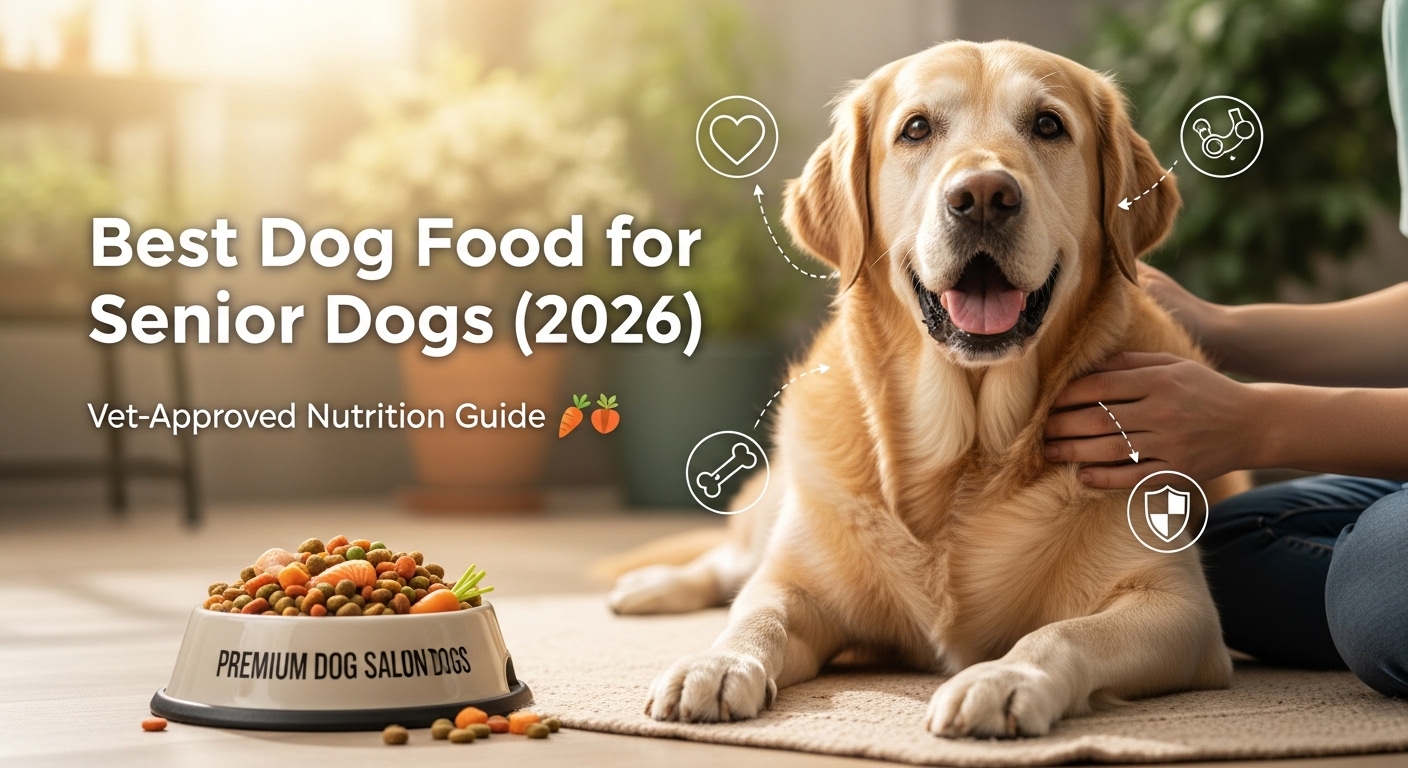
Your dog’s face is greying, their naps are getting longer, and they’re not quite as quick on their feet as they used to be. Sound familiar? As dogs enter their senior years, their nutritional needs shift in ways that most standard adult dog foods simply don’t address.
The right senior dog food can protect aging joints, preserve muscle mass, support brain health, aid digestion, and help maintain a healthy weight — all at the same time. But with dozens of “7+” and “mature” formulas lining the shelves, it’s hard to know which ones actually deliver.
In this guide, we cover the best dog food for senior dogs in 2026 — with vet-backed picks, key ingredients explained, and a full comparison table to help you choose the right formula for your dog’s specific needs.
Quick Answer: The best dog food for senior dogs should contain high-quality named animal protein (chicken, fish, turkey), glucosamine and chondroitin for joints, omega-3 fatty acids for inflammation and brain health, antioxidants (vitamins C & E), and probiotics for digestion. Top vet-recommended picks for 2026 include Orijen Senior, The Farmer’s Dog (fresh), Royal Canin Ageing 10+, Hill’s Science Diet Adult 7+, Purina Pro Plan Bright Mind, Blue Buffalo Life Protection Senior, and Nulo FreeStyle Senior. Always consult your vet before switching — senior nutrition is not one-size-fits-all.
🐾 When Does a Dog Become a “Senior”?
The answer depends on breed size — larger breeds age significantly faster than smaller ones. A Great Dane at 6 is physiologically older than a Chihuahua at 10. Here’s a general guide:
| Breed Size | Weight Range | Senior Age |
|---|---|---|
| Small breeds | Under 20 lbs | 10–12 years |
| Medium breeds | 20–50 lbs | 8–10 years |
| Large breeds | 50–90 lbs | 7–8 years |
| Giant breeds | 90+ lbs | 5–6 years |
Recognizing when your dog enters this life stage is the first step to getting their nutrition right.
🔬 How Senior Dogs’ Nutritional Needs Change
As dogs age, their bodies work differently. Here’s what’s actually happening — and what it means for their diet:
Muscle Loss Accelerates
Senior dogs stop synthesizing protein as efficiently as younger dogs. This means they actually need more high-quality, digestible protein — not less, as older advice suggested. Current veterinary nutrition consensus is clear: protein quality and digestibility matter more than percentage. Losing lean muscle mass is associated with increased risk of illness, so a protein-rich diet is essential.
Metabolism Slows Down
Older dogs burn fewer calories and are less active, which means their food needs to be calorie-appropriate to prevent obesity — a condition that worsens joint pain, strains the heart, and shortens lifespan.
Joints Begin to Deteriorate
Joint wear accumulates over the years. Senior dogs benefit from glucosamine, chondroitin, and omega-3 fatty acids in their food to reduce inflammation and support cartilage integrity.
Brain Health Declines
Canine cognitive dysfunction (doggy dementia) affects a significant percentage of dogs over 10. Medium-chain triglycerides (MCTs) from coconut oil and antioxidants from blueberries, spinach, and vitamins C & E support brain function and may slow cognitive decline.
Digestion Becomes Less Efficient
Aging organs process nutrients differently. Added fiber and probiotics support gut health, improve nutrient absorption, and help with regularity — common concerns in older dogs.
Immunity Weakens
The immune system becomes less effective with age. Antioxidants from vitamins E and C, selenium, and plant-based phytonutrients help support immune function.
Taste and Smell Fade
Senior dogs often become less interested in food as their senses dull. Palatability — how appealing the food smells and tastes — becomes a real practical concern.
✅ Key Ingredients to Look For in Senior Dog Food
High-Quality Animal Protein
The first ingredient should always be a named animal protein — chicken, beef, turkey, salmon, or lamb. Look for approximately 25–30% protein on a dry matter basis from highly digestible sources. Avoid formulas that rely on unnamed “meat meal” or plant-based fillers as primary protein sources.
Glucosamine & Chondroitin
Natural compounds that support cartilage structure and joint lubrication. Essential for senior dogs — especially large breeds and those already showing stiffness.
Omega-3 Fatty Acids (EPA & DHA)
Long-chain omega-3s from marine oils (fish oil, salmon oil) reduce joint inflammation and support brain and kidney function. Look for fish oil or salmon oil listed as a specific ingredient, not just vague “fat sources.”
Antioxidants (Vitamins C & E, Selenium)
Help fight cellular damage caused by aging. Ingredients like blueberries, spinach, and sweet potato naturally provide antioxidants alongside vitamins C and E.
Fiber & Probiotics
Support digestive health and nutrient absorption. Look for ingredients like beet pulp, chicory root, or listed probiotic strains.
MCTs (Medium-Chain Triglycerides)
Found in coconut oil, MCTs fuel brain cells and may support cognitive health in older dogs. Some senior-specific formulas, like Purina Pro Plan Bright Mind, specifically include this ingredient.
Controlled Calorie Density
Senior formulas should be calorie-appropriate — lower than adult formulas for inactive dogs, but not so low they cause muscle wasting. Follow feeding guidelines carefully and adjust for your dog’s activity level and body condition.
🚫 What to Avoid in Senior Dog Food
- Very low protein formulas — outdated advice. Senior dogs need quality protein.
- Excess fillers (corn syrup, wheat, soy, artificial dyes) — poor digestibility and may worsen inflammation.
- Unspecified fat sources — quality matters, especially for older digestive systems.
- Overfeeding calorie-dense formulas — obesity accelerates virtually every age-related condition.
- Foods not AAFCO-approved — always look for a statement confirming the food meets AAFCO standards for senior or all-life-stages.
📊 Best Dog Food for Senior Dogs — Quick Comparison Table
| Dog Food | Best For | Key Nutrients | Type | Price Range |
|---|---|---|---|---|
| Orijen Senior | Overall senior nutrition | High protein, glucosamine, omega-3s | Dry | $$$ |
| The Farmer’s Dog | Fresh, human-grade diet | High protein, balanced macros, real ingredients | Fresh (subscription) | $$$$ |
| Royal Canin Ageing 10+ | Medium breeds, 10+ years | EPA/DHA, antioxidants, quality protein | Dry | $$ |
| Hill’s Science Diet Adult 7+ | Everyday senior maintenance | Antioxidants, omega-6, vitamin E | Dry | $$ |
| Purina Pro Plan Bright Mind | Cognitive support | MCTs, EPA, DHA, antioxidants | Dry | $$ |
| Blue Buffalo Life Protection Senior | Budget-conscious senior nutrition | Glucosamine, chondroitin, LifeSource Bits | Dry | $$ |
| Nulo FreeStyle Senior | Sensitive seniors, grain-free | Glucosamine, chondroitin, L-carnitine, probiotics | Dry | $$ |
| Blue Buffalo Homestyle Senior | Palatability, wet food fans | Glucosamine, chondroitin, high moisture | Wet | $$ |
🏆 Best Dog Food for Senior Dogs — Full Reviews 2026
1. Orijen Senior — Best Overall
Why we love it: Orijen Senior is consistently one of the top-rated senior dog foods for its whole-ingredient, high-protein philosophy. Built around approximately 85% quality poultry and fish, it delivers natural glucosamine and chondroitin alongside omega-3 fatty acids — without relying on synthetic additives to check nutritional boxes. It’s one of the few senior kibbles that actually maintains protein levels high enough to prevent age-related muscle wasting.
Key Benefits:
- ~85% animal ingredients — dense, whole-food nutrition
- Natural glucosamine & chondroitin from whole animal ingredients
- Supports joint health, weight management, and immune function
- No artificial additives, fillers, or synthetic flavor enhancers
- Exceptionally palatable — older dogs with fading appetite tend to eat it readily
Best For: Senior dogs of all breeds, large breeds, dogs with joint issues, owners who want the closest thing to a biologically appropriate diet in kibble form
Verdict: Premium price, but delivers genuine senior nutrition without compromise. One of the most trusted senior dog foods among vets and long-term dog owners alike.
2. The Farmer’s Dog — Best Fresh Food for Seniors
Why we love it: The Farmer’s Dog delivers human-grade, vet-formulated fresh food tailored to your dog’s age, weight, breed, and activity level. The Turkey Recipe is one of four fresh formulas that has been tested using live feeding trials over 6 years — a standard that exceeds AAFCO’s own gold standard. Senior dogs with fading appetites, dental issues, or picky eating habits often respond extremely well to fresh food’s taste and aroma.
Key Benefits:
- Human-grade, minimally processed ingredients
- Personalized portions based on your dog’s profile
- Backed by 6-year live feeding trials — exceptional quality verification
- Highly palatable — ideal for dogs who’ve lost interest in dry food
- Easy to digest for sensitive senior stomachs
Best For: Senior dogs with picky appetites, dogs with dental issues who struggle with kibble, owners who want a human-grade, personalized option
Verdict: The most nutritionally honest and palatable option available. The subscription model makes it convenient, though it’s the most expensive pick on this list.
3. Royal Canin Ageing 10+ — Best for Dogs Over 10
Why we love it: Royal Canin has been formulated with veterinary input since the brand’s founding, and the Ageing 10+ formula reflects deep nutritional expertise for very senior dogs. It contains a blend of high-quality protein to maintain muscle mass, EPA and DHA from omega-3 fatty acids to support joint mobility, and antioxidants including vitamins C and E to protect cells from age-related damage. Balanced fiber supports healthy digestion — increasingly important as dogs move into their double digits. Royal Canin also offers breed-size-specific formulas for small, medium, and large senior dogs.
Key Benefits:
- Formulated specifically for dogs 10 years and older
- EPA & DHA from omega-3s for joint mobility
- Vitamins C & E antioxidants for cellular protection
- Balanced fiber for healthy digestion
- Available in small, medium, and large breed versions
Best For: Very senior dogs (10+), medium breeds, owners who want a breed-size-appropriate senior formula with strong veterinary backing
Verdict: One of the most vet-recommended brands globally, and the Ageing 10+ formula is purpose-built for the dogs who need it most.
4. Hill’s Science Diet Adult 7+ — Best Everyday Senior Formula
Why we love it: Hill’s Science Diet Adult 7+ is one of the most widely recommended senior formulas by veterinarians for healthy, aging dogs. It supports lean muscle maintenance and healthy organ function with high-quality protein, omega-6 fatty acids and vitamin E for skin and coat health, and antioxidants to support immune function. It’s backed by clinical nutrition science and is broadly available at vet clinics and pet stores.
Key Benefits:
- Clinically backed formula — widely prescribed by vets
- Supports lean muscle, immune function, and coat health
- Omega-6 fatty acids and vitamin E for skin and coat
- Easy to find and consistently available
- AAFCO approved with feeding trial verification
Best For: Healthy senior dogs 7+, owners who want a vet-familiar brand with proven reliability, dogs without specific health conditions
Verdict: A dependable everyday senior formula. Not the flashiest ingredients list, but the science is solid and vets trust it.
5. Purina Pro Plan Bright Mind — Best for Cognitive Support
Why we love it: Purina Pro Plan Bright Mind is uniquely formulated to support brain health in dogs 7 and older. Its key differentiator is enhanced botanical oils providing medium-chain triglycerides (MCTs), which fuel brain cells and have been shown to improve alertness and mental sharpness in senior dogs. It also includes EPA and DHA for brain and joint function, antioxidants, and high-quality protein. Purina backs this formula with veterinary nutritionist input and extensive feeding trials.
Key Benefits:
- Enhanced botanical oils containing MCTs for brain health
- EPA & DHA from omega-3s for cognitive and joint support
- Antioxidants for immune and cellular health
- Backed by Purina veterinary nutritionists and feeding trials
- Available in chicken and turkey recipes
Best For: Senior dogs showing early signs of cognitive decline, anxious or confused older dogs, owners focused on brain health alongside physical health
Verdict: The most cognitively targeted senior food on this list. If your older dog seems confused, disoriented, or is sleeping more than usual, this formula is worth a serious look.
6. Blue Buffalo Life Protection Senior — Best Value Dry Food
Why we love it: Blue Buffalo Life Protection Senior is a solid, mainstream option that doesn’t cut corners on the ingredients that matter for aging dogs. It features deboned chicken as the first ingredient, glucosamine and chondroitin for joint support, and Blue Buffalo’s signature “LifeSource Bits” — a blend of antioxidants, vitamins, and minerals cold-formed to preserve their potency. It’s widely available, relatively affordable, and trusted by millions of dog owners.
Key Benefits:
- Deboned chicken as first ingredient
- Glucosamine & chondroitin for joint support
- LifeSource Bits: antioxidant & vitamin blend
- No corn, wheat, soy, artificial flavors, or preservatives
- Widely available and competitively priced
Best For: Senior dog owners looking for quality without premium pricing, dogs without complex health conditions, first-time senior food switchers
Verdict: A reliable step up from basic adult food, without the premium price tag of Orijen or fresh food options.
7. Nulo FreeStyle Senior (Trout & Sweet Potato) — Best Grain-Free Senior
Why we love it: A grain-free, chicken-and-egg-free recipe ideal for seniors with food sensitivities. It contains glucosamine and chondroitin for joint health, L-carnitine to support older dogs’ metabolism, probiotic strains for digestive health, and calcium and phosphorus for bone strength — making it one of the most complete grain-free senior formulas available.
Key Benefits:
- Grain-free, chicken-free, egg-free — ideal for sensitive dogs
- Glucosamine & chondroitin for hip and joint support
- L-carnitine for metabolic support in aging dogs
- Probiotics for digestive health
- Trout as primary protein — novel and highly digestible
Best For: Senior dogs with grain sensitivities or chicken allergies, dogs with digestive issues, owners seeking a grain-free option with genuine joint-support credentials
Verdict: One of the most thoughtfully formulated grain-free senior foods on the market. The trout-based recipe is particularly useful for dogs who’ve developed common protein sensitivities over time.
8. Blue Buffalo Homestyle Senior (Wet Food) — Best Wet Food for Seniors
Why we love it: For senior dogs who’ve lost interest in dry food, struggle with dental issues, or need extra hydration, Blue Buffalo Homestyle Senior is an outstanding wet food option. It packs 36% protein on a dry-matter basis from chicken and nutrient-rich chicken liver, plus glucosamine and chondroitin at therapeutic levels — rare for a canned diet. The high moisture content also supports kidney function, an increasingly important concern for aging dogs.
Key Benefits:
- High protein (36% dry matter) from chicken and chicken liver
- Glucosamine & chondroitin at therapeutic levels — unusual for wet food
- High moisture content supports hydration and kidney health
- Exceptionally palatable — ideal for dogs who’ve lost their appetite
- No artificial flavors, preservatives, or by-product meals
Best For: Picky senior dogs, dogs with dental pain or tooth loss, seniors needing extra hydration, dogs with kidney concerns
Verdict: The best wet food option for seniors. The therapeutic glucosamine/chondroitin levels make it genuinely functional, not just palatable.
🧪 Dry vs Wet Dog Food for Senior Dogs: Which Is Better?
Both have real advantages for older dogs. Many vets recommend a combination approach to provide balanced benefits.
| Dry Food | Wet Food | |
|---|---|---|
| Dental health | ✅ Helps reduce plaque | ❌ Less abrasion |
| Hydration | ❌ Low moisture | ✅ High moisture (good for kidneys) |
| Palatability | ❌ Can be less appealing | ✅ More aromatic, easier to eat |
| Joint nutrients | ✅ Easy to formulate with | ✅ Some formulas include therapeutic levels |
| Calorie control | ✅ Easier to portion | ⚠️ Calories can add up quickly |
| Cost | ✅ More economical | ❌ More expensive per calorie |
A good strategy: use quality dry food as the base and mix in wet food to boost palatability and hydration — especially as your dog ages.
Frequently Asked Questions (FAQ)
The best overall pick is Orijen Senior for its high-protein, whole-ingredient approach. For fresh food, The Farmer’s Dog is exceptional. For cognitive support specifically, Purina Pro Plan Bright Mind stands out. The right choice depends on your dog’s health needs, breed size, and budget.
Not always — but often yes. Senior-specific formulas address joint support, cognitive health, and calorie density in ways adult maintenance foods typically do not. As Cornell University veterinary nutritionists note, there’s no one-size-fits-all for senior dogs, and it’s worth discussing your dog’s specific situation with your vet.
More high-quality protein — not less. The old advice to drastically cut protein in senior dogs has been revised. Current veterinary nutrition consensus is that senior dogs actually need more digestible protein to prevent muscle loss, unless they have kidney disease (in which case a vet-prescribed diet is appropriate).
It depends on breed size. Large breeds (50–90 lbs) typically become seniors around 7–8 years. Small breeds may not need a senior formula until 10–12 years. Giant breeds often transition as early as 5–6 years.
Transition gradually over 7–10 days. Start with 25% new food / 75% old food, then slowly increase the ratio. Senior dogs can have more sensitive digestion, so a slow transition helps prevent stomach upset.
A senior dog can eat adult maintenance food, but may not get optimal nutrition for their age-related needs. Senior-specific formulas better address joint support, cognitive health, and calorie density.
Canine cognitive dysfunction (CCD) is similar to dementia in humans and affects a significant percentage of dogs over 10. Foods containing MCTs (medium-chain triglycerides), omega-3 fatty acids, and antioxidants — like Purina Pro Plan Bright Mind — may help support brain function and slow progression.
Most senior dogs do well with two smaller meals per day. This is easier on digestion than one large meal and helps regulate blood sugar and energy levels throughout the day.
Possibly. If your dog’s food doesn’t contain therapeutic levels of glucosamine/chondroitin, a dedicated joint supplement may help. For dogs with cognitive concerns, omega-3 supplements or specific vet-prescribed diets (like Purina NeuroCare) may be recommended. Always consult your vet before adding supplements.
💡 Pro Tips for Feeding Your Senior Dog
- Weigh your dog regularly. Unexplained weight gain or loss in a senior dog should always be addressed with your vet promptly — it can signal underlying health changes.
- Keep fresh water always available. Senior dogs are more prone to dehydration, and adequate hydration supports joint lubrication and kidney function.
- Warm up cold food slightly. If your senior dog has lost interest in eating, gently warming wet or moistened kibble enhances aroma and palatability dramatically.
- Portion control matters. Obesity worsens virtually every age-related condition — joint pain, heart disease, diabetes. Follow feeding guidelines and adjust for your dog’s actual activity level.
- Schedule regular vet nutrition check-ins. As Cornell University’s veterinary nutrition experts emphasize, senior dog nutrition is complex and individual. What’s right at age 8 may need adjustment at age 12.
- Consider an elevated food bowl. Senior dogs with arthritis or neck stiffness often find elevated bowls much more comfortable to eat from.
- Don’t feed human food. It disrupts nutritional balance and can lead to obesity or toxicity. Garlic, onions, grapes, and raisins are especially dangerous for dogs of any age.
🏁 Final Verdict
Choosing the best dog food for senior dogs is one of the most meaningful things you can do for your aging pup’s comfort, mobility, and quality of life. Here’s a quick cheat sheet:
- Best Overall: Orijen Senior
- Best Fresh Food: The Farmer’s Dog
- Best for Dogs 10+: Royal Canin Ageing 10+
- Best Everyday Formula: Hill’s Science Diet Adult 7+
- Best for Cognitive Health: Purina Pro Plan Bright Mind
- Best Value Dry Food: Blue Buffalo Life Protection Senior
- Best Grain-Free: Nulo FreeStyle Senior
- Best Wet Food: Blue Buffalo Homestyle Senior
Whatever you choose, prioritize high-quality named protein, meaningful joint support ingredients, omega-3s, and antioxidants. Pair great food with regular vet visits, a healthy weight, and appropriate low-impact exercise — and your senior dog’s golden years can truly be golden.
Medical Disclaimer : This article is for informational purposes only and does not constitute veterinary advice. Always consult your veterinarian before introducing new foods into your dog’s diet, especially if your dog has existing health conditions.
Affiliate Disclosure: This article may contain affiliate links. If you purchase through these links, we may earn a small commission at no extra cost to you. We only recommend products that meet strict quality standards for pet safety.