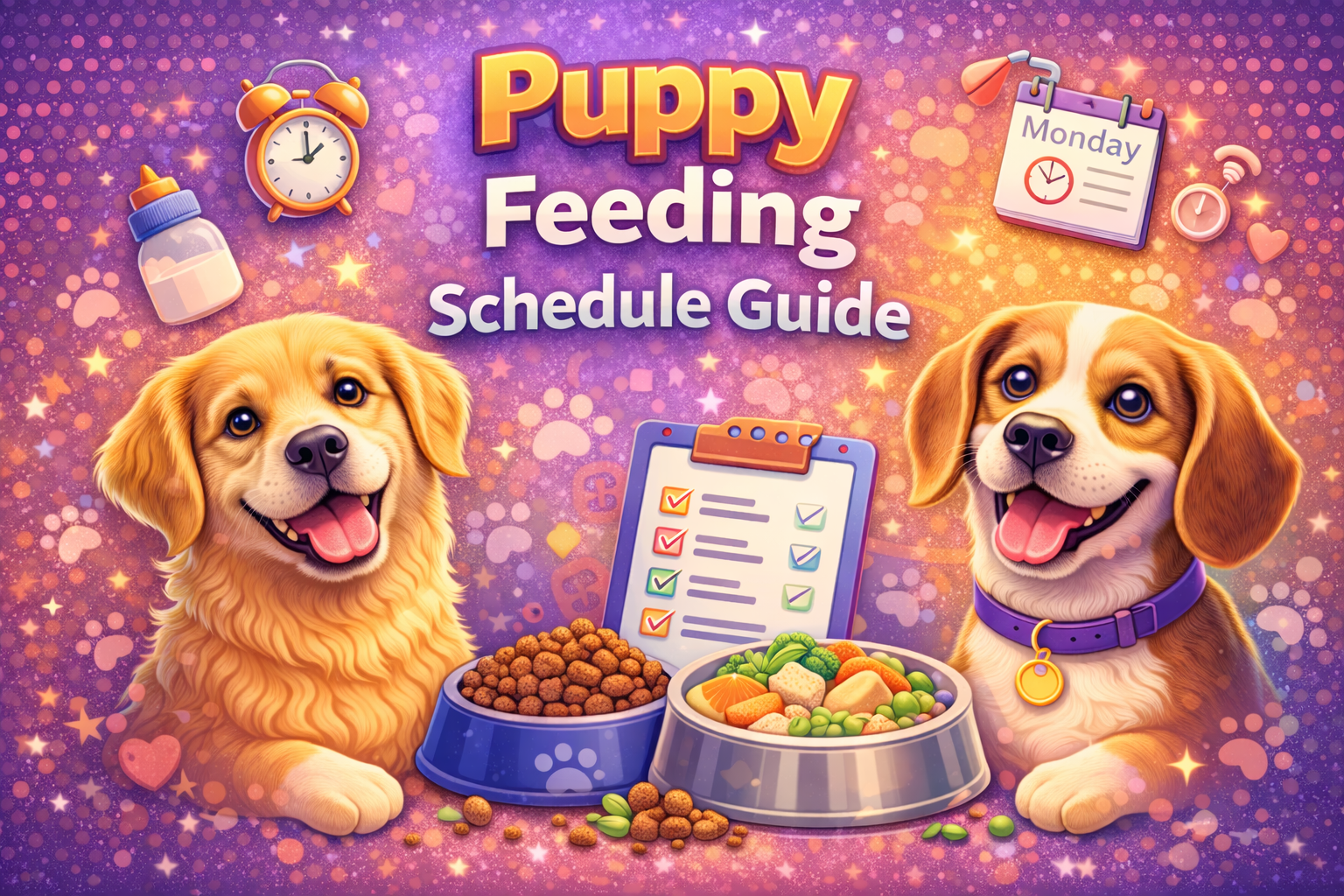
A puppy feeding schedule guide helps owners establish a consistent routine for providing essential nutrients during rapid growth stages. Most puppies require three to four small, nutrient-dense meals daily between ages 8 weeks and 6 months to support developing bones, muscles, and cognitive function while maintaining stable blood sugar levels.
Quick Facts: Puppy Feeding Chart by Age
- Frequency Matters: Young puppies (under 6 months) generally need 3–4 meals a day to prevent energy crashes.
- Rapid Growth: Puppies require nearly twice the energy of adult dogs per pound of body weight.
- Caloric Density: Puppy-specific food is higher in protein, fat, and minerals like calcium and phosphorus.
- Stable Routine: Feeding at the same time daily helps with house training and digestive regularity.
- The Transition: Most dogs move from 3 meals to 2 meals daily once they reach 6–12 months of age.
- Monitor Weight: Growth should be steady; ribs should be felt but not seen prominently.
Bringing home a new puppy is a journey filled with excitement, but it also comes with the significant responsibility of fueling their growth. Unlike adult dogs, puppies are essentially “growth engines” that require a specialized balance of nutrients to build strong bones, healthy organs, and a resilient immune system.
Establishing a puppy feeding schedule guide is one of the most effective ways to ensure your new companion thrives. A structured schedule does more than just fill their belly; it provides psychological security and makes house-training significantly easier. In this guide, we will break down the complexities of puppy nutrition into simple, actionable steps for every new owner.
What Is a Puppy Feeding Schedule Guide?
A puppy feeding schedule guide is a timed plan that dictates when and how often a puppy should eat throughout the day. Because puppies have small stomachs and high energy demands, they cannot process all their daily calories in one sitting.
By following a puppy feeding chart by age, you provide smaller, more frequent portions. This prevents “hypoglycemia” (low blood sugar), which can be dangerous for small breeds, and ensures that the puppy’s digestive system isn’t overwhelmed by large volumes of food at once.
Why Is It Important for Dogs?
Correct feeding during the first year of life sets the foundation for a dog’s entire future health.
- Bone and Joint Development: Puppies, especially large breeds, need a precise ratio of calcium and phosphorus to prevent orthopedic issues.
- Immune Support: High-quality puppy diets contain antioxidants to help bridge the “immunity gap” as maternal antibodies fade.
- Brain Development: DHA (an omega-3 fatty acid) is essential for healthy brain and vision development.
- Behavioral Predictability: A puppy who knows when their next meal is coming is often less anxious and less likely to beg or scavenge.
What Ingredients Should You Look For?
When selecting food for your puppy feeding schedule guide, the ingredient list is your best friend.
High-Quality Animal Proteins
Look for specific sources like “Chicken,” “Turkey,” or “Lamb” as the first ingredient. Protein provides the amino acids necessary for building new tissue and muscle.
DHA and Healthy Fats
DHA is typically found in fish oil or algae. It is crucial for a puppy’s learning ability and eye health. Healthy fats provide the dense energy puppies need for play.
The Calcium-to-Phosphorus Ratio
This is vital for bone growth. Reputable puppy foods are formulated to ensure these minerals are balanced so bones don’t grow too fast or too slow.
What Should You Avoid?
Puppies have sensitive digestive tracts. Avoid these common pitfalls:
- “All Life Stages” Food (Usually): Unless it specifically meets AAFCO puppy growth standards, it may not be nutrient-dense enough for a growing puppy.
- Hard “Adult” Treats: These can be too tough for puppy teeth or a choking hazard.
- Fillers like Corn and Soy: While not toxic, they take up space in the stomach without providing the high-quality nutrition a puppy needs.
- Toxic Human Foods: Keep grapes, onions, garlic, and anything containing Xylitol far away from the puppy bowl.
Puppy Feeding Chart by Age: Frequency & Portions
Every puppy is an individual, but most follow this general frequency schedule:
| Age of Puppy | Feedings Per Day | Goal |
| 8 – 16 Weeks | 4 Meals | Stable blood sugar and small portions |
| 4 – 6 Months | 3 Meals | Sustained growth and energy |
| 6 – 12 Months | 2 Meals | Transition toward adult maintenance |
| 12+ Months | 1–2 Meals | Adult maintenance (breed dependent) |
How Often to Feed a Puppy: Sample Daily Routine
A consistent routine helps with potty training. Here is a sample schedule for a 12-week-old puppy:
- 7:00 AM: First meal followed by a potty break.
- 11:00 AM: Second meal followed by a potty break.
- 3:00 PM: Third meal followed by a potty break.
- 7:00 PM: Final meal of the day followed by a potty break.
Note: Avoid feeding right before bedtime to prevent overnight accidents.
Benefits of a Consistent Schedule
- Easier Housebreaking: Puppies usually need to “go” 15–30 minutes after eating. A schedule lets you predict exactly when to take them outside.
- Satiety: Regular meals keep the puppy feeling full, reducing the urge to chew on furniture or shoes.
- Monitoring Health: If a puppy skips a scheduled meal, it’s an immediate signal that they might not be feeling well.
Common Mistakes Dog Owners Make
- Overfeeding: A “chubby” puppy may look cute, but excess weight puts dangerous pressure on developing joints.
- Free-Feeding: Leaving food out all day makes house-training much harder and can lead to picky eating habits.
- Switching Foods Too Fast: If you change brands, do it over 7–10 days to avoid diarrhea.
- Feeding Large Breed Puppies “Standard” Puppy Food: Large breeds need lower calcium levels to prevent them from growing too fast. Use “Large Breed Puppy” formulas specifically.
Comparison: Wet vs. Dry Food for Puppies
| Feature | Puppy Kibble (Dry) | Puppy Wet Food |
| Dental Health | Helps scrape plaque. | No dental benefit. |
| Palatability | Moderate. | High (good for picky eaters). |
| Hydration | Low. | High (helps with water intake). |
| Convenience | High (easy to store). | Moderate (must be refrigerated after opening). |
Recommended Products Section
Affiliate Disclosure: This article may contain affiliate links. If you purchase through these links, we may earn a small commission at no extra cost to you.
To succeed with your puppy feeding schedule guide, consider these foundational products:
- AAFCO-Compliant Puppy Food: Look for labels that state the food is “complete and balanced for growth.”
- Fish Oil Supplements: If your puppy’s food is low in Omega-3s, a pure salmon oil can support their coat and brain development.
- Training Treats: Small, soft, low-calorie treats are best for frequent rewards during puppy training sessions.
- Slow-Feeder Bowls: If your puppy “inhales” their food, a slow-feeder can prevent choking and bloating.
Safety Guidelines & Vet Recommendations
- Check the Ribs: You should be able to feel your puppy’s ribs but not see them. If you see them, increase food; if you can’t feel them, decrease food.
- Fresh Water: Ensure a clean bowl of water is available at all times, though you can lift it 2 hours before bed during potty training.
- Professional Consultation: Large breed puppies and those with sensitive stomachs benefit from a personalized plan. Always discuss your feeding choice during your puppy’s vaccination visits.
FAQ Section
Check the feeding guide on your food bag based on your puppy’s expected adult weight and age, then adjust based on their body condition (rib test).
Most puppies are lactose intolerant after weaning. Stick to fresh water and high-quality puppy food to avoid stomach upset.
If they are still playful and drinking water, don’t panic. If they miss two meals or seem lethargic, contact a professional immediately.
Adding a little warm water can make kibble easier to chew for very young puppies and increases hydration.
Small breeds can switch at 9–12 months, while large breeds may stay on puppy food for 18–24 months to ensure bone safety.
Yes, but they should be soft and small. Remember the 10% rule: treats should not make up more than 10% of their daily calories.
Medical Disclaimer: “This content is for informational purposes only and is not a substitute for professional veterinary advice, diagnosis, or treatment.”