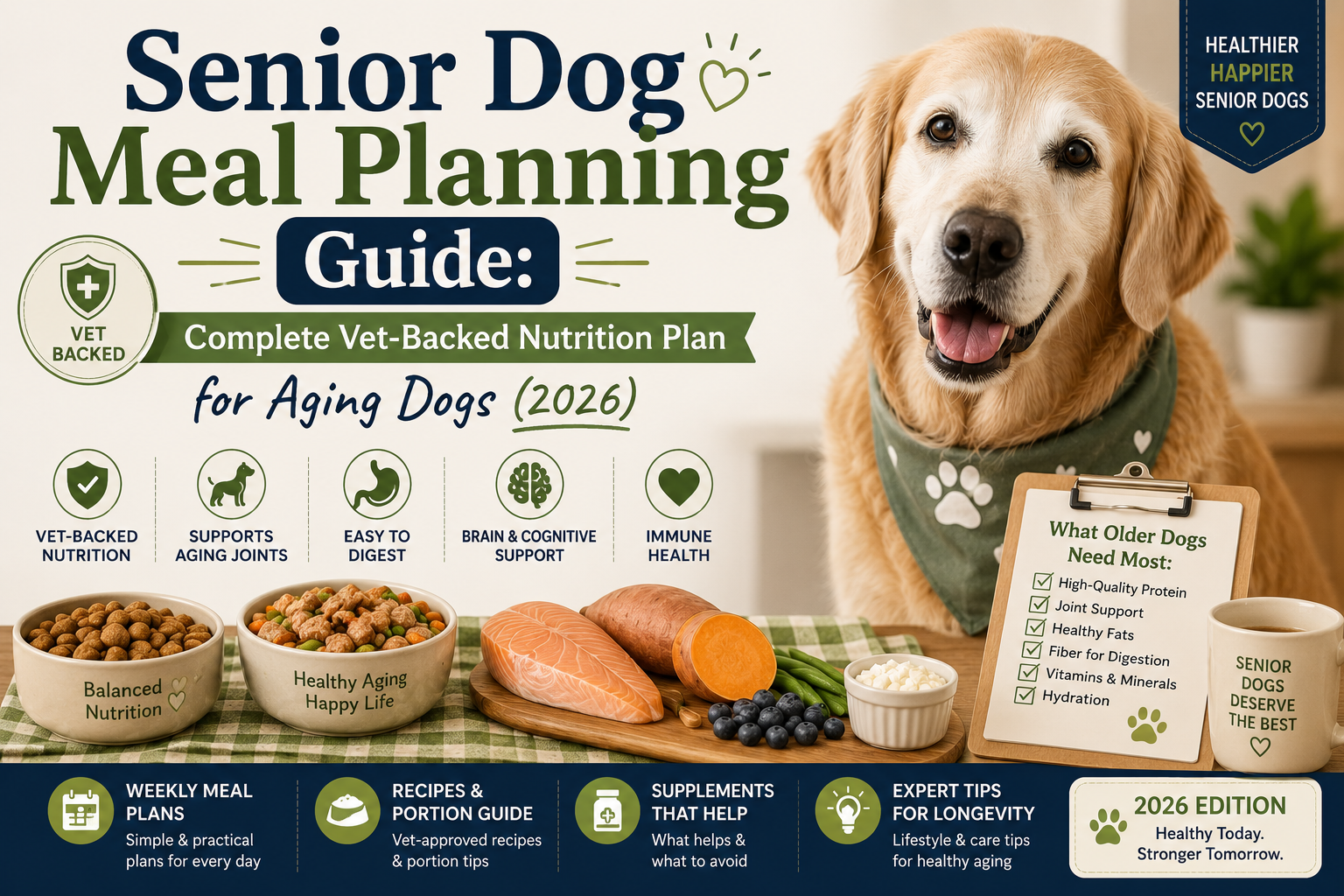
Quick Answer: Senior dogs need high-quality, easily digestible protein (minimum 25–28% of calories), reduced overall calories (15–25% less than adult peak), increased omega-3 fatty acids, controlled phosphorus, more fibre, and consistent hydration. Meal frequency should be 2–3 smaller meals per day. The single biggest mistake owners make is feeding less protein — healthy senior dogs actually need more protein, not less, to prevent muscle wasting.
When Is a Dog Considered a Senior? {#when-is-senior}
The answer depends more on breed size than chronological age. As a general guide:
| Breed Size | Examples | Senior Stage Begins |
|---|---|---|
| Small (under 20 lbs) | Chihuahua, Dachshund, Shih Tzu | 10–11 years |
| Medium (20–50 lbs) | Beagle, Cocker Spaniel, Bulldog | 8–9 years |
| Large (50–90 lbs) | Labrador, German Shepherd, Boxer | 7–8 years |
| Giant (90+ lbs) | Great Dane, Saint Bernard, Mastiff | 5–6 years |
According to PetMD, most dogs move into the “mature adult” category between 6 and 8 years old, with the transition to true senior status typically happening by age 8 — though individual health, activity level, and genetics all influence when age-related changes actually appear.
The practical implication: don’t wait for obvious signs of decline before adjusting your dog’s diet. Proactive nutritional changes at the start of the senior life stage are far more effective than reactive changes once problems have developed.
How Aging Changes a Dog’s Nutritional Needs {#how-aging-changes}
Aging triggers a cascade of physiological changes that directly affect how your dog processes food, how much energy they need, and which nutrients become critically important. Understanding these changes is the foundation of effective senior dog meal planning.
| Nutritional Factor | Young Adult Dog | Senior Dog | Required Change |
|---|---|---|---|
| Calories | Higher (active metabolism) | 15–25% reduction | Reduce to prevent obesity |
| Protein (quality) | Moderate | Higher quality, more digestible | Maintain or increase — see below |
| Total fat | Moderate | Reduced total, more omega-3 | Shift to anti-inflammatory fats |
| Fibre | Standard | Higher beneficial | Add pumpkin, green beans, oats |
| Calcium/Phosphorus | Balanced | Controlled (kidney health) | Reduce phosphorus if kidney issues |
| Antioxidants | Standard | Significantly higher needed | Blueberries, sweet potato, vitamin E |
| Hydration | Normal | Critically important | Active encouragement required |
| Joint support nutrients | Optional | Highly recommended | Glucosamine, chondroitin, omega-3 |
| Sodium | Standard | Reduced (heart/kidney health) | Lower sodium formulas preferred |
| Cognitive support | Not typically needed | Beneficial | MCT oils, B vitamins, omega-3 DHA |
According to PetMD’s senior dog nutrition guide, metabolism slows with age — sometimes by up to 25% — which increases the risk of obesity and simultaneous muscle loss. Organs including the kidneys, liver, and heart may not function as efficiently, and a poorly matched diet can accelerate this decline significantly.
The Protein Myth — Busted by Veterinary Science {#protein-myth}
This is the most important and most misunderstood topic in senior dog nutrition. The widespread belief that senior dogs need less protein is scientifically incorrect — and acting on it is one of the most harmful things you can do to an aging dog.
Here is what the research actually shows:
- A study comparing 2-year-old Beagles to 13-year-old Beagles found that senior dogs needed at least 50% more dietary protein than their younger counterparts, according to the AKC
- Veterinary nutritionists recommend a minimum of 25–28% of calories from protein for healthy senior dogs, with many experts recommending 28–32% on a dry-matter basis
- Senior dogs lose 15–25% of muscle mass between ages 7 and 12 due to age-related sarcopenia (muscle wasting) — adequate protein is the primary nutritional tool to slow this process
- According to the AKC, muscle loss in severe cases can progress until dogs can no longer walk unassisted
The one true exception: Dogs with diagnosed chronic kidney disease (CKD) may require protein restriction under veterinary supervision — typically 18–24% protein on a dry-matter basis. But this applies only to dogs with confirmed CKD, not healthy aging dogs. PetMD confirms that protein restriction is a targeted medical intervention, not a preventive measure for all seniors.
Bottom line: Unless your vet has specifically diagnosed kidney disease and recommended restriction, feed your senior dog more quality protein, not less.
Calories: How Much to Reduce and When {#calories}
While protein needs stay high or increase, calorie needs genuinely do decrease for most senior dogs — typically by 15–25% compared to their active adult peak. The reason is straightforward: reduced activity and a slower metabolism mean less energy is being burned.
Practical Calorie Reduction Guide
| Dog’s Current Status | Calorie Adjustment | Method |
|---|---|---|
| Healthy weight, active senior | Reduce by 10–15% | Slightly smaller portions; same food quality |
| Overweight senior | Reduce by 20–25% | High-fibre, lower-fat diet; increase vegetable volume |
| Underweight senior | Maintain or increase | Higher-calorie, protein-dense foods; smaller frequent meals |
| Very old dog (low appetite) | Focus on density, not volume | Nutrient-dense smaller meals; add toppers for palatability |
Important: Do not reduce calories by simply buying cheaper, lower-quality food. Reduce calories by adjusting portion size and choosing foods with higher nutrient density per calorie — meaning more protein, fibre, and micronutrients per calorie consumed, not more filler.
Weigh your senior dog monthly and adjust portions based on body condition rather than age-based rules alone. Your vet can assess body condition score (BCS) at regular check-ups, ideally every six months for dogs aged 7 and over.
The Role of Fat, Fibre, and Micronutrients {#fat-fibre}
Dietary Fat
Total fat should be moderately reduced in most senior diets to help manage weight. However, the type of fat matters enormously. Senior dogs benefit from:
- Omega-3 fatty acids (EPA and DHA) from fish oil — reduce joint inflammation, support brain function, improve coat quality, and benefit cardiovascular health
- Reduced saturated animal fats — skin-on chicken, fatty pork, and heavily marbled beef become less appropriate as main protein sources for seniors
- MCT oils (medium-chain triglycerides) — emerging research (including the formulation behind Purina Pro Plan Bright Mind) links MCT oils to improved cognitive performance in aging dogs by providing alternative fuel for brain cells
Dietary Fibre
Senior dogs benefit from moderately increased dietary fibre to:
- Support healthy gut motility (older dogs are prone to constipation)
- Aid weight management through improved satiety
- Regulate blood sugar more evenly
- Support beneficial gut bacteria (microbiome health)
Best budget-friendly fibre sources: plain canned pumpkin (not pie filling), steamed green beans, oats, and cooked sweet potato.
Key Micronutrients for Senior Dogs
- Antioxidants (Vitamins C and E, beta-carotene): Combat oxidative stress and support immune function. Sources: blueberries, sweet potato, carrots, spinach
- B vitamins (especially B12, B6, folate): Support cognitive function and neurological health. Sources: eggs, meat, fish
- Vitamin D and calcium: Bone density maintenance — balanced with phosphorus control
- Zinc: Immune function and wound healing — often deficient in senior dogs
Senior Dog Meal Timing and Frequency {#meal-timing}
Two to three smaller meals per day is the standard veterinary recommendation for senior dogs, rather than one large daily meal. Benefits include:
- More stable blood sugar throughout the day
- Reduced digestive strain on each meal
- Lower risk of bloat (gastric dilatation-volvulus), particularly in large and giant breeds
- Better appetite stimulation in dogs with reduced appetite
- Easier medication administration if supplements are required
For dogs with diabetes or acid reflux, three or even four small meals spread throughout the day may be recommended by your vet. Consistency in timing matters — senior dogs thrive on routine, and regular meal times make appetite changes (an important health signal) much easier to notice.
Best Protein Sources for Senior Dogs {#best-proteins}
Choose proteins that are highly digestible, relatively lean, and lower in phosphorus (important for kidney protection). Here are the best options ranked:
| Protein Source | Digestibility | Phosphorus Level | Best Use |
|---|---|---|---|
| Chicken breast (skinless) | Excellent | Low-Moderate | Daily staple protein |
| Turkey breast/mince | Excellent | Low-Moderate | Great variety protein |
| Whitefish (cod, hake) | Excellent | Low | 2–3x per week for omega-3 |
| Salmon (cooked) | Excellent | Moderate | Omega-3 rich; 1–2x per week |
| Eggs | Excellent | Low | Versatile — 4–5x per week |
| Cottage cheese | Very Good | Moderate | Small amounts as topper |
| Sardines in water | Very Good | Moderate | 2–3x per week for omega-3 |
| Lean beef mince | Good | Moderate-High | Use occasionally, not daily |
| Lamb | Good | Moderate-High | Occasional variety |
Avoid: high-fat cuts (chicken skin, pork belly, fatty mince), processed deli meats (high sodium), and raw protein sources for immunocompromised seniors (raw food carries higher bacterial risk for aging immune systems).
Best Vegetables and Carbohydrates for Senior Dogs {#best-veg-carbs}
Vegetables (Serve Cooked for Best Digestibility)
| Vegetable | Key Benefit | Preparation |
|---|---|---|
| Sweet potato | Beta-carotene, fibre, vitamin C | Boiled or mashed; no butter |
| Plain pumpkin | Digestive support, high fibre | Canned (plain), 1–2 tbsp per meal |
| Carrots | Beta-carotene, low calorie, crunchy | Steamed or raw; small pieces |
| Green beans | Very low calorie, fibre, filling | Steamed or thawed from frozen |
| Peas | Protein boost, B vitamins | Small amounts; avoid large quantities |
| Blueberries | Antioxidant powerhouse | Raw; handful as treat |
| Broccoli | Antioxidants, vitamin C | Very small amounts; steamed only |
| Spinach | Iron, antioxidants | Occasional; small amounts only |
Safe snack options for senior dogs managing weight include cucumber (almost zero calories) and carrot sticks. For a full guide on low-calorie snacking, see Can Dogs Eat Cucumbers?
Carbohydrates
| Carbohydrate | Benefit | Notes |
|---|---|---|
| White rice | Highly digestible, gentle on GI tract | Ideal for sensitive stomachs |
| Brown rice | More fibre, slower energy release | Better for weight management |
| Plain rolled oats | Soluble fibre, B vitamins | Always cooked; avoid flavoured |
| Barley | Low glycaemic index, good fibre | Cook thoroughly; digestible |
| Sweet potato | Dual role: carb + micronutrient source | Excellent senior staple |
Foods Senior Dogs Should Avoid {#foods-to-avoid}
Some foods that adult dogs can tolerate in moderation become higher-risk for senior dogs due to reduced organ function and immunity:
| Food | Why Senior Dogs Should Avoid | Risk Level |
|---|---|---|
| Onions and garlic | Toxic — destroys red blood cells | ❌ Always avoid |
| Grapes and raisins | Kidney failure — even tiny amounts | ❌ Always avoid |
| Chocolate | Theobromine toxicity | ❌ Always avoid |
| Xylitol (sweetener) | Severe hypoglycaemia, liver failure | ❌ Always avoid |
| Macadamia nuts | Tremors, weakness, vomiting | ❌ Always avoid |
| Raw meat (for immunocompromised seniors) | Bacterial infection risk higher with aging immunity | ⚠️ Avoid or consult vet |
| High-fat foods (pork belly, fried foods) | Pancreatitis risk increases with age | ⚠️ Avoid |
| Heavily salted foods | Excess sodium burdens aging heart and kidneys | ⚠️ Avoid |
| Cooked bones | Splinter and puncture GI tract | ❌ Always avoid |
| Avocado | Persin toxicity | ❌ Always avoid |
| Crab apples (seeds/stems) | Cyanogenic compounds | ⚠️ Avoid; see our crab apples guide |
For a complete database of safe and unsafe foods, browse our Can Dogs Eat? category.
Complete 7-Day Senior Dog Meal Plan (by Size) {#7-day-meal-plan}
These meal plans use a quality senior kibble as the base, supplemented with whole-food proteins, vegetables, and supplements. Adjust portions based on your dog’s ideal weight and activity level, and always transition gradually (see the transition section below).
For detailed daily calorie targets by weight and breed, see our 7-Day Balanced Dog Meal Plan and the how to create a balanced dog meal plan guide.
Small Senior Dog (8–20 lbs | e.g., Chihuahua, Shih Tzu, Dachshund)
| Day | Morning | Evening | Daily Supplement |
|---|---|---|---|
| Monday | ¼ cup senior kibble + 1 tbsp shredded chicken breast | ¼ cup senior kibble + 1 tbsp mashed sweet potato + steamed carrot | Fish oil (small dose) + probiotic |
| Tuesday | 1 scrambled egg (no butter) + 2 tbsp cooked white rice | ¼ cup senior kibble + 1 tbsp plain pumpkin + peas | Vitamin E soft chew |
| Wednesday | ¼ cup senior kibble + 1 tsp sardine in water + blueberries (5–6) | ¼ cup senior kibble + steamed green beans + shredded turkey | Fish oil + joint chew |
| Thursday | Whitefish (20g cooked) + 2 tbsp brown rice + grated carrot | ¼ cup senior kibble + plain pumpkin (1 tbsp) | Probiotic |
| Friday | ¼ cup senior kibble + 1 egg yolk drizzle | Chicken breast (20g) + oats (2 tbsp) + steamed broccoli (tiny) | Fish oil |
| Saturday | Turkey mince (20g) + sweet potato mash + frozen peas (thawed) | ¼ cup senior kibble + low-sodium broth drizzle | Joint chew + vitamin E |
| Sunday | Cottage cheese (1 tbsp) + white rice (2 tbsp) + blueberries | ¼ cup senior kibble + sardine in water (½ tsp) + green beans | Fish oil + probiotic |
| Estimated daily cost | ~$0.80–$1.20 |
Medium Senior Dog (25–45 lbs | e.g., Beagle, Cocker Spaniel, Bulldog)
| Day | Morning | Evening | Daily Supplement |
|---|---|---|---|
| Monday | ¾ cup senior kibble + 2 tbsp shredded chicken breast | ¾ cup senior kibble + sweet potato mash + steamed carrots | Fish oil (medium dose) + joint chew |
| Tuesday | 1 whole scrambled egg + ¼ cup white rice | ¾ cup senior kibble + plain pumpkin (1 tbsp) + thawed peas | Probiotic |
| Wednesday | ¾ cup senior kibble + sardine in water (1 tbsp) + blueberries | Turkey mince (50g) + brown rice (¼ cup) + green beans | Fish oil + vitamin E |
| Thursday | Whitefish (50g) + oats (¼ cup) + grated carrot | ¾ cup senior kibble + plain pumpkin + low-sodium broth | Joint chew + probiotic |
| Friday | ¾ cup senior kibble + egg yolk drizzle + spinach (small) | Chicken breast (50g) + sweet potato + frozen peas | Fish oil |
| Saturday | Cottage cheese (2 tbsp) + white rice + blueberries | ¾ cup senior kibble + steamed green beans + sardine (1 tsp) | Vitamin E + joint chew |
| Sunday | Turkey mince (50g) + brown rice + steamed carrots | ¾ cup senior kibble + warm low-sodium broth | Fish oil + probiotic |
| Estimated daily cost | ~$1.80–$2.60 |
Large Senior Dog (50–90 lbs | e.g., Labrador, German Shepherd, Golden Retriever)
| Day | Morning | Evening | Daily Supplement |
|---|---|---|---|
| Monday | 1.5 cups senior kibble + 80g shredded chicken breast | 1.5 cups senior kibble + ½ cup sweet potato mash + carrots | Fish oil (large dose) + joint chew |
| Tuesday | 2 scrambled eggs + ½ cup white rice | 1.5 cups senior kibble + plain pumpkin (2 tbsp) + green beans | Probiotic + vitamin E |
| Wednesday | 1.5 cups senior kibble + 1 can sardine in water + blueberries | Turkey mince (100g) + brown rice + steamed broccoli (small) | Fish oil + joint chew |
| Thursday | Whitefish (100g) + oats (½ cup) + grated carrot | 1.5 cups senior kibble + pumpkin + low-sodium broth drizzle | Probiotic |
| Friday | 1.5 cups senior kibble + 2 egg yolk drizzle | Chicken breast (100g) + sweet potato + frozen peas | Fish oil |
| Saturday | Cottage cheese (3 tbsp) + brown rice + blueberries (small handful) | 1.5 cups senior kibble + green beans + sardine topper | Vitamin E + joint chew |
| Sunday | Turkey mince (100g) + brown rice + steamed carrots | 1.5 cups senior kibble + warm low-sodium bone broth | Fish oil + probiotic |
| Estimated daily cost | ~$3.20–$4.50 |
For German Shepherd-specific guidance on senior nutrition and food selection, visit our Best Dog Food for German Shepherds guide. For joint-focused food recommendations, see Best Dog Food for Joint Support.
Feeding a Senior Dog with Dental Disease {#dental-disease}
Dental disease is one of the most prevalent conditions in senior dogs and directly impacts their ability to eat. Many older dogs experience tooth loss, gum disease, or significant oral pain that makes chewing standard kibble genuinely painful — which owners often misinterpret as loss of appetite or picky eating.
Signs your senior dog may have dental pain affecting eating:
- Dropping food from the mouth while chewing
- Chewing predominantly on one side
- Reluctance to chew hard treats they previously loved
- Excessive drooling
- Bad breath that doesn’t improve
- Eating slower or leaving food in the bowl
How to adapt meals for dental disease:
- Soften kibble: Add warm water (using 3x the kibble weight, as recommended in recent veterinary research) or low-sodium bone broth and allow to soak for 5–10 minutes until the kibble softens completely
- Transition to wet food: Wet/canned food requires minimal chewing and is significantly easier on inflamed gums
- Mash vegetables: Replace raw carrot sticks with sweet potato mash, carrot purée, or steamed peas
- Dice proteins finely: Cut chicken, turkey, and fish into very small pieces (pea-sized for small dogs) before serving
- Warm food slightly: Warming food to around body temperature (not hot) enhances aroma significantly, which compensates for reduced chewing satisfaction
Most importantly: if you suspect your senior dog has dental disease, schedule a veterinary dental examination. Dental disease causes chronic pain and can allow oral bacteria to enter the bloodstream, affecting the heart, kidneys, and liver.
Hydration: The Most Overlooked Senior Nutrition Factor {#hydration}
Kidney function naturally declines with age in most dogs. According to a 2026 veterinary nutrition study, adequate water intake is imperative for aging dogs because total body water content decreases with age — and this directly impacts kidney function, joint lubrication, digestion, and temperature regulation.
Despite this, senior dogs often drink less than they should, not more. Reduced thirst drive is a normal aging change.
Practical strategies to increase senior dog water intake:
- Pet water fountain: Moving water is significantly more appealing to most dogs than still water in a bowl. Many senior dogs drink 30–50% more with a fountain
- Add warm water or broth to meals: Low-sodium bone broth (homemade or store-bought with no onion/garlic) added to kibble dramatically increases moisture intake at every meal. A 2025 study noted that adding three times the weight of kibble in water is a practical standard
- Wet food at least once daily: Wet dog food contains 70–80% moisture compared to 10% in dry kibble — a dramatic difference in daily hydration
- Multiple water stations: Place bowls in multiple rooms, especially near your dog’s bed and resting spots
- Fresh water always: Empty, clean, and refill water bowls daily — senior dogs are sensitive to stale water
Signs of dehydration in senior dogs: dry or tacky gums, sunken eyes, skin that doesn’t snap back when gently pinched at the scruff, lethargy, and reduced urination. Contact your vet if you observe these signs.
Essential Supplements for Senior Dogs {#supplements}
Supplements are most effective when used to fill specific gaps rather than sprinkled broadly. Here are the most evidence-supported options for senior dog nutrition:
1. Omega-3 Fatty Acids (Fish Oil) — Highest Priority
The single most universally beneficial supplement for senior dogs. EPA and DHA from fish oil support joint inflammation reduction, cognitive function, skin and coat health, and cardiovascular function.
Dosing guide (EPA+DHA combined):
- Small dogs (under 20 lbs): 300–500 mg/day
- Medium dogs (20–50 lbs): 700–1,000 mg/day
- Large dogs (50–90 lbs): 1,500–2,000 mg/day
Choose cold-water fish oil (wild salmon oil or sardine/anchovy oil). Liquid form is more cost-effective than capsules.
2. Glucosamine and Chondroitin — Joint Health
These compounds support cartilage integrity and help reduce joint pain and stiffness in aging dogs. Multiple veterinary studies support their use in dogs with osteoarthritis, which affects an estimated 20% of all dogs over age 1 and a far higher proportion of senior dogs.
Start at age 6–7 as a preventive measure rather than waiting for visible joint problems.
3. Probiotics — Digestive Support
The gut microbiome changes with age, and senior dogs are more prone to digestive sensitivity, loose stools, and incomplete nutrient absorption. A daily dog-specific probiotic helps maintain healthy gut bacteria and improve nutrient utilisation.
Look for multi-strain formulas with Lactobacillus and Bifidobacterium strains specifically validated for dogs.
4. Antioxidants (Vitamins C and E)
Cellular aging is driven partly by oxidative stress — damage from free radicals that the body’s natural antioxidant defences struggle to neutralise as efficiently with age. Supplemental antioxidants, particularly vitamin E, provide additional protection.
Many senior-specific kibbles include enhanced antioxidant levels — check the label before adding supplements to avoid over-supplementation.
5. Digestive Enzymes
Some senior dogs produce fewer digestive enzymes, reducing their ability to fully break down and absorb nutrients from food. A plant-based digestive enzyme blend (amylase, protease, lipase) can meaningfully improve nutrient absorption — particularly valuable for underweight seniors who eat adequate amounts but continue losing condition.
6. B Vitamins and Cognitive Support
B vitamins (particularly B12 and B6) support neurological function and are often reduced in senior dogs. For dogs showing signs of cognitive decline (confusion, disrupted sleep, disorientation, reduced interaction), a combination of omega-3 DHA, vitamin E, and MCT oils has shown measurable benefits in veterinary studies.
Always introduce supplements one at a time and monitor your dog’s response. Consult your vet before starting any new supplement, particularly if your dog takes medication or has an existing diagnosis.
Nutrition-Based Management of Common Senior Health Conditions {#health-conditions}
Different health conditions require specific dietary adjustments. This table, based on PetMD’s senior feeding guidelines, provides an overview:
| Condition | Key Dietary Adjustments | Foods to Emphasise | Foods to Limit |
|---|---|---|---|
| Kidney Disease (CKD) | Lower phosphorus, restricted protein (18–24%), increased hydration | Egg whites, white rice, low-phosphorus vegetables | Red meat, organ meats, high-phosphorus fish |
| Heart Disease | Reduced sodium, controlled calories | Lean chicken, oats, vegetables | Salty foods, processed meats, excess fat |
| Osteoarthritis | Increased omega-3, weight management | Oily fish, lean proteins, anti-inflammatory veg | High-calorie treats, excess carbs |
| Obesity | Higher fibre, reduced calorie density | Green beans, pumpkin, lean protein | Kibble toppers with fat, high-sugar fruits |
| Diabetes | Higher fibre, lower fat, consistent meal timing | Oats, vegetables, lean protein | Simple sugars, high-fat foods |
| Cognitive Decline | Increased DHA, B vitamins, MCT oils, antioxidants | Fish, eggs, blueberries, sweet potato | Processed foods, artificial additives |
| Dental Disease | Soft textures, dental-specific kibble or wet food | Mashed foods, broth-soaked kibble | Hard raw bones, hard treats |
| Liver Disease | Lower protein, increased antioxidants | Egg whites, plain rice, carrots | High-fat foods, excess protein, salt |
Critical reminder: Any dietary modification for a diagnosed health condition must be done in consultation with your veterinarian. Do not attempt to manage CKD, heart disease, or diabetes through diet alone without veterinary guidance.
For more targeted guidance, our best dog food for senior dogs review covers vet-recommended commercial options for each of these conditions. For joint-specific food recommendations, see our best dog food for joint support guide.
How to Transition to a Senior Diet {#transition}
Switching your dog’s food too quickly is one of the most common — and avoidable — causes of digestive upset in senior dogs. Their aging digestive systems are less adaptable than younger dogs.
Standard 10-day transition protocol:
| Days | Old Food | New Food |
|---|---|---|
| Days 1–3 | 75% | 25% |
| Days 4–6 | 50% | 50% |
| Days 7–9 | 25% | 75% |
| Day 10+ | 0% | 100% |
If your dog shows loose stool, vomiting, or refuses food at any stage, slow the transition further — extend each phase to 4–5 days rather than 3.
For dogs with a history of sensitive stomachs, consider even slower transitions (14–21 days) and add a probiotic supplement during the changeover period to support gut adaptation.
For more detailed guidance on structuring a balanced diet from scratch, see our how to create a balanced dog meal plan guide.
Signs Your Senior Dog’s Diet Is Working {#signs-working}
You don’t need a laboratory to assess whether your senior dog’s diet is appropriate. Watch for these positive indicators:
✅ Stable weight: No unexplained gain or loss month-to-month ✅ Visible muscle maintenance: Muscle over the hindquarters and spine remains firm, not wasting ✅ Firm, consistent stools: Not loose, not excessively hard, no straining ✅ Bright, engaged eyes: Cognitive alertness maintained ✅ Good coat condition: Shiny, not dull or brittle; minimal shedding above baseline ✅ Maintained mobility: Joint movement appropriate for age; not worsening rapidly ✅ Consistent appetite: Eating willingly at regular meal times ✅ Healthy gums: Pink and moist, not pale or tacky
If you notice the reverse of any of these signals — unexpected weight change, muscle loss, dull coat, reduced appetite, mobility decline — schedule a veterinary check-up. Senior dogs should be seen by a vet every six months, not annually.
When to Call the Vet About Senior Dog Nutrition {#when-to-call}
Contact your veterinarian promptly if your senior dog experiences any of the following:
- Unexplained weight loss even when eating normally — can indicate kidney disease, diabetes, cancer, or hyperthyroidism
- Refusal to eat for more than 24–48 hours — always a concern in seniors
- Dramatic increase in thirst and urination — classic early warning signs of kidney disease and diabetes
- Vomiting or diarrhoea lasting more than 24 hours — dehydration risk is greater in senior dogs
- Rapid muscle wasting, particularly in the hindquarters
- Persistent bad breath with a sweet/fruity smell (possible diabetes) or ammonia-like odour (possible kidney disease)
- Difficulty eating, dropping food, or chewing on one side — dental disease requiring treatment
- Sudden behavioural changes, confusion, or disorientation — possible cognitive dysfunction
Senior dogs can deteriorate faster than younger dogs once a health issue develops. Early intervention consistently produces better outcomes.
FAQs
Most dogs benefit from transitioning to a senior formula at age 7. Giant breeds (Great Danes, Saint Bernards, Mastiffs) should switch as early as 5–6 years. Small breeds may not need to switch until 9–10. Body condition and health status matter more than age alone — ask your vet at the next check-up.
Less calories, yes — typically 15–25% fewer than at their adult peak. But not less protein. The quality and digestibility of what they eat is more important than simply feeding less. Reduce portion size; do not reduce protein quality.
Skinless chicken breast, turkey mince, whitefish, cooked salmon, eggs, and sardines in water. These are all highly digestible, relatively lean, and gentle on aging kidneys. Avoid high-fat cuts and heavily processed meats.
Yes, but homemade meals as the sole diet must be vet-formulated to meet AAFCO nutritional standards. Research from UC Davis found 95% of online dog food recipes are nutritionally incomplete. The safest approach is a quality senior kibble base supplemented with whole-food toppers.
Not recommended unless a specific grain allergy is confirmed. The FDA has investigated a potential link between grain-free diets and dilated cardiomyopathy (DCM). A 2025 study found grain-free diets are not superior to grain-containing ones for most dogs. Quality whole grains (brown rice, oats, barley) are beneficial sources of fibre and B vitamins for seniors.
Two meals per day is ideal for most seniors. Dogs with digestive sensitivity, diabetes, or acid reflux may benefit from three smaller meals. Feed at consistent times every day.
Fish oil (omega-3) is the highest priority for almost all seniors. Glucosamine and chondroitin are strongly recommended for joint health. Probiotics support digestive function. Add others (vitamin E, digestive enzymes, B vitamins) based on your dog’s specific needs and vet guidance.
With significant caution. Aging immune systems are less able to fight off bacterial contamination from raw meat (Salmonella, Listeria). If raw feeding is important to you, consult a veterinary nutritionist and use commercially prepared frozen raw products formulated for seniors rather than homemade raw diets.
Warm food slightly to around body temperature to enhance aroma. Add a small amount of low-sodium bone broth. Switch to wet food or soften kibble with warm water. Try smaller, more frequent meals. Rule out dental pain, medication side effects, or underlying illness with your vet.
Final Thoughts {#final-thoughts}
Your senior dog’s golden years can be comfortable, active, and joyful — and nutrition is one of the most powerful tools available to make that happen. The key principles of senior dog meal planning come down to this:
- ✅ More protein, not less — minimum 25–28% from high-quality, digestible sources
- ✅ Fewer calories — 15–25% reduction based on activity and body condition
- ✅ Omega-3 fatty acids daily — joint, brain, coat, and heart support
- ✅ Increased antioxidants — blueberries, sweet potato, eggs, and vitamin E
- ✅ Prioritise hydration — wet food, broth toppers, water fountains
- ✅ Two to three smaller meals — more stable and gentler than one large meal
- ✅ Vet check-ups every six months — not annually
- ✅ Supplement strategically — fish oil and glucosamine first; add others based on specific needs
- ✅ Transition any new food slowly — minimum 10 days; slower for sensitive dogs
Above all, treat your senior dog as an individual. Their needs change as they age — sometimes month to month — and the diet that works at age 8 may need adjustment at age 11. Regular monitoring, responsive adjustments, and consistent vet input are what separate a good senior dog meal plan from a great one.
Continue learning with these related guides on Healthy Dogs Meals:
- 🏆 Best Dog Food for Senior Dogs — vet-approved commercial picks for 2026
- 💪 Best Dog Food for Joint Support — targeted joint nutrition guide
- 📋 7-Day Balanced Dog Meal Plan — full week-by-week template
- ⚖️ Budget-Friendly Dog Meal Planning — nutritious feeding without overspending
- 🌿 How to Improve Your Dog’s Gut Health Naturally — probiotic and fibre strategies
- 🍂 Seasonal Meal Adjustments for Dogs — adapting the diet year-round
- 🐾 How to Create a Balanced Dog Meal Plan — step-by-step planning guide
- 🐕 Best Dog Food for German Shepherds — large-breed senior considerations
- 🥒 Can Dogs Eat Cucumbers? — best low-calorie senior snack
- 📚 Dog Meal Plans Category — all meal planning resources
Sources & References
- AKC — How to Feed the Senior Dog
- AKC — Nutritional Needs for Senior Dogs
- PetMD — 5 Tips for Feeding a Senior Dog
- PetMD — Nutritional Needs of Older Dogs
- PetMD — Does My Dog Need Senior Dog Food?
- PetMD — Kidney Diet for Dogs
- Healthline / Vincent Tavella DVM — Diet for Senior Dogs (2026)
- AAFCO — Dog Food Nutrient Profiles
- Blanchard G, et al. (2025). Nutrition and aging in dogs and cats. PMC
- Cai X, et al. (2026). Nutrition research in aging dogs and cats. MDPI Animals
Medical Disclaimer: The information on Healthy Dogs Meals is for educational purposes only and does not replace professional veterinary advice. Always consult your veterinarian before changing your senior dog’s diet, particularly if they have an existing health condition.
Affiliate Disclosure: Some links in this article may be affiliate links. If you purchase through them, we may earn a small commission at no extra cost to you. We only recommend products we genuinely believe support dog health.


One thought on “Senior Dog Meal Planning Guide: Complete Vet-Backed Nutrition Plan for Aging Dogs (2026)”