
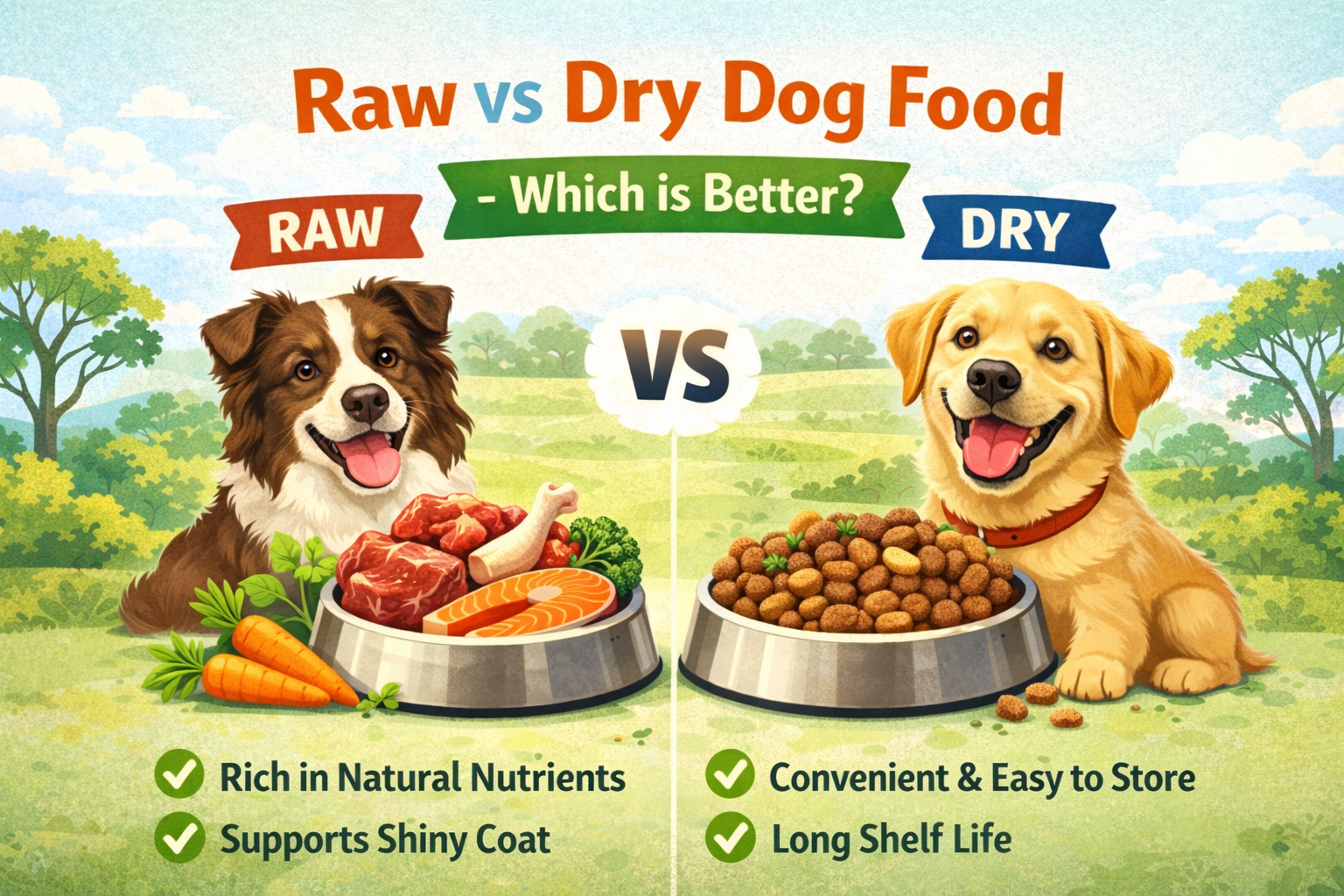
Choosing between raw and dry dog food depends on your lifestyle, budget, and your dog’s specific health needs. Raw dog food offers high moisture and bioavailable nutrients for better skin and dental health, while dry dog food (kibble) provides convenience, affordability, and shelf-stability. Both can be “complete and balanced” if they meet AAFCO standards.
Quick Facts: Raw vs Kibble Comparison
- Nutrient Density: Raw food typically contains more natural enzymes and unprocessed proteins than kibble.
- Convenience: Dry food is shelf-stable and easy to travel with; raw requires freezer space and safe handling.
- Hydration: Raw food is roughly 70% moisture, helping kidney health, while kibble is only 10% moisture.
- Cost: Dry dog food is generally more budget-friendly per feeding than premium raw diets.
- Dental Health: Raw bones and enzymes help reduce tartar, though some dental kibbles provide mechanical cleaning.
- Safety: Kibble has a lower risk of bacterial contamination (like Salmonella) compared to raw meat.
- Digestibility: Raw diets often lead to smaller, firmer stools because they contain fewer fillers.
Introduction: The Great Dog Food Debate
If you’ve spent any time in a pet store recently, you know that the “Raw vs Dry” debate is one of the hottest topics in the dog world. Every owner wants the best for their furry friend, but with so much conflicting information online, it’s easy to feel overwhelmed.
On one side, we have dry dog food (kibble), the reliable staple that has fed generations of dogs. On the other, raw feeding—a growing movement that aims to return dogs to their ancestral roots. In this guide, we will break down the raw vs dry dog food argument, looking at the pros, cons, and nutritional science to help you decide which bowl is right for your pup.
What Is Raw vs Dry Dog Food?
Dry dog food, commonly known as kibble, is made through a process called extrusion. Ingredients are mixed, cooked at high temperatures, and dried into crunchy pellets. This process makes the food shelf-stable and easy to serve.
Raw dog food (often called the BARF diet—Biologically Appropriate Raw Food) consists of uncooked meat, organs, edible bones, and sometimes fruits and vegetables. It can be prepared at home or purchased as “frozen raw” patties that are pre-balanced for convenience.
Why Is the Choice Important for Dogs?
The diet you choose acts as the biological foundation for your dog’s entire life. It affects everything from their energy levels and mood to the quality of their coat and the longevity of their joints.
Understanding raw vs kibble nutrition for dogs is essential because:
- Metabolism: Some dogs thrive on the high-fat/high-protein nature of raw, while others need the fiber and steady carbohydrates found in quality dry food.
- Health Conditions: Dogs with kidney issues may benefit from the moisture in raw, whereas dogs with certain immune compromises might be safer on a cooked dry diet.
- Owner Lifestyle: If you cannot commit to strict kitchen hygiene, raw feeding may pose a risk to your household.
What Ingredients Should You Look For?
Regardless of whether you choose raw feeding vs dry dog food, the quality of the ingredients is what matters most.
In Dry Dog Food (Kibble):
- Named Meat Meals: Look for “Chicken Meal” or “Lamb Meal” as the first ingredient. Avoid generic “Meat by-products.”
- Whole Grains or Complex Carbs: Brown rice, oats, or sweet potatoes provide steady energy.
- Natural Preservatives: Look for Vitamin E (Tocopherols) and Rosemary Extract.
In Raw Dog Food:
- Muscle Meat: Should make up the bulk of the diet (approx. 70%).
- Organ Meats: Liver, kidney, and heart provide essential vitamins (approx. 10%).
- Ground Bone: Essential for the correct calcium-to-phosphorus ratio (approx. 10%).
- Omega-3 Sources: Fish oil or flaxseed for skin health.
What Should You Avoid?
When doing a raw dog food comparison with dry food, watch out for these “red flags”:
- Artificial Colors/Flavors: Often found in cheap kibble to make it look appealing to humans.
- Excessive Fillers: Avoid foods where corn, wheat, or soy are the primary ingredients.
- Unbalanced Raw Mince: Never feed “pet mince” from the supermarket as a sole diet; it often lacks the calcium and organs needed for a complete meal.
- Sugar or Corn Syrup: Sometimes added to treats and low-grade kibble to increase palatability.
Are There Vet-Recommended Options?
The veterinary community is diverse in its opinions. However, most professionals agree on one thing: balance is key.
- For Kibble: Vets often recommend “Science-based” brands like Royal Canin or Hill’s Science Diet because they undergo rigorous feeding trials.
- For Raw: Vets who support raw feeding usually point toward “Complete and Balanced” commercial options like Big Dog BARF or Proudi. These brands ensure your dog isn’t missing vital micronutrients that often occur in poorly managed home-made raw diets.
Benefits of Raw Dog Food vs Kibble
Benefits of Raw Feeding:
- Superior Dental Hygiene: Natural enzymes in raw meat and the physical act of chewing bone help keep teeth clean.
- Smaller, Odorless Stools: Since the food is highly bioavailable, there is less waste.
- Healthy Skin: High levels of fresh fats lead to a shiny, soft coat.
Benefits of Dry Feeding:
- Cost-Effective: Generally cheaper per meal, especially for large breeds.
- Convenience: Can be left out for “free feeding” (though not always recommended) and doesn’t require refrigeration.
- Safety: The high-heat process kills most pathogens, making it safer for households with young children or the elderly.
Nutritional Breakdown: Raw vs Kibble
| Feature | Raw Diet (Patties) | Dry Food (Kibble) |
| Protein Quality | High (Unprocessed) | Moderate (Processed) |
| Moisture Content | ~70% | ~10% |
| Carbohydrates | Very Low (0-10%) | Moderate to High (30-50%) |
| Preservatives | None (Frozen) | Natural or Chemical |
| Preparation Time | 5-10 Minutes | 30 Seconds |
Recommended Products Section
Choosing a high-quality brand ensures your dog gets the best of whichever category you choose.
- For Raw (Australia): Big Dog BARF. A pioneer in the Australian market, offering balanced patties using local ingredients like kangaroo and turkey.
- For Dry (Australia): Black Hawk. An Australian-made premium kibble that uses real meat and emu oil for skin health.
- The “Middle Ground”: Lyka Pet Food. A fresh-cooked subscription service. It offers the whole-food benefits of raw but is gently cooked to eliminate bacterial concerns.
- For Puppies: Royal Canin Puppy. Specifically designed for the intense growth phase of young dogs with guaranteed mineral levels.
Affiliate Disclosure: This article may contain affiliate links. If you purchase through these links, we may earn a small commission at no extra cost to you.
Common Mistakes Dog Owners Make
- The “All-Meat” Trap: Feeding only muscle meat (like chicken breast) in a raw diet. This leads to severe bone demineralization due to a lack of calcium.
- Overfeeding Kibble: Dry food is very calorie-dense. Feeding just a little too much can quickly lead to obesity.
- Sudden Swapping: Switching from kibble to raw overnight can cause “digestive upset.” Always use a 7–10 day transition period.
- Microwaving Raw Bone: Never microwave raw food that contains bone; cooked bone becomes brittle and can pierce the digestive tract.
Safety Guidelines for Dogs and Humans
When discussing raw dog food safety vs kibble, hygiene is the top priority.
- The Stainless Steel Rule: Use stainless steel or ceramic bowls. Plastic bowls can develop scratches that harbor bacteria.
- Wash Up: Always wash your hands, counters, and utensils with hot, soapy water after handling raw meat.
- Proper Storage: Keep dry food in its original bag inside an airtight container. Keep raw food in the freezer and thaw only what you need for 24 hours.
- Check for Recalls: Regularly check the manufacturer’s website for any safety recalls.
FAQ
There is no “perfect” answer. Raw food is often more nutrient-dense and better for skin/teeth, while dry food is safer, more convenient, and more affordable.
Yes, many owners do “half and half.” However, some dogs have sensitive stomachs and may experience gas or diarrhea due to different digestion speeds.
Most standard kibbles do not. Only specific “dental” kibbles that are extra large and fibrous provide enough mechanical scraping to reduce tartar.
Commercial raw food is safe if handled with the same hygiene you use for your own dinner. Avoid raw feeding if your dog has a severely compromised immune system.
Because raw food is highly digestible, the dog’s body absorbs more of it. Stools are smaller and often turn white and crumble away after a day.
Sometimes. Many budget kibbles use corn or wheat, which are common allergens. Switching to a grain-free kibble or a raw diet often helps.
Start by choosing a “Complete and Balanced” commercial raw patty. Slowly replace 25% of their kibble with raw every few days until the transition is complete.
Conclusion: Finding the Best Diet for Your Dog
In the battle of raw vs dry dog food, the winner is the diet that your dog thrives on and you can afford to maintain consistently. If you want the convenience of dry food but the nutrition of raw, consider using high-quality kibble as a base and adding raw “toppers” like sardines or a raw egg.
Ultimately, the best diet is one that results in a happy dog with clear eyes, a shiny coat, and plenty of energy for walkies!
Medical Disclaimer: “This content is for informational purposes only and is not a substitute for professional veterinary advice, diagnosis, or treatment.”
[…] Read : Raw vs Dry Dog Food […]