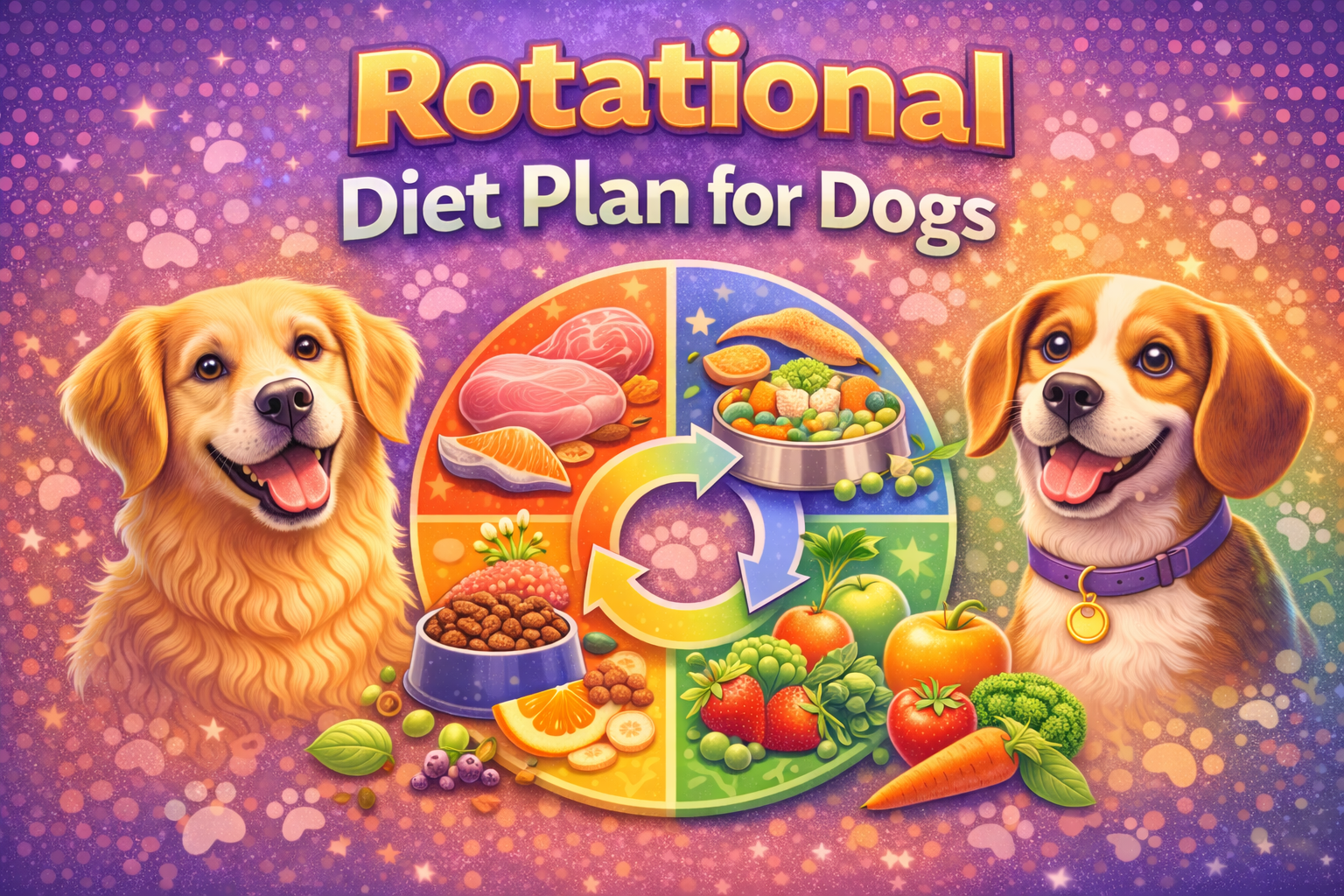
A rotational diet plan for dogs is a feeding strategy that involves periodically changing a dog’s primary protein sources, vegetable mixers, and food formats. By switching between different high-quality ingredients every few weeks or months, owners can provide a broader spectrum of amino acids, prevent food boredom, and support a more resilient digestive system.
Quick Facts: Rotating Dog Food Diet Plan
- Nutritional Variety: Rotating proteins like beef, chicken, and fish ensures your dog gets a diverse range of minerals and vitamins.
- Reduced Allergy Risk: Constant exposure to the same protein for years can lead to sensitivities; rotation may help prevent this.
- Gut Health: Introducing different safe ingredients can foster a more diverse and healthy gut microbiome.
- Combat Boredom: Even the most enthusiastic eaters can grow tired of the same kibble; rotation keeps mealtime exciting.
- Slow Transitions: Always introduce new foods gradually over 7–10 days to avoid stomach upset.
- Quality Check: Every food in the rotation should be “complete and balanced” according to AAFCO standards.
In the past, pet owners were often told to find one good dog food and stick with it for the animal’s entire life. However, modern nutritional science suggests that variety might be the “spice of life” for our canine companions as well. Implementing a rotational diet plan for dogs is a proactive way to mirror the natural dietary diversity that wild canines experience.
By moving away from a mono-protein diet, you can address potential nutritional gaps and keep your dog’s digestive system adaptable. Whether you rotate daily, weekly, or by the bag, a rotating dog food diet plan offers a flexible approach to health that fits almost any lifestyle and budget. This guide will walk you through the essential steps to starting a safe and effective rotation.
What Is a Rotational Diet Plan for Dogs?
A rotational diet plan for dogs is the practice of varying the food your dog eats rather than feeding a single formula indefinitely. This doesn’t mean feeding “table scraps,” but rather switching between different nutritionally complete recipes.
There are three main ways to handle rotation:
- Protein Rotation: Keeping the same brand but switching from a chicken formula to a beef or lamb formula.
- Texture/Format Rotation: Alternating between dry kibble, wet canned food, and gently cooked or freeze-dried meals.
- Brand Rotation: Switching between different reputable manufacturers to ensure no single “formulation bias” affects your dog’s long-term health.
Why Is It Important for Dogs?
A varied diet is important because no single ingredient is perfect. Every protein source and vegetable has a unique nutrient profile.
- Amino Acid Diversity: Chicken is high in certain amino acids, while beef is richer in others like iron and zinc. Rotation ensures a “safety net” of nutrition.
- Preventing Sensitivities: Many food allergies develop because a dog’s immune system is overexposed to a single protein over many years.
- Hydration Management: Rotating in wet or fresh foods helps increase water intake, which is vital for kidney and urinary health.
- Engagement: Mental stimulation is a key part of canine wellness. New smells and tastes provide a positive sensory experience twice a day.
Benefits of Rotational Feeding for Dogs
The benefits of rotational feeding for dogs extend from their nose down to their tail. Owners who switch to this method often report several positive changes:
- Stronger Digestion: Dogs on a rotational plan often develop a “cast iron stomach” because their gut enzymes are used to processing different ingredients.
- Healthier Skin and Coat: Different fish oils and fats from varying proteins lead to a more resilient skin barrier and a shinier coat.
- Better Weight Control: Rotating calorie-dense kibble with high-moisture fresh food makes it easier to keep your dog at a lean, healthy weight.
- Enthusiastic Eating: It eliminates the struggle of a “picky eater” who has grown bored of their standard meal.
What Ingredients Should You Look For?
When selecting the components for your rotational diet plan for dogs, look for high-quality, recognizable whole foods.
- Diverse Proteins: Aim for a mix. Try a poultry (chicken/turkey), a red meat (beef/lamb), and a fish (salmon/whitefish) throughout the year.
- Low-Glycemic Carbs: Look for lentils, chickpeas, or sweet potatoes instead of heavy corn or wheat fillers.
- Healthy Fats: Ensure your rotation includes sources of Omega-3s (like fish oil) and Omega-6s (like sunflower or chicken fat).
- Probiotics: Some foods include added beneficial bacteria which help the gut transition between recipes more smoothly.
What Should You Avoid?
Not all rotations are created equal. Avoid these common mistakes when picking new foods:
- Low-Quality Fillers: Don’t rotate into a “budget” brand full of “meat by-products” just for the sake of variety.
- Sudden “Cold Turkey” Switches: Never swap 100% of the food in one day. This is the fastest way to cause diarrhea.
- Exotic Proteins (Unless Needed): Save “novel” proteins like venison, kangaroo, or alligator for cases where a vet needs to treat a specific allergy.
- Incomplete Recipes: Ensure every food in your rotation is labeled “complete and balanced.” Toppers alone are not a meal.
Comparison: Rotation Styles
| Method | Frequency | Best For… |
| By the Bag | Every 1–3 months | Beginners; easy to manage and store. |
| Weekly | Every 7 days | Owners who want maximum variety without daily prep. |
| The “Mixer” | Daily | Dogs who enjoy different toppers added to a steady base. |
Nutritional Breakdown: Balancing the Mix
When you rotate, you want to maintain a consistent nutritional baseline. If your dog thrives on a diet that is roughly 25% protein and 15% fat, try to choose rotating recipes that stay within those ranges to keep their energy levels stable.
| Ingredient Type | Importance in Rotation |
| Muscle Meat | Primary source of amino acids. |
| Organ Meats | Provides concentrated vitamins (A, B12). |
| Veggies/Fiber | Regulates blood sugar and gut transit. |
| Oils/Fats | Supports brain and skin health. |
Recommended Products Section
Affiliate Disclosure: This article may contain affiliate links. If you purchase through these links, we may earn a small commission at no extra cost to you.
To start a successful rotational diet plan for dogs, you need a few high-quality staples. We recommend choosing products that have clear, transparent ingredient sourcing.
- High-Quality Dry Kibble: Choose a brand that offers several “flavor” variations (e.g., Chicken & Rice, Salmon & Sweet Potato) within the same product line. This makes transitioning much easier.
- Freeze-Dried Raw Toppers: These are perfect for adding a “burst” of different protein without having to buy a whole new bag of food.
- Digestive Enzymes & Probiotics: Adding a daily probiotic powder can help your dog’s gut handle the change in ingredients with ease.
- Canned Wet Food: A few cans of high-quality wet food can be rotated in 2–3 times a week to boost hydration and flavor.
Common Mistakes Dog Owners Make
- Ignoring the Stool: Your dog’s “output” is the best health indicator. If a specific protein causes loose stools every time, remove it from the rotation.
- Over-complicating: You don’t need 10 different brands. Rotating between 2 or 3 high-quality recipes is more than enough to see the benefits.
- Feeding Too Much: Different proteins have different calorie counts. Always check the “kcal/cup” on the new bag to adjust your portions.
- Forgetting the “Base”: If you use a fresh-food base mix, make sure the meat you add is lean to avoid upsetting the fat balance.
Safety Guidelines & Vet Recommendations
A rotating dog food diet plan is generally very safe for healthy adult dogs, but caution is needed for some.
- Gradual Transition: Use the “7-Day Rule.” Days 1–2: 75% old, 25% new. Days 3–4: 50/50. Days 5–6: 25% old, 75% new. Day 7: 100% new.
- Medical Consultation: If your dog has a history of pancreatitis, IBD, or severe allergies, do not start a rotation without speaking to a professional first.
- Monitor Weight: Weigh your dog every two weeks when starting a new rotation to ensure they aren’t gaining or losing weight unintentionally.
- Keep a Food Log: Note which proteins your dog likes best and which ones seem to give them the most energy.
FAQ Section
Most healthy adult dogs do very well. However, puppies and dogs with chronic digestive issues should stay on a more consistent, specific growth or therapeutic formula.
The most common method is “by the bag.” When one bag is almost empty, start the transition into the next protein source.
Actually, it usually does the opposite! It prevents them from becoming “hooked” on one specific flavor and makes them more open to new, healthy foods.
You don’t have to, but staying within a single brand’s “product family” (like a Limited Ingredient line) often makes the transition easier on the stomach.
Not necessarily. You are still feeding the same amount of food; you are just buying different varieties instead of the same one every time.
If your dog currently eats chicken, turkey or beef are usually the easiest “next steps” in a rotation.
Medical Disclaimer: “This content is for informational purposes only and is not a substitute for professional veterinary advice, diagnosis, or treatment.”