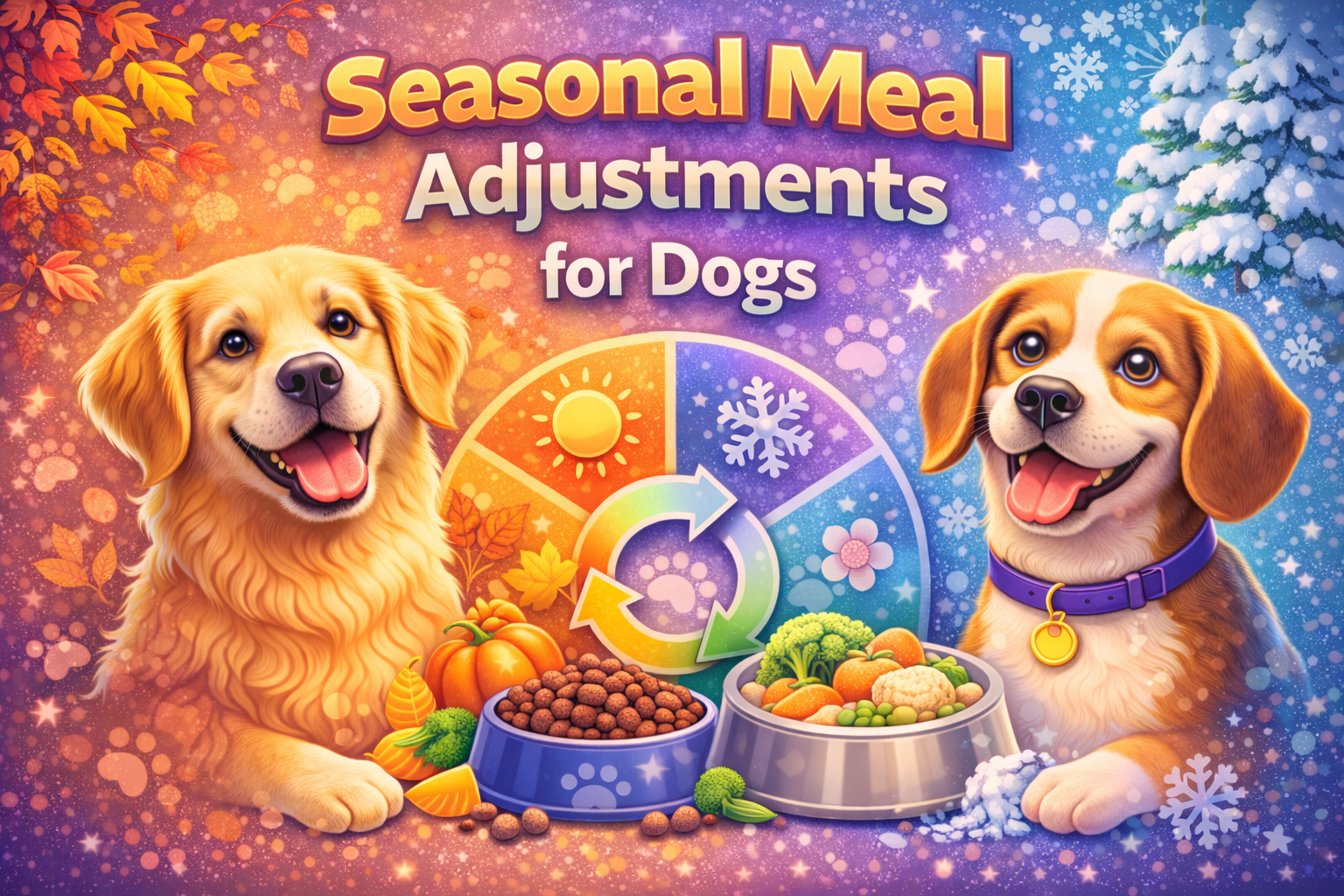
Seasonal meal adjustments for dogs involve modifying a dog’s caloric intake, hydration levels, and nutrient ratios to match changes in temperature and activity. In winter, active dogs may require more calories for warmth, while summer adjustments prioritize high-moisture foods and cooling ingredients to prevent dehydration and heat-related stress.
Quick Facts: Seasonal Dog Feeding Tips
- Calorie Shifts: Outdoor dogs often need more calories in winter to maintain body temperature, while sedentary indoor dogs may need fewer.
- Hydration Focus: Summer requires a significant increase in water-rich toppers like cucumber or seedless watermelon.
- Activity Levels: Adjust portions if your dog is less active during extreme heat or snowy conditions.
- Winter Skin Care: Adding Omega-3 fatty acids in winter helps combat dry, itchy skin caused by indoor heating.
- Safe Summer Treats: Frozen low-sodium broth or plain yogurt “pupsicles” help dogs cool down.
- Gradual Changes: Always transition between seasonal meal plans over 7–10 days to avoid digestive upset.
As the seasons change, so do our dogs’ physical needs. We swap our summer t-shirts for heavy winter coats, and our canine companions experience similar shifts in their metabolism and energy expenditure. Understanding how to implement seasonal meal adjustments for dogs is a proactive way to ensure your pet remains comfortable and healthy year-round.
Many owners assume that a “one-size-fits-all” diet works from January through December. However, environmental factors like humidity, freezing temperatures, and even seasonal allergies can change what your dog needs in their bowl. This guide will help you navigate dog diet changes by season with simple, practical steps.
What Is Seasonal Meal Adjustment for Dogs?
Seasonal meal adjustments for dogs are intentional changes made to a dog’s diet to accommodate the environmental challenges of different times of year. This includes adjusting total calories, moisture content, and specific functional ingredients.
For example, a weekly dog meal plan in July might emphasize hydration and light proteins, whereas a January plan might include slightly higher healthy fat content for energy. These adjustments help the body regulate internal temperature and maintain a healthy coat regardless of the weather.
Why Is It Important for Dogs?
Adapting your dog’s food to the season supports their natural biological rhythms.
- Metabolic Support: In cold weather, the body burns more energy just to keep the core temperature stable.
- Skin and Coat Health: Seasonal shedding and dry air can leave skin vulnerable. Targeted nutrients help maintain the skin barrier.
- Weight Management: Dogs that go for fewer walks in the rain or snow are at a higher risk of winter weight gain if their portions aren’t adjusted.
- Hydration Safety: Summer heat increases the risk of dehydration, making moisture-rich foods a necessity rather than a luxury.
Summer and Winter Dog Feeding Tips
Summer Adjustments (Focus: Cooling and Hydration)
When the temperature rises, dogs often experience a natural decrease in appetite.
- Moisture-Rich Toppers: Add water, goats’ milk, or bone broth to dry kibble.
- Cooling Foods: In traditional food energetics, proteins like duck, rabbit, or whitefish are considered “cooling,” whereas chicken and lamb are “warming.”
- Small, Frequent Meals: Large meals can increase internal body heat during digestion; smaller portions are easier to process in the heat.
Winter Adjustments (Focus: Energy and Protection)
Cold air and indoor heaters present different challenges.
- Healthy Fats: A little extra fish oil or coconut oil can provide the dense energy needed to stay warm and keep skin from cracking.
- Warm Serving Temps: Slightly warming your dog’s food (to body temperature, never hot) can make it more palatable and comforting.
- Fiber Balance: If winter activity levels drop, increasing fiber with green beans can help your dog feel full while consuming fewer calories.
What Ingredients Should You Look For?
When making seasonal meal adjustments for dogs, look for these seasonally appropriate additions:
- Summer Gems: Cucumber, celery, seedless watermelon (all high in water), and blueberries (packed with antioxidants to fight sun-induced oxidative stress).
- Winter Essentials: Pumpkin (for digestive health), Sardines in water (high in Omega-3s for skin), and sweet potatoes (complex carbs for steady energy).
- Year-Round Basics: High-quality animal proteins should always be the primary ingredient, regardless of the month.
What Should You Avoid?
Regardless of the season, some items are always off-limits:
- High-Salt Broths: Especially in summer, salt can lead to faster dehydration.
- Excessive “Winter Fat”: While some extra fat is good for outdoor working dogs, avoid giving fatty table scraps like ham or bacon, which can cause pancreatitis.
- Ice Cubes for Gulping: While ice is generally safe, dogs that “bolt” or swallow large ice chunks too quickly may experience dental issues or minor choking hazards. Always supervise.
Comparison: Seasonal Needs At-A-Glance
| Factor | Summer Needs | Winter Needs |
| Primary Goal | Cooling & Hydration | Warmth & Skin Protection |
| Calorie Level | Usually Lower (unless swimming) | Usually Higher (if outdoors) |
| Best Toppers | Cucumber, Melon, Yogurt | Pumpkin, Fish Oil, Egg |
| Hydration Level | Very High | Normal to High |
Common Mistakes Dog Owners Make
- Forgetting to Count Summer Treats: Those extra “pupsicles” and frozen treats add up. If you give frozen treats, reduce the size of the dinner bowl.
- Overfeeding Sedentary Dogs: Many owners think dogs need “winter bulk,” but if your dog spends 23 hours a day on a heated sofa, they actually need fewer calories than in the active summer months.
- Ignoring Water Bowls: In winter, indoor air is very dry. Dogs need just as much fresh water as they do in the summer, even if they aren’t “panting.”
- Sudden Dietary Flips: Don’t switch brands or proteins overnight just because the calendar changed. Mix the “seasonal” ingredients in gradually.
Recommended Products
Affiliate Disclosure: This article may contain affiliate links. If you purchase through these links, we may earn a small commission at no extra cost to you.
To help manage seasonal meal adjustments for dogs, consider these quality-focused additions:
- Hydration Boosters: Look for “Human Grade” bone broths specifically formulated for dogs (no onions or salt). These are perfect for summer hydration.
- Omega-3 Supplements: A high-quality, AAFCO-compliant salmon oil is a winter must-have for dry skin.
- Lick Mats: These are great for freezing yogurt or purees in the summer, providing a cooling activity that reduces anxiety.
- Food Dehydrators: If you want to make your own seasonal treats (like dried sweet potato for winter or dried apple for summer), a simple home dehydrator is a great investment.
Safety Guidelines & Vet Recommendations
Before changing your dog’s feeding schedule, keep these safety points in mind:
- Monitor Body Condition: Use a body condition score chart monthly. If you can’t feel your dog’s ribs, it’s time to trim back the calories, regardless of the season.
- Vet Consultation: If your dog has a history of allergies, seasonal changes might trigger skin flare-ups. Talk to your vet about adding specific supplements like Quercetin or local honey.
- Climate Matters: A dog in a tropical climate won’t need “winter adjustments” the same way a dog in a snowy climate will. Adjust based on your local weather, not just the month.
FAQ Section
Only if your dog spends significant time outdoors or is highly active in the snow. Most indoor pets actually need slightly less food in winter due to lower activity levels.
Add moisture to their food, provide multiple water stations, and offer frozen “pupsicles” made from water and a few pieces of fruit.
While diet isn’t a cure, anti-inflammatory foods like fish oil and certain antioxidants can support the skin’s natural defenses during allergy season.
Yes, frozen treats are safe and help lower body temperature. However, the main meal should usually be served at room temperature to ensure proper digestion.
Many dogs naturally eat less when it is very hot. As long as they aren’t losing weight too quickly or acting lethargic, a slight drop in appetite is often normal.
Cooked squash or pumpkin is excellent. It’s filling, nutrient-dense, and helps maintain a healthy gut during the less active months.
Medical Disclaimer: “This content is for informational purposes only and is not a substitute for professional veterinary advice, diagnosis, or treatment.”