
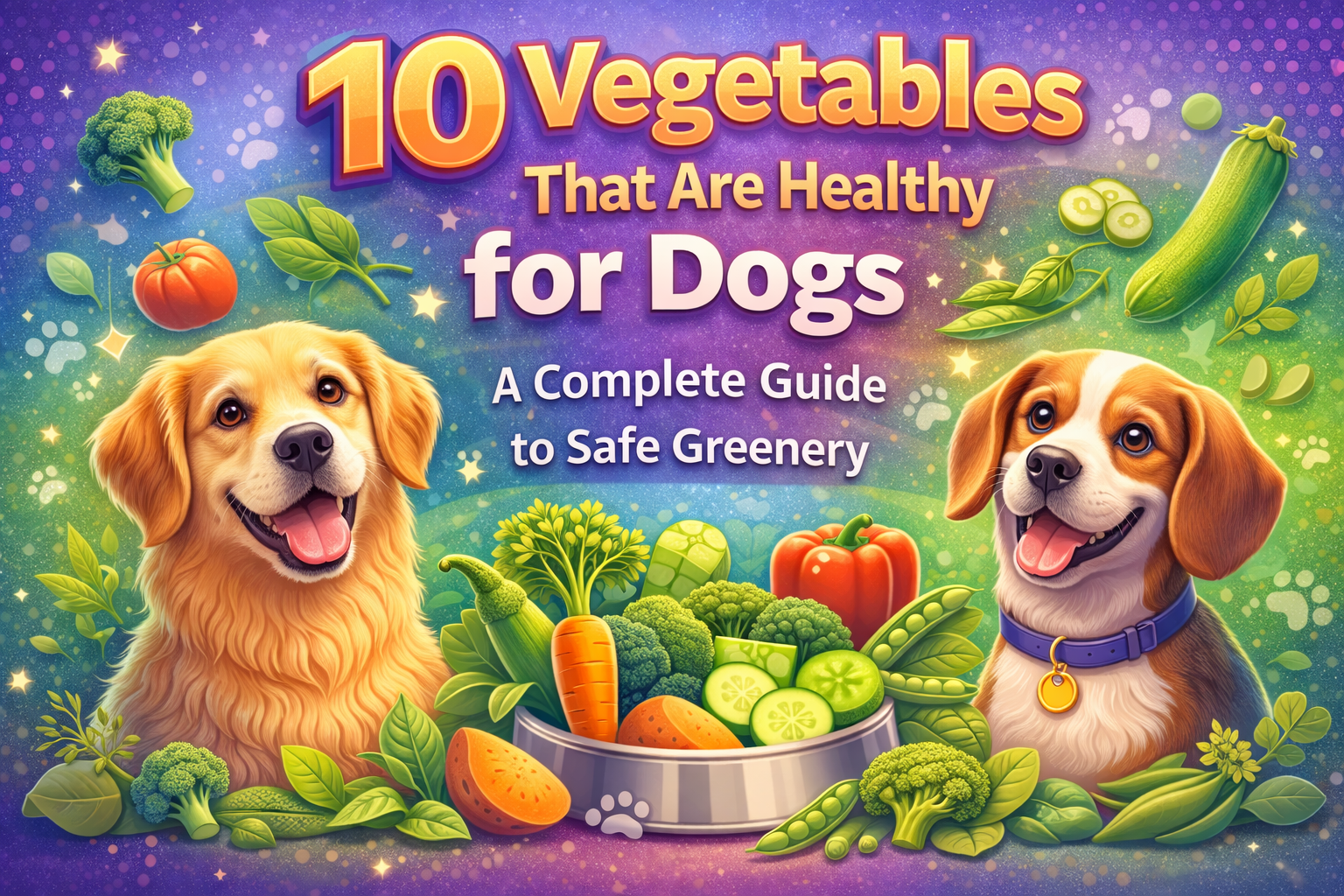
Many vegetables are healthy for dogs and can provide essential vitamins, minerals, and fiber to supplement their diet. Safe options include carrots, green beans, broccoli, spinach, and sweet potatoes. These low-calorie snacks support digestion, boost immune health, and improve coat quality when served in moderation and prepared correctly.
Quick Facts: Veggies for Dogs
- Low-Calorie Treats: Most vegetables are excellent for weight management compared to processed biscuits.
- Fiber Boost: Veggies like pumpkin and green beans help regulate digestion.
- Hydration: High-water vegetables like cucumbers help keep dogs hydrated in summer.
- Preparation Matters: Most vegetables should be steamed or pureed for better nutrient absorption.
- The 10% Rule: Treats (including vegetables) should never exceed 10% of your dog’s daily calorie intake.
- Avoid Alliums: Never feed dogs onions, garlic, leeks, or chives, as these are toxic.
Why Are Vegetables Important for Dogs?
While dogs are primarily scavenging carnivores, they benefit significantly from the phytonutrients found in plants. In a modern canine diet, vegetables serve as functional toppers. They provide antioxidants that fight free radicals, which can help support long-term cellular health.
Including safe vegetables in your dog’s bowl offers:
- Micronutrient Diversity: Vitamins A, C, and K that might be processed out of some kibbles.
- Mental Stimulation: Crunchy textures like raw carrots provide a satisfying chew.
- Satiety: The high fiber content helps “fill up” dogs who are constantly hungry without adding excessive calories.
10 Best Vegetables Dogs Can Eat
1. Carrots
Carrots are perhaps the most popular vegetable for dogs. They are rich in beta-carotene, which the body converts into Vitamin A. This is essential for eye health and a strong immune system.
- How to serve: Raw chunks for dental health or steamed/pureed for maximum nutrient absorption.
2. Green Beans
If your dog needs to lose a little weight, green beans are the “gold standard.” They are filling and very low in calories.
- How to serve: Chopped, steamed, or even frozen as a crunchy summer treat.
3. Broccoli
Broccoli is a nutritional powerhouse containing Vitamin C and Vitamin K. However, it should be given in small amounts because the florets contain isothiocyanates, which can cause gastric irritation in some dogs if eaten in excess.
- How to serve: Steamed stalks and florets.
4. Sweet Potatoes
Unlike white potatoes, sweet potatoes are packed with fiber and Vitamin B6. They are great for energy but are higher in sugar, so use them sparingly.
- How to serve: Must be cooked (roasted or steamed) and the skin removed for easier digestion.
5. Spinach
Spinach contains high levels of iron and antioxidants. While it is healthy, it also contains oxalates, which can interfere with calcium absorption. It should only be fed in small, occasional portions.
- How to serve: Steamed or blanched to reduce oxalates.
6. Cucumber
Cucumbers are nearly 96% water. They are the perfect snack for overweight dogs or for hydration after a long walk.
- How to serve: Sliced into bite-sized pieces to prevent choking.
7. Celery
Celery is rich in Vitamins A, B, and C. Some owners use it to help freshen “doggy breath.” It is very low in fat and cholesterol.
- How to serve: Cut into small, manageable sticks.
8. Pumpkin (Plain)
Pumpkin is famous for its ability to soothe upset stomachs. It helps with both constipation and diarrhea due to its unique fiber profile.
- How to serve: Cooked, mashed, or canned (ensure it is not pumpkin pie mix with spices).
9. Peas
Sugar snap peas, garden peas, and English peas are all safe for dogs. They provide a nice protein boost and are easy to mix into regular meals.
- How to serve: Fresh or frozen, but avoid canned peas which often contain high sodium.
10. Brussels Sprouts
These “mini cabbages” are loaded with nutrients and antioxidants. Be warned: much like in humans, they can cause significant flatulence in dogs.
- How to serve: Fully cooked and in very small portions.
Nutritional Comparison Table
| Vegetable | Primary Benefit | Best Preparation | Calorie Level |
| Carrots | Eye Health/Vision | Raw or Steamed | Low |
| Green Beans | Weight Management | Steamed | Very Low |
| Sweet Potato | Digestive Fiber | Roasted/Mashed | Moderate |
| Cucumber | Hydration | Raw Slices | Very Low |
| Broccoli | Immune Support | Steamed | Low |
Safety Guidelines: How to Feed Veggies Safely
When introducing natural vegetables for dogs, safety should be your first priority. Even “safe” foods can cause issues if handled incorrectly.
1. Size and Choking Hazards
Always cut vegetables into bite-sized pieces. Hard veggies like carrots or broccoli stalks can become lodged in a dog’s throat if they try to swallow them whole.
2. Cooking Methods
Avoid using butter, salt, onions, or garlic when preparing vegetables for your dog. Steaming is the best method as it softens the plant cell walls (making them easier to digest) without leaching out all the vitamins.
3. The “Slow Start” Rule
Introduce one new vegetable at a time. This allows you to monitor your dog for any signs of an allergic reaction or digestive upset (like gas or loose stools).
Common Mistakes Dog Owners Make
- Feeding Canned Veggies: Most canned vegetables are stored in brine (saltwater). High sodium is dangerous for dogs. Always choose fresh or frozen.
- Using Seasonings: Onions and garlic powder are toxic to dogs. Never share veggies that have been seasoned for your own dinner.
- Ignoring the Skin: For vegetables like squash or sweet potatoes, the skin can be tough to digest and may cause a blockage in smaller dogs.
- Overfeeding: Even healthy vegetables have calories. If you feed too many, you might accidentally unbalance their main diet.
Recommended Products Section
While fresh vegetables are excellent, sometimes a balanced commercial topper or treat is more convenient for busy owners. Look for products that prioritize transparency and whole-food ingredients.
- Dehydrated Veggie Mixes: Brands like The Honest Kitchen offer AAFCO-compliant base mixes. These are great because they use human-grade, gently dehydrated vegetables that retain most of their nutrients.
- Freeze-Dried Vegetable Treats: Look for single-ingredient treats (like freeze-dried sweet potato). These offer the crunch of a biscuit without the fillers or grain by-products.
- Wet Food Toppers: Quality brands often include visible chunks of peas and carrots in their formulas. Ensure these products list a real protein source (like beef or chicken) as the first ingredient.
Affiliate Disclosure: This article may contain affiliate links. If you purchase through these links, we may earn a small commission at no extra cost to you.
Frequently Asked Questions
Yes, most safe vegetables for dogs are also safe for puppies. However, introduce them in very small amounts to ensure their developing digestive systems can handle the fiber.
Yes, but in moderation. Raw broccoli is harder to digest and can cause gas. Steaming is generally preferred for canine digestion.
Avoid onions, garlic, leeks, chives, and mushrooms found in the wild. These can cause red blood cell damage or severe poisoning.
Absolutely. Frozen peas or green beans make excellent, cooling treats during hot weather. Just check the label to ensure no salt has been added.
For a medium-sized dog, two or three baby carrots are usually sufficient. Large amounts of Vitamin A over a long period can lead to toxicity, though this is rare with food sources.
For veggies like cucumbers or carrots, peeling isn’t necessary but washing is vital. For thick-skinned vegetables like squash, peeling is recommended.
Summary & Vet Recommendations
Before making significant changes to your dog’s diet, it is always a good idea to have a quick chat with your veterinarian. Every dog is an individual; what works for a Golden Retriever might not sit well with a French Bulldog.
In general, vets recommend vegetables as a healthy alternative to high-fat treats. If your dog is prone to kidney stones or has specific thyroid issues, your vet might advise you to avoid certain vegetables like spinach or cabbage.
Medical Disclaimer: This content is for informational purposes only and is not a substitute for professional veterinary advice, diagnosis, or treatment.

[…] Read : Healthy Vegetables for Dogs […]
[…] 10 Vegetables That Are Healthy for Dogs: A Complete Guide to Safe Greenery […]