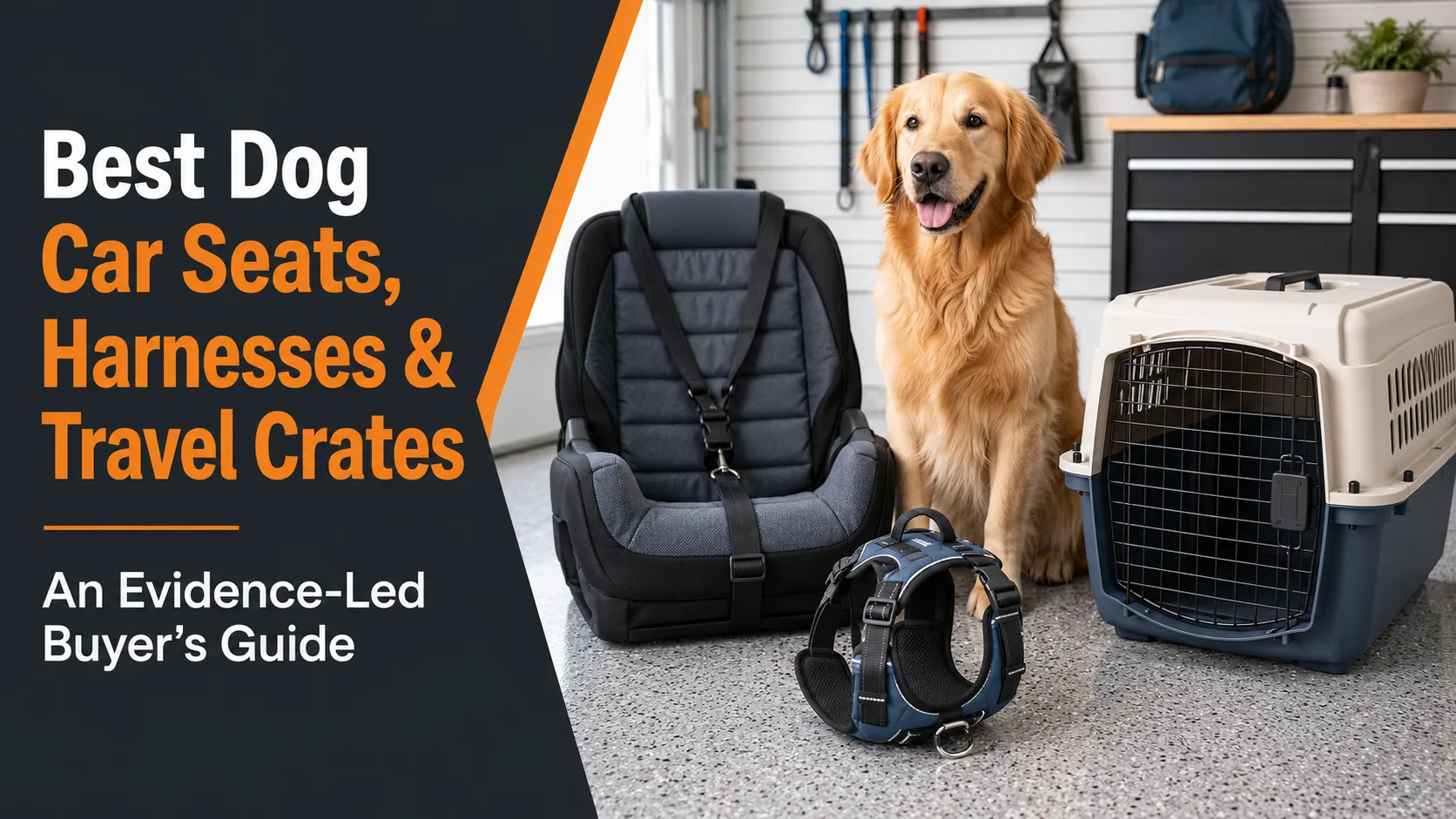
Quick answer: The safest choice is not a generic booster seat; it is a restraint system independently certified for the dog’s size and installed exactly as tested. Current Center for Pet Safety listings include selected harnesses, small-dog carriers, and travel kennels. Verify the exact model and size on the current certification page before buying, because a brand may sell both certified and non-certified products.
Many listings use ‘crash tested’ without naming a standard, laboratory, speed, test protocol, or passing result. Marketing language is not the same as independent certification.
This buyer’s guide uses current certification and official product information as the first filter. Healthy Dogs Meals should not claim hands-on testing unless the editorial team actually obtains, fits, installs, and tests the products in a documented methodology.
How We Selected Products
- Current appearance in the Center for Pet Safety certified-product directory for the exact model/size where applicable.
- A clear restraint category: safety harness, enclosed carrier, or anchored travel kennel.
- Published sizing and installation information from the manufacturer.
- Ability to fit the dog without restricting breathing, movement, or safe posture.
- Vehicle compatibility and a realistic installation plan.
- No reliance on star ratings, affiliate commission, or the phrase ‘airline approved’ as proof of crash protection.
Best Current Options by Use Case
Certification lists change. Before publication and before a reader buys, confirm the exact entry at Center for Pet Safety. A product family’s other sizes or accessories are not automatically covered.
| Product/use case | Why it makes the shortlist | Verify before purchase |
| Sleepypod Clickit Sport Plus harness | Certified harness option for dogs within the listed size range | Exact size, fit, belt routing, current CPS listing |
| Sleepypod Clickit Range harness | Alternative geometry for some deep- or barrel-chested dogs | Model/size certification and return policy |
| Gunner G1 kennel | Selected sizes appear in current CPS certified directory | Size, kennel weight, strength-rated tie-downs, vehicle clearance |
| Lucky Duck Lucky Kennel | Selected kennel sizes are listed by CPS | Exact model/size and anchoring requirements |
| Cabela’s GunDog Kennel | Intermediate and large entries appear in CPS directory | Current availability, dimensions, tie-down plan |
| Away Pet Carrier | Certified carrier option for suitable small pets | Pet fit, vehicle attachment, airline dimensions separately |
| Diggs Passenger Carrier | Enclosed small-pet travel option on CPS list | Current certified configuration and size limit |
| PawsInCar Expandable Pet Carrier | Current CPS-listed small-pet carrier | Certified travel mode vs expanded comfort mode |
Harness vs Carrier vs Crate
| Type | Advantages | Trade-offs |
| Harness | Compact, dog remains on rear seat, easier daily use | Strict size/fit limits; belt routing matters; not for every body shape |
| Carrier | Enclosed small-dog containment; portable | Space and posture limits; airline and vehicle criteria differ |
| Crate | Strong containment and separation | Heavy, expensive, large; needs verified anchoring and vehicle space |
| Booster seat | Visibility and comfort for some small dogs | May not provide crash protection unless exact product is certified |
Measure the Dog Correctly
Follow the manufacturer’s measurement points, not clothing size or breed. Weigh the dog accurately and measure chest girth, neck, back, standing height, and body length as instructed. For a crate or carrier, the dog must fit according to the travel use and rules; bigger is not always safer in a collision.
If the dog falls between sizes, contact the manufacturer. Do not modify straps, add an extension tether, or substitute hardware unless the certified instructions explicitly allow it.
Vehicle Installation Checklist
- Read the restraint and vehicle manuals completely.
- Use the rear seat or verified cargo installation specified by the product; stay clear of airbags.
- Route belts and anchors exactly as instructed without twists or improvised clips.
- For crates, confirm anchor-point strength and use the required strength-rated straps.
- Check door clearance, ventilation, visibility, and whether passengers can sit safely.
- Perform a stationary fit session and short calm drives before a long trip.
Why Extension Tethers Are a Red Flag
A long tether allows more movement before restraint, increasing the distance and force involved. The Center for Pet Safety warns that extension tethers and zipline-style products can increase spinal and orthopedic injury risk and can cancel the intended protection of a certified harness.
Never attach a car tether to a collar. Use only the certified configuration for the exact product.
Comfort and Behavior Still Matter
Safety equipment that a dog panics in will be difficult to use correctly. Condition the dog gradually with food, short door closures or fastening, stationary car sessions, and brief drives.
Watch for drooling, yawning, whining, vomiting, frantic scratching, freezing, or refusal to enter. These may indicate motion sickness, fear, poor fit, overheating, or pain.
What ‘Airline Approved’ Does and Does Not Mean
There is no single universal carrier that every airline accepts. Cabin dimensions vary by airline, aircraft, route, and seat. A carrier suitable for air travel is not automatically certified for vehicle crash protection, and a crash-certified car carrier may not fit airline requirements.
Confirm both uses separately with the exact airline and current product documentation.
Buying Mistakes to Avoid
- Buying by breed label instead of measuring the individual dog.
- Assuming any product from a certified brand is certified.
- Choosing the largest crate possible without considering crash excursion and anchoring.
- Connecting a certified harness to an untested extension tether.
- Placing the dog in front of an active airbag.
- Leaving installation until departure day.
- Keeping equipment after a collision without following manufacturer replacement guidance.
Editorial Update Checklist
- Recheck the CPS directory and every official product page.
- Record date checked, certified sizes, and any removed or newly listed products.
- Remove prices from evergreen copy or date-stamp them; prices change rapidly.
- Do not use ‘best’ as a claim of hands-on superiority—explain the selection methodology.
- Add affiliate links only after the neutral shortlist is final.
Frequently Asked Questions
Are dog booster seats safe?
Some may improve comfort, but do not assume crash protection. Look for current independent certification for the exact product and configuration.
Is a harness safer than a crate?
It depends on the certified product, dog fit, vehicle, and installation. Both can be appropriate when independently tested and used exactly as instructed.
What does crash tested mean?
By itself, very little. Look for the test protocol, independent body, exact model/size, passing criteria, and current certification.
Can I attach a car tether to my dog’s collar?
No. Collision forces on the neck can be catastrophic. Use the certified harness or carrier/crate configuration only.
How tight should a car harness be?
Follow the manufacturer’s fit test exactly. It should be secure without restricting breathing or causing rubbing, and all straps should lie as instructed.
Can one carrier work for car and plane travel?
Sometimes, but each use has different requirements. Verify vehicle certification and airline dimensions/policy separately.
Should I replace a restraint after a crash?
Follow the manufacturer’s crash-replacement guidance. Even without visible damage, contact the manufacturer and do not assume continued safety.
Medical and behavior disclaimer: This guide is educational and does not replace veterinary, airline, government, legal, or vehicle-manufacturer advice. Pet-entry rules, health-certificate windows, airline policies, weather embargoes, and product certifications can change. Verify every requirement directly with the airline, destination authority, your veterinarian, and the product manufacturer before travel. Never give sedatives, antihistamines, or anti-nausea medication unless your veterinarian has prescribed the specific drug and dose for your dog.
Affiliate disclosure: This article may contain affiliate links. If a reader buys through a link, Healthy Dogs Meals may earn a commission at no extra cost to the reader. Product inclusion should be based on documented safety, fit, function, value, and current availability—not commission rate. The editorial team should re-check model names, certifications, sizing, and prices before publication.