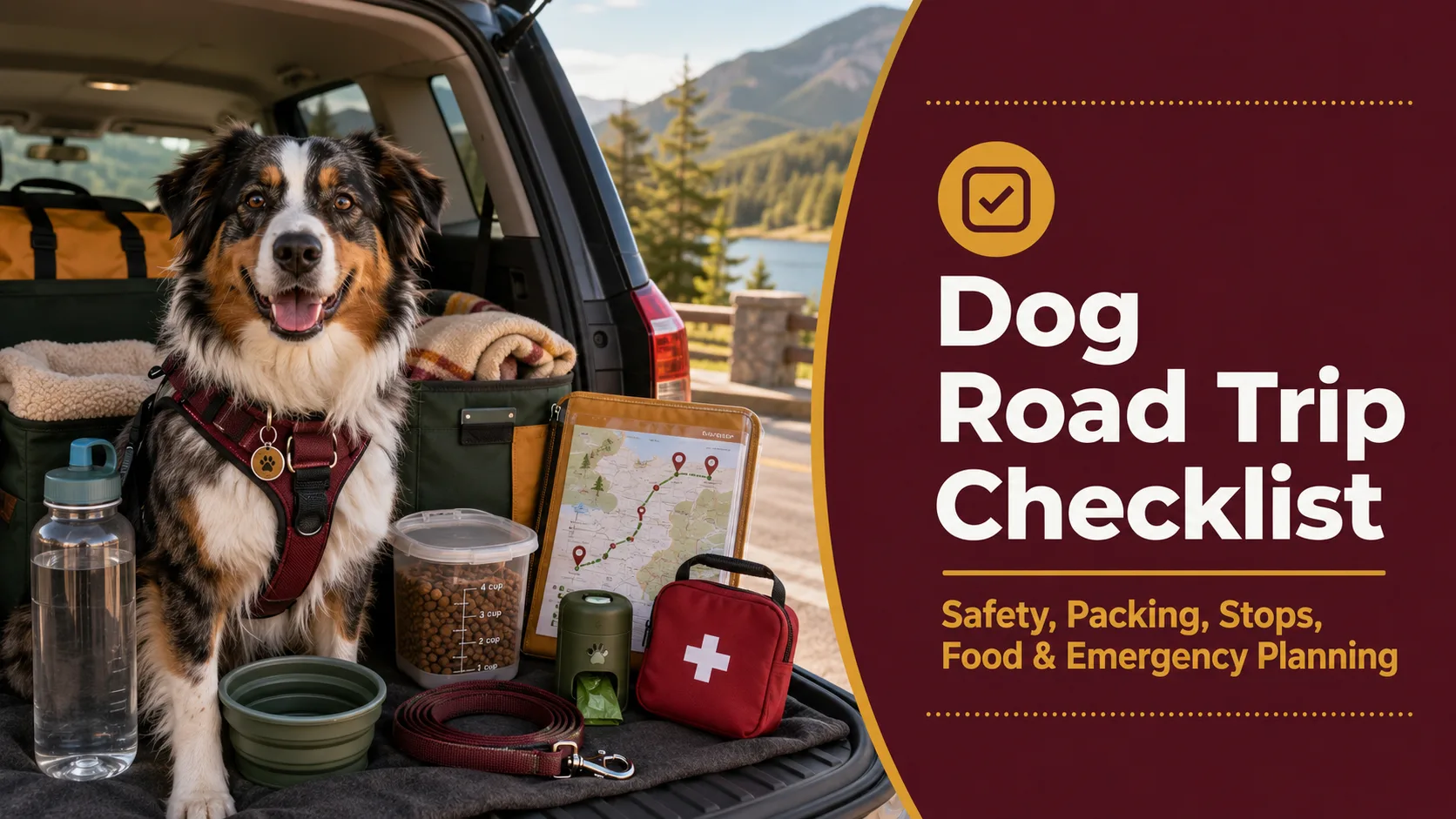
Quick answer: For a dog road trip, pack a certified restraint or secured crate, ID and records, familiar measured food, water, medications, leads and backup gear, waste and cleaning supplies, bedding, emergency contacts, and a recent photo. Plan safe breaks, pet-friendly lodging, weather, veterinary care, and a rule that the dog is secured before any vehicle door opens.
A packing list is useful only when connected to a route and routine. Water in the boot does not help during a motorway delay if it cannot be reached. A hotel marked pet friendly may still prohibit unattended pets or apply weight and breed rules.
Use this checklist twice: once during planning, and again at the vehicle before departure.
One Month Before
- Ask the veterinarian whether health, medication, vaccines, parasite prevention, and motion sickness are ready for the route.
- Confirm accommodation rules, fees, pet limits, restricted areas, and emergency evacuation procedures.
- Map safe break locations and veterinary clinics; save details offline.
- Condition the dog to the exact restraint or crate and progressively longer drives.
- Update microchip registration and order a current ID tag.
Master Packing List
| Pack | Specific items | Where to keep it |
| Safety | Certified harness/carrier/crate, strength-rated straps, lead, backup harness | Installed and tested |
| Identity | ID tag, microchip number, recent photo, records, permits | Phone + paper folder |
| Food | Familiar food, measured bags, safe treats, bowls, can opener | Accessible dry container |
| Water | Drinking water, bottles, bowl, cleaning water | Cabin-accessible |
| Health | Labeled medication, dosing sheet, first aid, veterinarian contacts | Temperature-safe bag |
| Comfort | Bedding, mat, safe chew, towel, shade plan | Dog area |
| Clean-up | Waste bags, paper towels, enzymatic cleaner, spare liners | Easy-access kit |
Vehicle Setup
- Install the certified restraint or crate exactly as instructed.
- Confirm airflow without placing the dog in front of an active airbag or unsecured luggage.
- Separate luggage so it cannot strike or crush the dog during braking.
- Place water, lead, waste bags, medication, and records where an adult can reach them safely when stopped.
- Test doors, child locks, windows, and the rule that the dog is clipped before an opening.
Departure-Day Routine
Give the dog time to toilet, sniff, and move before loading. Follow the familiar feeding and medication plan agreed with the veterinarian. Avoid a new chew, rich meal, or supplement on the morning of travel.
Load the dog last after the vehicle is ready and climate is safe. Photograph the installed restraint and packed medication list; this helps another caregiver understand the setup.
Break Checklist
- Stop in a safe low-traffic location before the dog becomes desperate.
- Attach and check the lead before opening any vehicle door or crate.
- Offer water and allow toileting and sniffing; inspect paws and gait.
- Check harness rubbing, crate position, anchor straps, bedding, temperature, and breathing.
- Never leave the dog unattended while people use restrooms; rotate adults.
Food and Water on the Road
Pre-measure meals into labeled bags or containers and carry extra for delays. Keep food in the original packaging or photograph the lot and label details in case of a recall or emergency.
Use the dog’s regular water when practical or introduce travel water gradually. Sudden excessive drinking, inability to keep water down, repeated vomiting, or lethargy needs veterinary advice.
Weather and Route Changes
Check heat, cold, storms, smoke, road closures, and power outages. A pet-friendly route can become unsafe when a breakdown removes climate control. Carry supplies, but never use cooling gear to justify leaving a dog in a parked vehicle.
Have a backup hotel and know which roadside services allow dogs. Keep the fuel level conservative so a detour does not create a welfare emergency.
Hotel Room Safety Sweep
- Look under beds and furniture for pills, food, hooks, broken glass, poison, and previous guests’ items.
- Check balconies, screens, doors, connecting rooms, and spaces behind furniture.
- Set up the familiar mat and water before allowing broad exploration.
- Use a sign and door routine so housekeeping cannot accidentally release the dog.
- Do not leave a distressed dog alone because the hotel technically permits it.
Emergency Information Card
| Field | Record |
| Dog | Name, age, breed/type, color, sex, weight, microchip |
| Health | Conditions, allergies, medication, vaccine status |
| Contacts | Owner, backup caregiver, regular vet, destination emergency vet |
| Transport | Crate/harness release instructions and escape risk |
| Consent | Insurance and treatment authorization information where appropriate |
Arrival Checklist
- Toilet on lead and inspect the property before letting the dog explore.
- Set up water, bed, crate or mat, food, and medication in a quiet zone.
- Keep the first hours calm; delay greetings and strenuous activity.
- Check fences, gates, pools, wildlife, livestock, toxic plants, and local leash rules.
- Monitor appetite, stool, urine, gait, breathing, and ability to settle.
Mistakes That Turn Small Problems Into Emergencies
- Opening a hatch before clipping the dog.
- Packing medication in inaccessible luggage or exposing it to unsafe temperatures.
- Assuming a ‘pet-friendly’ listing answers every policy question.
- Allowing a dog to ride loose for a short section.
- Using unfamiliar food to solve travel appetite.
- Driving through severe heat without a breakdown plan.
Frequently Asked Questions
What should I pack first for a dog road trip?
Start with restraint, identity, records, medication, food, water, leads, and emergency contacts. Comfort items come after safety and health.
How often should I stop?
Plan regular breaks based on age, health, bladder control, medications, weather, and stress. Stop before urgency and use safe low-traffic areas.
Can a dog ride loose in the back seat?
No. Use a current independently certified restraint, carrier, or secured crate appropriate to the dog and vehicle.
How do I keep dog food fresh on a trip?
Keep it sealed, dry, temperature-safe, and identifiable by original label/lot. Pre-measure portions and carry extra for delays.
What if my dog will not eat at the hotel?
A single reduced meal may occur with stress, but repeated refusal, especially with vomiting, diarrhea, pain, weakness, or excessive thirst, needs veterinary advice.
Can I leave my dog in the car for a quick stop?
No. Vehicle temperature and delays are unpredictable. Rotate adults or use genuinely pet-friendly stops.
What if my dog escapes on a trip?
Act immediately: notify microchip registry, local shelters and authorities, lodging, and nearby veterinary clinics; share a current photo and exact last location without chasing a frightened dog.
Disclaimer
Medical and behavior disclaimer: This guide is educational and does not replace veterinary, airline, government, legal, or vehicle-manufacturer advice. Pet-entry rules, health-certificate windows, airline policies, weather embargoes, and product certifications can change. Verify every requirement directly with the airline, destination authority, your veterinarian, and the product manufacturer before travel. Never give sedatives, antihistamines, or anti-nausea medication unless your veterinarian has prescribed the specific drug and dose for your dog.