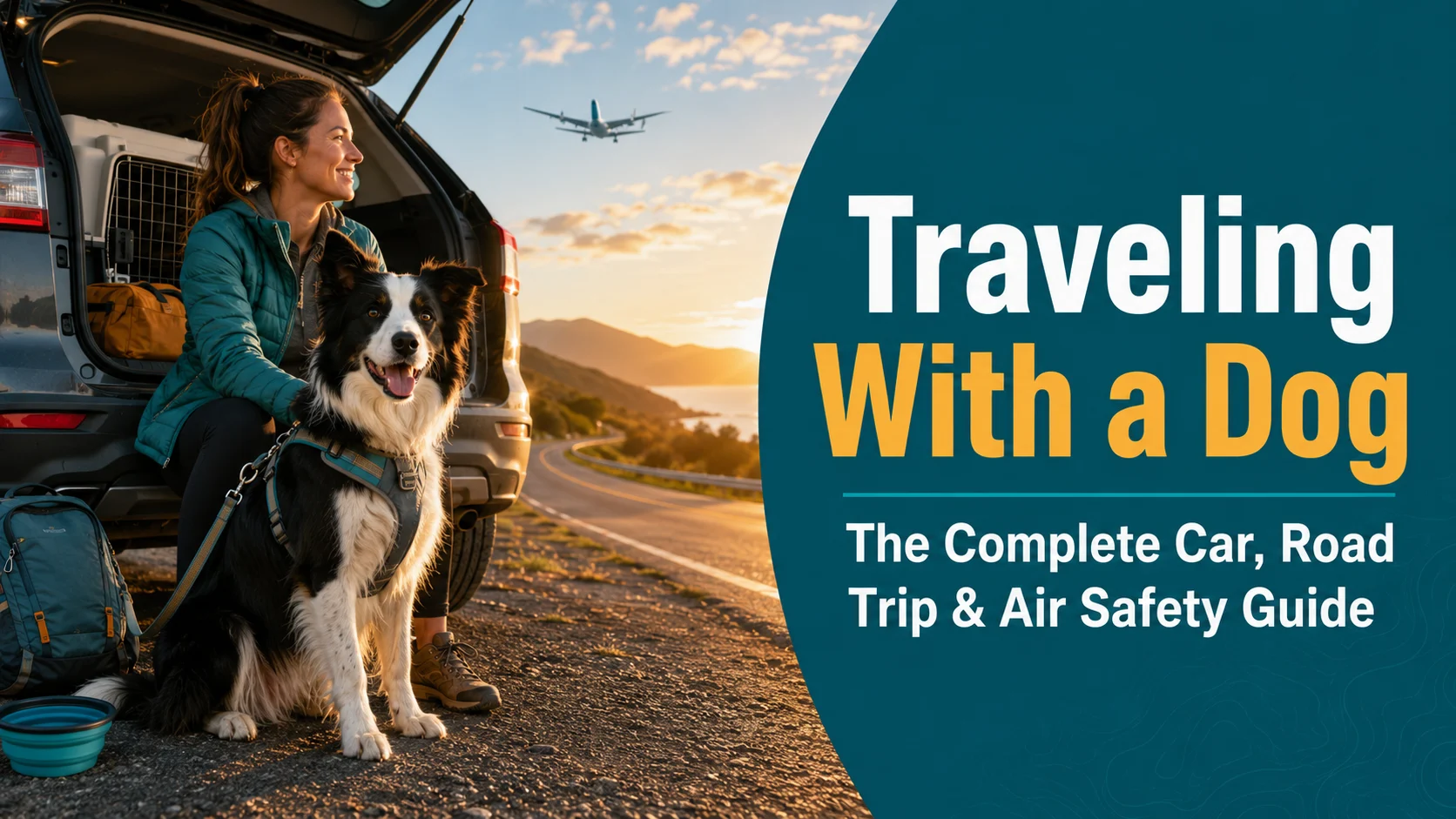
Quick answer: Safe dog travel begins weeks before departure. Confirm the dog’s health and destination rules, build comfort with the restraint or carrier, use a crash-tested restraint or properly secured crate in the vehicle, preserve food and medication routines, plan breaks and emergency care, and verify airline requirements directly before every flight. A dog should never ride loose, in the front seat near an airbag, or unattended in a hot vehicle.
Travel is easier when the dog already understands the equipment and routine. A carrier introduced at the airport, a harness first worn on a motorway, or a new food offered during a stressful journey creates avoidable problems.
This guide separates preparation, car travel, road trips, and flying so you can build a plan that fits the dog. Not every dog benefits from every trip; health, age, fear, brachycephaly, temperature, and destination rules may make a trusted caregiver the safer option.
Decide Whether the Dog Should Travel
Consider the dog’s physical health, breathing, mobility, age, pregnancy, medication, anxiety, recovery from illness or surgery, and previous response to transport. Ask the veterinarian about fitness to travel, preventive care, motion sickness, and destination disease risks.
Air travel deserves extra caution for short-nosed dogs because stress and heat can worsen breathing risk. USDA APHIS advises extra care with brachycephalic dogs. Individual airlines may restrict breeds, routes, seasons, or cargo transport.
Six Weeks Before Departure
- Confirm destination, transit, return, lodging, park, campground, and airline rules from primary authorities.
- Book a veterinary visit early enough for vaccines, tests, parasite prevention, health certificates, and medication supply.
- Check microchip registration and use a visible ID tag with current mobile number.
- Select the exact vehicle restraint, carrier, or crate and begin positive conditioning.
- Identify regular and emergency veterinary clinics along the route and at the destination.
- Review insurance coverage, medication storage, food availability, and weather risks.
Condition the Restraint or Carrier
- Leave the equipment open in a familiar room and reward voluntary investigation.
- Feed near it, then inside it, without closing the door.
- Build seconds of relaxed door closure, then movement of the carrier or fastening of the harness.
- Practice in the stationary vehicle, then on very short drives ending in calm or enjoyable places.
- Increase duration gradually and stop before panting, drooling, escape attempts, or panic escalates.
Car Safety Essentials
The AVMA recommends securing pets with an appropriate carrier or crash-tested harness in a location clear of airbags. A loose dog can distract the driver and become a projectile in sudden braking or a collision.
Use the restraint exactly as tested and instructed. Avoid attaching a travel tether to a collar. Extension tethers and zipline-style add-ons can increase injury risk; check the current Center for Pet Safety certified list rather than trusting a vague ‘crash tested’ marketing claim.
Choosing Between a Harness, Carrier, and Crate
| Option | Best fit | Key checks |
| Safety harness | Dogs within certified size range who ride on a rear seat | Exact model/size certification, fit, vehicle belt routing |
| Enclosed carrier | Small dogs with room to stand/turn as required | Secure vehicle attachment, ventilation, structural integrity |
| Travel crate/kennel | Dogs and vehicles that can accommodate a secured crate | Current certification, correct size, strength-rated tie-down plan |
| Booster/console seat | Comfort or elevation only unless independently certified | Do not assume containment equals crash protection |
Road Trip Routine
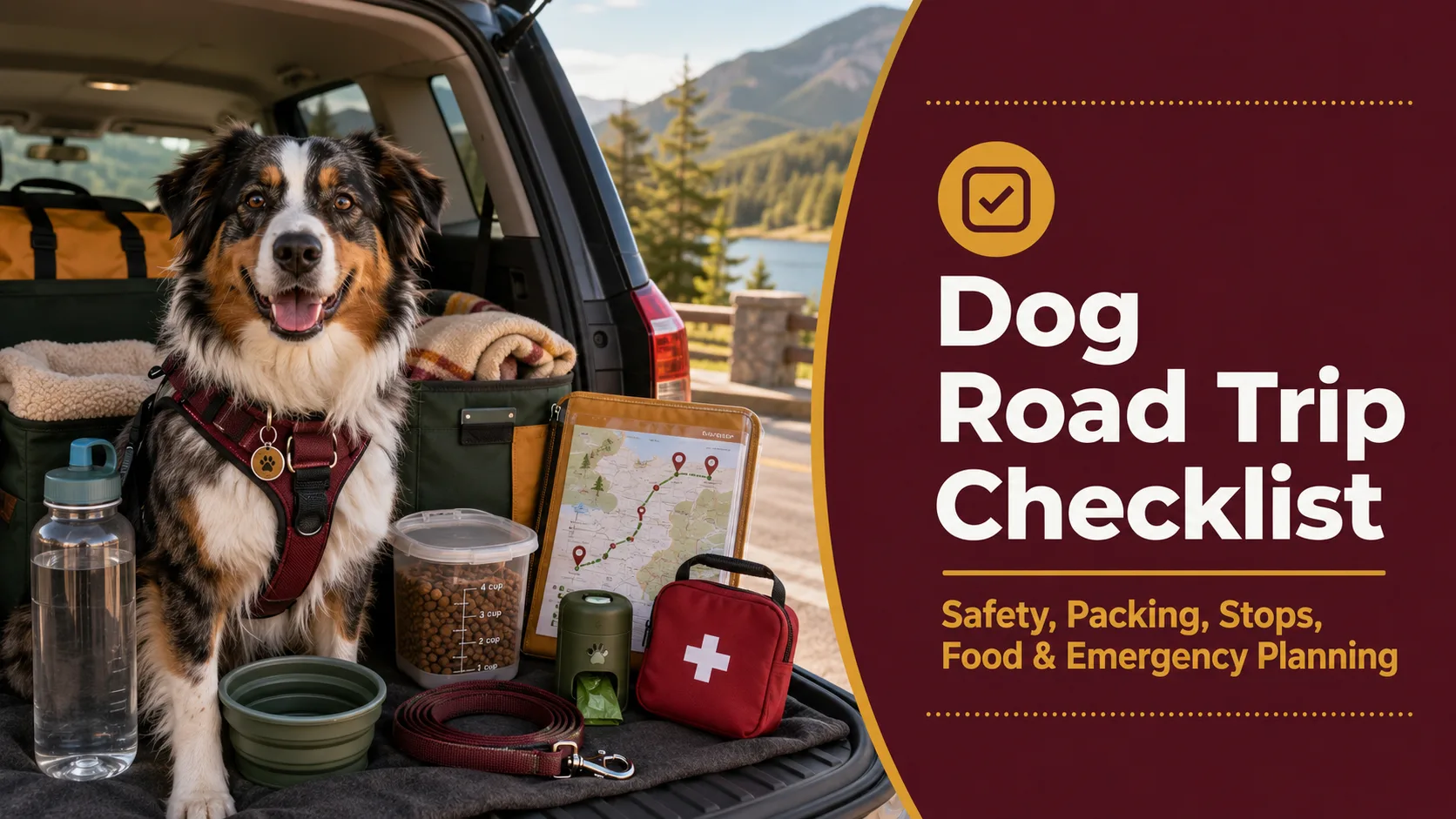
Exercise and toilet the dog before departure without exhausting them. Offer the familiar meal on a schedule that works with the dog’s history and veterinarian’s advice. Keep food, water, medication, and break timing predictable.
Plan regular safe breaks in low-traffic locations. Clip the lead before any door or hatch opens, check the harness, offer water, allow toileting and sniffing, and inspect paws and temperature. Never open a crate or carrier in an unsecured roadside area.
What to Pack
| Category | Items |
| Identity/documents | ID tag, microchip details, vaccine/health records, permits, recent photo, insurance |
| Food/water | Familiar food, measured portions, water, bowls, safe treats, can opener if needed |
| Health | Medications in original labels, dosing instructions, first-aid supplies, veterinarian contacts |
| Safety | Certified restraint or secured crate, lead, backup harness, waste bags, towel, light |
| Comfort | Familiar bedding, safe chew, mat, cleaning supplies, spare bags |
| Climate | Shade, cooling or warming plan, paw protection when appropriate—never a substitute for safe conditions |
Motion Sickness and Travel Anxiety
Motion sickness can cause drooling, nausea, vomiting, yawning, whining, uneasiness, poor appetite, or diarrhea. Fear can coexist with vestibular nausea. The dog car sickness guide explains conditioning and when to ask the veterinarian about medication.
Do not give human antihistamines, sedatives, cannabidiol, or leftover prescriptions without veterinary direction. Sedation may change balance, breathing, temperature regulation, or airline eligibility.
Hotel, Rental, and Destination Safety
- Confirm weight, breed, number-of-pets, fee, crate, and unattended-pet rules in writing.
- Inspect the room for food, medicines, rodent poison, cleaning products, balconies, loose screens, and escape gaps.
- Use a door routine and keep ID on the dog; unfamiliar hallways increase escape risk.
- Bring a mat and white noise if hallway sounds trigger barking, but do not leave a distressed dog alone.
- Protect wildlife, livestock, other guests, and local leash rules; a holiday is not a reason to test recall.
Flying With a Dog
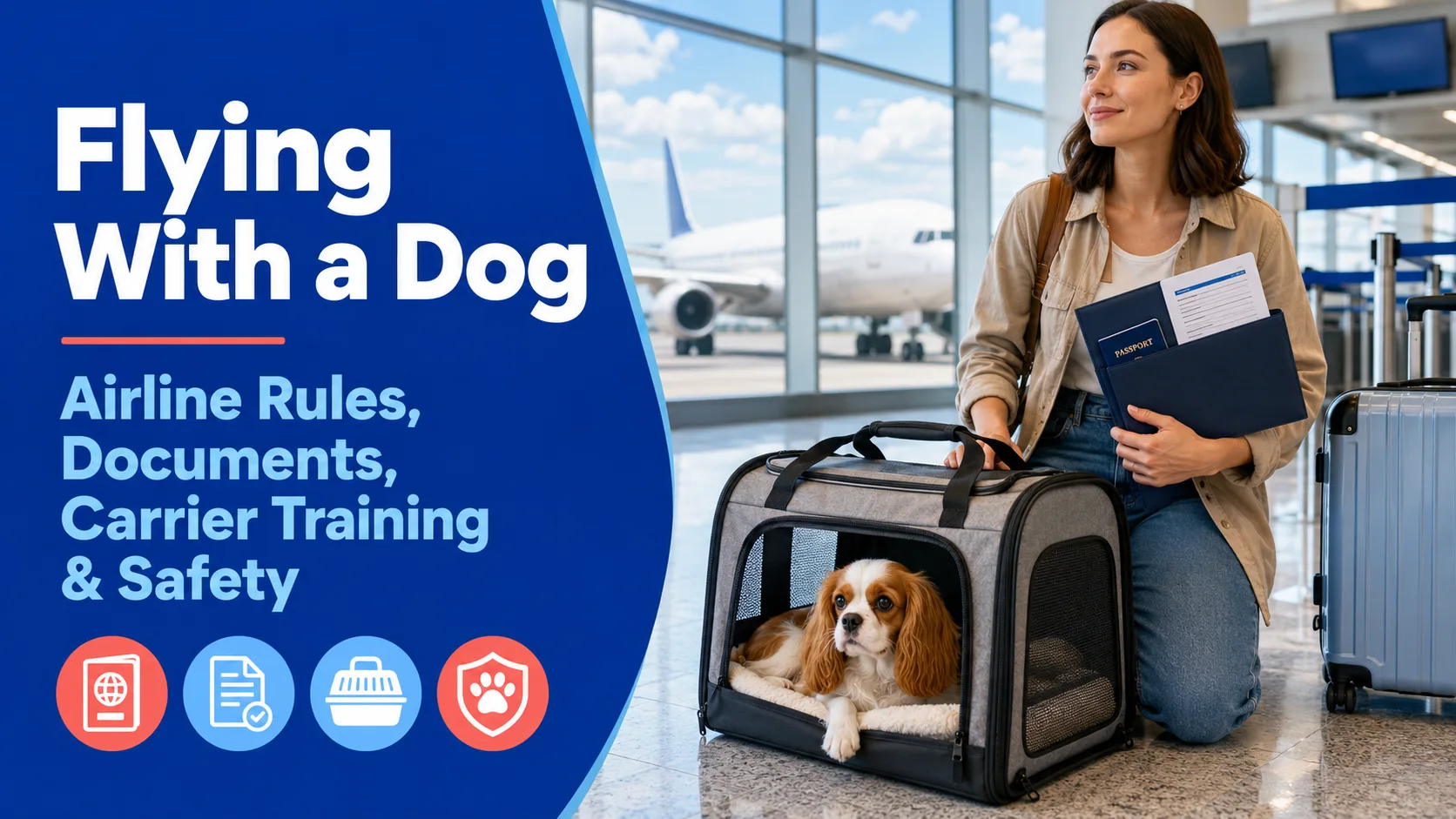
Airline pet policies are carrier-specific and can change without matching third-party summaries. Confirm species, breed, age, size, weight, carrier dimensions, booking limits, documentation, route, aircraft, fees, check-in, and weather restrictions directly with the airline.
International trips may require veterinary certificates, laboratory tests, treatments, endorsements, permits, or waiting periods. Begin with the destination authority and a government pet-travel portal such as USDA APHIS for U.S. departures. See the complete flying with a dog guide.
Heat, Cold, and Vehicle Emergencies
Never leave a dog unattended in a parked vehicle. Temperature can become dangerous quickly, and cracked windows are not protection. Plan human rest stops so one adult stays with the dog when pets cannot enter.
Carry water and know signs of heat illness, but prevention is the plan. Heavy panting, weakness, disorientation, vomiting, collapse, or abnormal gum color requires immediate cooling guidance and emergency veterinary care.
Arrival and Decompression
On arrival, toilet the dog on lead, offer water, set up the familiar resting area, and keep exploration small. Maintain meal and medication timing. Travel fatigue can look like irritability or hyperactivity.
Delay crowded greetings, dog parks, long hikes, and unsupervised freedom until the dog has rested and you have inspected the environment.
Emergency Plan
- Keep the dog’s recent photo, microchip number, records, medication list, and emergency contacts offline and on paper.
- Know how to describe your location and route to an emergency clinic.
- If a restraint or crate is involved in a collision, replace or inspect it according to manufacturer guidance even if damage is not obvious.
- After any collision, seek veterinary advice; adrenaline can hide pain or internal injury.
- Report lost pets immediately to microchip registry, local shelters, police/animal control where appropriate, and lodging staff.
Frequently Asked Questions
What is the safest way for a dog to ride in a car?
Use a current independently certified harness, carrier, or crate appropriate to the dog’s size and vehicle, installed exactly as instructed in a rear seating/cargo configuration verified as suitable. Keep clear of airbags.
How often should a dog stop on a road trip?
There is no universal interval. Age, health, medication, bladder control, temperature, stress, and trip length matter. Plan regular safe breaks before the dog is desperate.
Should I feed my dog before driving?
Follow the dog’s normal routine and veterinary advice, especially with motion sickness, diabetes, medication, or bloat risk. Avoid experimenting with a large unfamiliar meal on travel day.
Can a dog ride with its head out the window?
It increases risk from debris, eye injury, falls, and inadequate restraint. Keep the dog secured inside with safe ventilation.
Can I sedate my dog for travel?
Only if a veterinarian prescribes and advises it for the specific dog and trip. Sedation can affect breathing, balance, temperature regulation, and airline acceptance.
What paperwork is needed to fly with a dog?
It depends on airline, route, destination, origin, and return. Verify all requirements with the airline and government authorities; start months early for some countries.
How can I tell if my dog should stay home?
Significant medical risk, severe travel distress, breathing concerns, heat exposure, unmanageable logistics, or a destination that cannot meet the dog’s needs can make a trusted caregiver safer.
Disclaimer
Medical and behavior disclaimer: This guide is educational and does not replace veterinary, airline, government, legal, or vehicle-manufacturer advice. Pet-entry rules, health-certificate windows, airline policies, weather embargoes, and product certifications can change. Verify every requirement directly with the airline, destination authority, your veterinarian, and the product manufacturer before travel. Never give sedatives, antihistamines, or anti-nausea medication unless your veterinarian has prescribed the specific drug and dose for your dog.