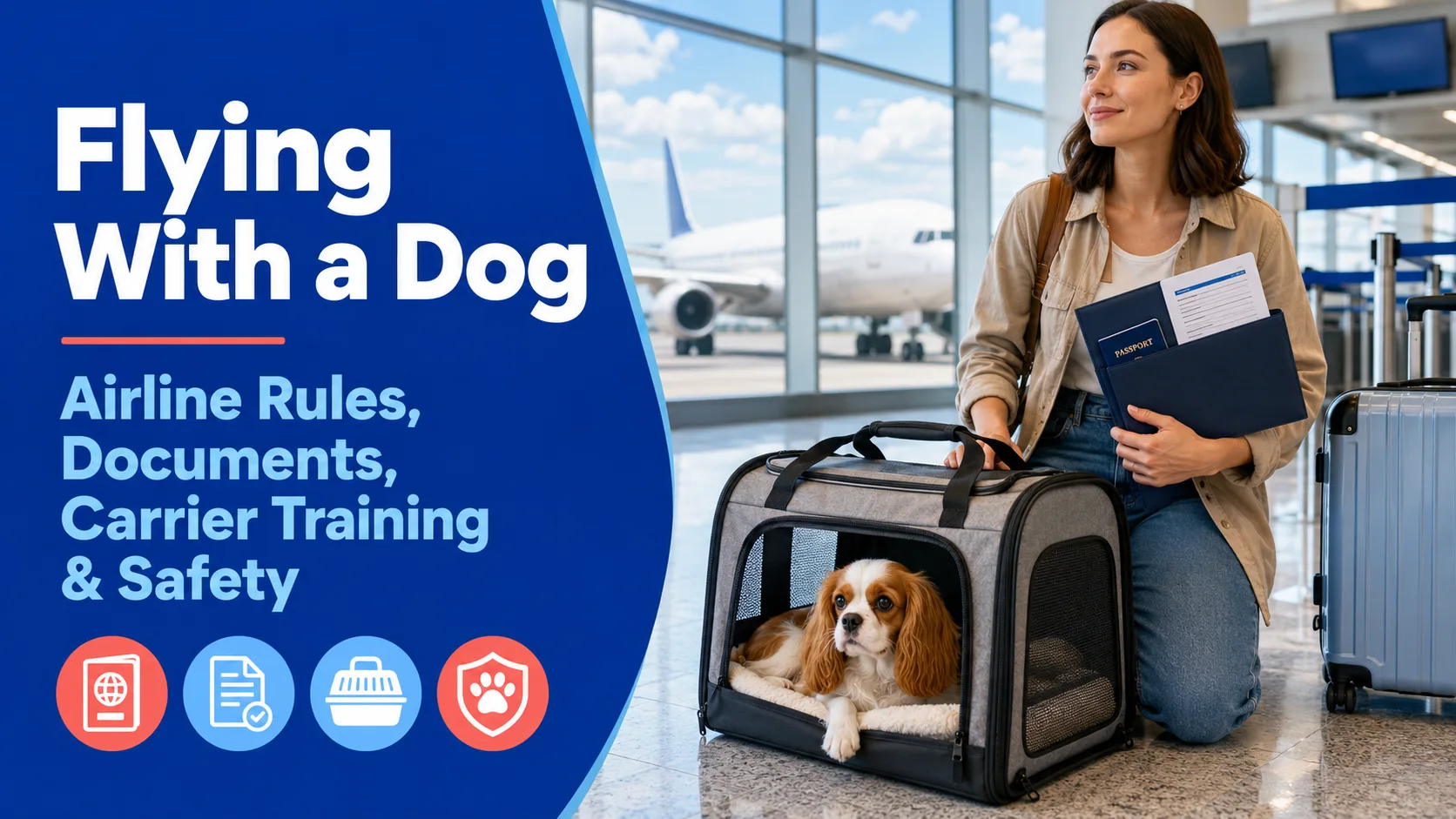
Quick answer: Before flying, verify the exact airline, aircraft, route, and destination rules directly. Confirm whether the dog may travel in cabin or must use another arrangement; reserve the limited pet space; complete vaccines, microchip, tests, treatments, and health certificates within required windows; train the carrier; and plan temperature and connection risk. Never rely solely on a blog or booking agent summary.
Air travel rules can change faster than an evergreen article. Airlines may differ on species, number of pets, breed, weight, carrier dimensions, seat type, age, documentation, route, weather, and whether checked pets or cargo are accepted.
This article teaches a verification workflow. It should be updated at least quarterly and whenever a major airline or destination changes policy.
Start With Four Authorities
For U.S. departures, USDA APHIS provides country-specific pet-travel pathways. Requirements for return can differ from outbound requirements, so plan both directions before buying a non-refundable ticket.
- Destination government: import permits, microchip, rabies, tests, treatments, quarantine, and arrival inspection.
- Origin/export authority: endorsements, departure certificates, and export steps.
- Airline: booking, carrier, cabin/cargo, breed, temperature, fee, route, aircraft, and check-in rules.
- Veterinarian: fitness to fly, preventive care, certificate timing, medication, and stress/motion-sickness plan.
Cabin, Checked, Cargo, and Service Animals
A small pet may be accepted in an under-seat carrier in the cabin, subject to airline and aircraft limits. Some airlines do not accept checked pets; cargo programs have separate procedures. Do not use these terms interchangeably.
In the United States, service-animal rules are distinct from pet rules. Emotional support status does not automatically create service-animal rights. Never misrepresent a pet as a service animal.
Airline Questions to Confirm in Writing
- Is this species, breed, age, weight, and number of pets accepted on the exact flight?
- What are the maximum external carrier dimensions and combined weight, if any?
- Which seat rows or cabin classes are permitted, and does the carrier count as a carry-on?
- What health certificate, vaccine, or acclimation documents are required and within what window?
- Are there connection, codeshare, international, seasonal, temperature, or aircraft restrictions?
- When and where must the pet check in, and what fee applies?
- What happens during disruption, cancellation, missed connection, or aircraft change?
Documents and Timeline
| When | Action | Why |
| 3–6+ months | Research import/export and return rules | Some tests and waiting periods take months |
| 6–10 weeks | Confirm airline and reserve pet space | Capacity may be limited |
| 2–6 weeks | Complete veterinarian-planned vaccines/tests/treatments | Timing must match rules |
| Required window | Obtain and endorse health certificate | Documents outside the window may be rejected |
| 72–24 hours | Reconfirm aircraft, weather, documents, and carrier | Last-minute changes affect eligibility |
| Travel day | Carry originals and copies; arrive at required time | Avoid document and check-in failure |
Carrier Selection and Training
Use the airline’s current external dimensions for the exact aircraft and seat, then ensure the dog fits the carrier under applicable rules. Ventilation, closures, leak-resistant base, structural support, and safe posture matter. ‘Airline approved’ on a product page is not a guarantee.
Train over weeks: feed inside, close briefly, lift, carry, rest under a table, practice travel sounds, and take short journeys. The dog should be able to settle before facing an airport.
Brachycephalic and Medically Vulnerable Dogs
Short-nosed dogs can be more vulnerable to breathing difficulty and heat stress. USDA APHIS specifically advises extra care. Airlines may refuse certain breeds for some forms of transport.
Senior, very young, pregnant, anxious, ill, recovering, or mobility-limited dogs need veterinary assessment. Choosing not to fly can be the safer decision.
Food, Water, Medication, and Sedation
Keep familiar food and follow veterinary guidance on timing. Do not fast a puppy or medically managed dog without advice. Carry medication in original labeling with written instructions and enough extra for disruption.
Do not sedate a dog simply to make travel easier. Medication decisions must be made by the veterinarian for the individual, and the airline may have restrictions. Test any prescribed plan before travel only as directed.
Airport and Flight-Day Plan
- Exercise and toilet the dog appropriately before leaving home.
- Attach ID to dog and carrier without creating snag hazards.
- Keep documents, supplies, and an absorbent spare liner accessible.
- Use a secure lead and harness whenever the carrier must be opened in a designated secure area.
- Avoid unnecessary feeding, greetings, and crowd exposure.
- During delays, ask the airline how pet welfare and connections will be handled.
Connections and International Arrivals
A connection may introduce another airline, terminal, country, inspection, temperature exposure, or minimum connection rule. A codeshare ticket does not mean pet policies match.
Know where the dog is collected, inspected, cleared, and transferred. Keep destination contacts and transport ready; arrival is not the time to begin researching quarantine or ground transport.
Red Flags That Should Stop the Trip
- The airline cannot confirm the dog on the exact segment or aircraft.
- A required document, test, treatment, endorsement, or waiting period is missing.
- Forecast heat/cold or an embargo makes transport unsafe or ineligible.
- The dog has breathing changes, vomiting, diarrhea, fever, collapse, pain, or severe distress.
- The carrier is damaged, incorrectly sized, or unfamiliar to a panicking dog.
- The return journey requirements are unresolved.
After Landing
Inspect the dog before leaving the airport. Breathing difficulty, collapse, repeated vomiting, severe weakness, abnormal gum color, injury, or inability to stand requires emergency veterinary care.
Keep the first day quiet. Offer water and the familiar routine, monitor appetite, stool, urine, and behavior, and follow any post-entry parasite or quarantine requirements.
Frequently Asked Questions
Can my dog fly in the cabin?
It depends on the airline, route, aircraft, carrier, dog size/weight, destination, and available pet capacity. Confirm directly before booking.
What age must a dog be to fly?
USDA rules and airline policies set minimum ages; USDA notes at least 8 weeks and fully weaned for covered air transport, while airlines or destinations may require older.
Do I need a health certificate?
Possibly. Airline, destination, origin, and return rules determine the document and timing. Verify with authorities and an accredited veterinarian.
Are brachycephalic dogs allowed to fly?
Some airlines restrict them, especially outside the cabin, due to breathing and heat risk. A veterinarian should assess the individual and alternatives.
Can I buy an airline ticket before confirming the pet?
Avoid relying on a passenger ticket alone. Pet capacity and eligibility are separate; confirm and reserve the pet according to airline procedure.
Should I sedate my dog for a flight?
Only under specific veterinary direction, and after checking airline rules. Sedation can create health and handling risks.
Do service dogs follow pet rules?
Service-animal rules are separate and depend on jurisdiction and airline documentation. Do not misrepresent a pet or emotional-support animal as a trained service dog.
Disclaimer
Medical and behavior disclaimer: This guide is educational and does not replace veterinary, airline, government, legal, or vehicle-manufacturer advice. Pet-entry rules, health-certificate windows, airline policies, weather embargoes, and product certifications can change. Verify every requirement directly with the airline, destination authority, your veterinarian, and the product manufacturer before travel. Never give sedatives, antihistamines, or anti-nausea medication unless your veterinarian has prescribed the specific drug and dose for your dog.