Quick answer: Effective dog training makes desired behavior easy, marks the exact correct moment, and follows it with a reward the dog values. Begin in a quiet setting, teach one criterion at a time, keep sessions short, and add duration, distance, and distractions gradually. Prevent unwanted behavior from being rehearsed and use management—not fear, pain, or intimidation—when the dog cannot yet succeed.
Training is not a contest for control. It is a communication system that helps a dog predict which behavior will produce safety, access, food, play, movement, or social contact. A clear system produces a dog who can make useful choices even when no treat is visible.
This guide explains the mechanics beneath sit, recall, lead walking, and polite greetings. Once those mechanics are consistent, new skills become easier because the dog understands how learning works.
Start With Humane, Reward-Based Training
The AVSAB humane training position recommends reward-based methods for dog training and behavior modification. Rewards can include food, play, access to sniffing, distance from something uncomfortable, opening a door, or attention.
Aversive tools may interrupt behavior, but interruption is not the same as teaching. Pain or fear can also change the dog’s emotional response to the handler, other dogs, visitors, or the training context. Good training shows the dog what to do and changes the environment so that choice is possible.
Understand the ABC of Behavior
Behavior is easier to change when you examine what happens immediately before it (antecedent), the observable behavior itself, and what follows it (consequence). A dog jumps when a visitor enters, the visitor talks and touches the dog, and jumping becomes more likely. Change the setup and consequence: use a gate, cue a station, and deliver greeting only while four paws remain down.
Avoid labels such as stubborn, dominant, guilty, or spiteful when a description would be more useful. ‘The dog looked away and sniffed when I cued sit near the playground’ points toward distraction or stress. ‘The dog disrespected me’ does not identify a training change.
Choose a Marker and Charge It
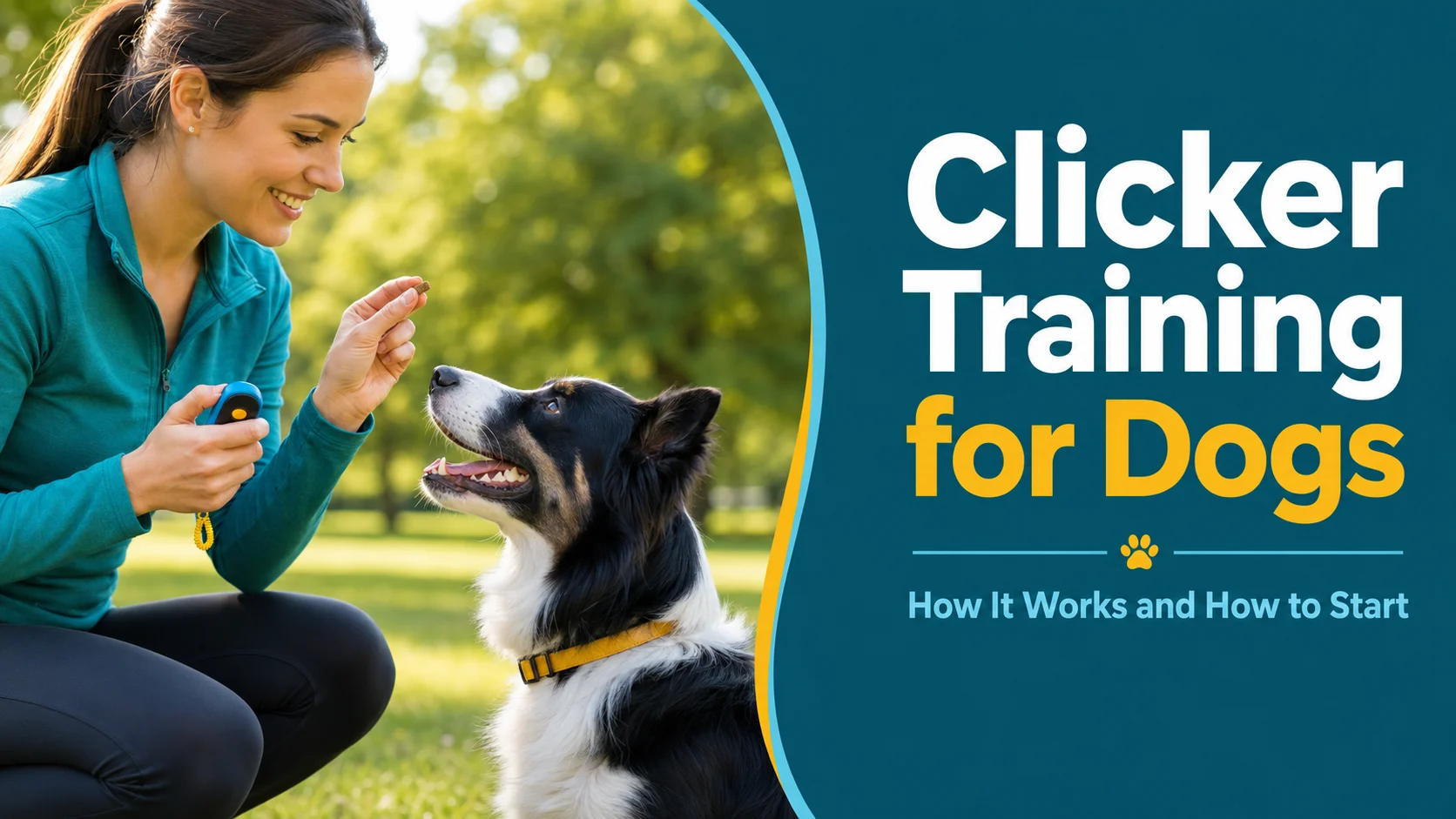
A marker—such as a clicker or a short word like ‘yes’—identifies the exact behavior that earned a reward. Start by saying or clicking once and delivering food, repeatedly, with no demand. Soon the marker predicts reinforcement.
The marker is a promise. Mark once, then reward. Do not click to get attention, click repeatedly, or delay payment because the dog moved after the click. The detailed clicker training guide covers timing, shaping, and common errors.
Find Rewards That Work Here
A reward is defined by its effect on behavior, not by the trainer’s intention. Dry kibble may work in the kitchen and fail beside a squirrel. Some dogs value a toy, a chase game, permission to sniff, or moving forward more than food.
Match value to difficulty and protect health by using tiny pieces and part of the daily ration. A dog who refuses food may be over threshold, nauseated, full, or uninterested in that reward; raising pressure is not the solution.
The Training Loop
- Set the environment so the desired behavior is likely.
- Give one clear cue only when the dog can probably respond.
- Mark the correct behavior at the exact moment it happens.
- Deliver the reward promptly and in a way that supports the next repetition.
- Pause, reset, and repeat three to five successful times.
- Stop while the dog still wants to engage, then record what to change next.
Teach Behavior Before Naming It
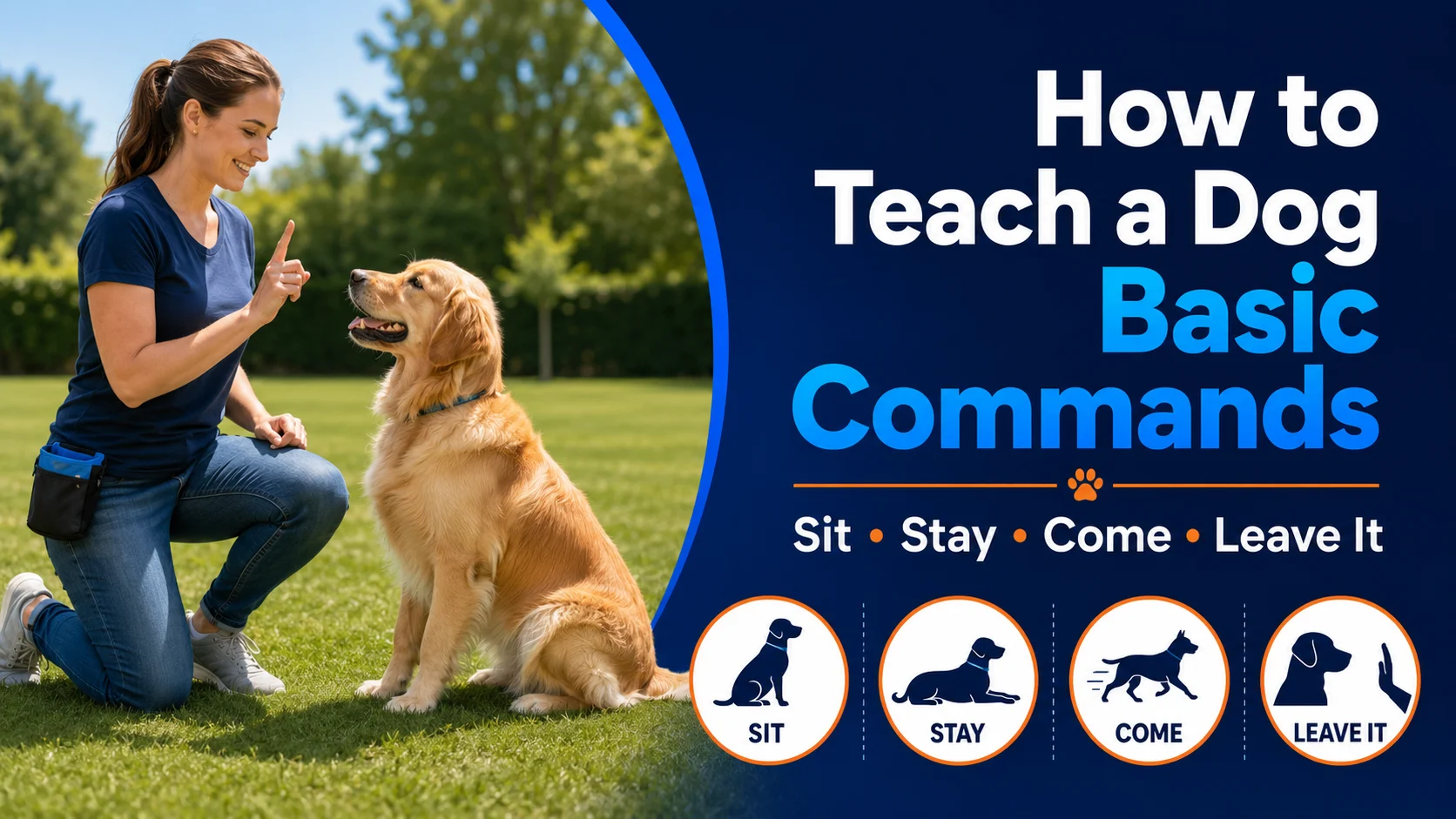
Use luring, capturing, or shaping to produce the behavior. Luring guides with a reward; capturing marks a behavior the dog offers naturally; shaping rewards small steps toward the final behavior. Add the cue when the dog is predictably performing the action.
Say the cue once, pause, then help by making the task easier rather than repeating the word. Repeated cues teach the dog that the first several versions are irrelevant.
Build Fluency With the Three Ds
Raise only one dimension at a time. A one-minute stay while the handler walks away in a busy park is three new difficulties, not one. If success drops below roughly four out of five easy repetitions, lower the criterion.
| Dimension | Meaning | How to progress |
| Duration | How long the behavior continues | Add one or two seconds, reward, and release |
| Distance | How far the handler or dog moves | Change by a small step, then return and reward |
| Distraction | Competing sights, sounds, smells, and access | Start far away or at low intensity |
Seven Foundation Skills
1. Name Response and Check-In
Mark and reward voluntary orientation. A strong check-in creates a doorway to every other cue and helps the dog reconnect around distractions.
2. Recall
Use a special cue, move away, reward generously, and release back to safe fun often. Never call the dog to punish or repeatedly test an untrained recall.
3. Sit and Down
Teach as positions, not as tools to suppress emotion. Use them for doors, meals, handling, and calm pauses only when the dog is physically comfortable.
4. Settle on a Mat
Reward looking at, stepping on, lying on, and relaxing on a portable mat. This becomes useful for meals, visitors, travel, and veterinary waiting rooms.
5. Leave It and Drop
Leave it means disengage before taking; drop means release what is already held. Trade safely and avoid chasing, which can create guarding or keep-away games.
6. Loose-Leash Walking
Reward the lead staying loose and stop movement before pulling is rewarded. The leash training plan breaks down equipment, positioning, and distractions.
7. Calm Greetings
Use distance, gates, a lead, and a station. Access to the person happens when four paws are down. See the guide to stopping jumping.
Management Is Part of Training
Baby gates, pens, closed doors, covered windows, a long line, food storage, scheduled walks, and a mat are not shortcuts. They prevent practice of behavior while skills develop. Every successful raid of the bin or sprint through the door can reinforce the pattern.
Management must also protect welfare. Do not confine a dog for unrealistic periods or use a crate to avoid meeting exercise, toilet, social, and enrichment needs.
A Four-Week Beginner Plan
| Week | Skills | Goal |
| 1 | Marker, name, hand target, sit, mat | Five short sessions in quiet rooms |
| 2 | Recall games, leave it, drop, handling | Reliable easy repetitions and clean cues |
| 3 | Loose lead, greetings, doors, short stays | Use real-life rewards and management |
| 4 | Generalize across rooms and calm outdoor locations | Add one difficulty at a time |
Why Training Stalls
- The dog does not understand the behavior yet, but the cue has been added.
- The trainer increased duration, distance, and distraction together.
- The reward is weak compared with the environment.
- The dog is tired, afraid, in pain, too hot, nauseated, or overaroused.
- The household rewards the unwanted behavior inconsistently.
- The behavior has a strong history and management allows daily rehearsal.
When to Involve a Professional
Get help for aggression, guarding, severe fear, panic when alone, compulsive behavior, repeated escape, or any problem that threatens safety. A sudden behavior change needs a veterinary examination because pain and illness can alter behavior.
Choose a professional who explains methods clearly, uses reward-based plans, welcomes questions, sets realistic goals, and collaborates with a veterinarian when medical or medication support may be relevant.
Frequently Asked Questions
What should I teach my dog first?
Begin with a marker, name response, recall game, hand target, settle on a mat, toilet routine, and calm handling. These skills make later training easier.
How long should a dog training session be?
For beginners, one to five focused minutes can be enough. Several successful micro-sessions usually outperform one long session.
Should I use treats forever?
Reinforcement continues, but delivery can become less frequent and include real-life rewards such as sniffing, play, access, and movement. New or difficult situations should still pay well.
Why does my dog obey at home but not outside?
Dogs do not automatically generalize. Outside adds competing smells, movement, distance, and emotion. Re-teach at an easier outdoor level with better rewards.
Is saying no effective dog training?
It may interrupt behavior but does not specify what to do. Prevent rehearsal, cue or arrange an alternative, and reinforce that choice.
Are prong or shock collars necessary for difficult dogs?
AVSAB recommends reward-based methods and advises against aversive methods. Safety cases need professional assessment and management, not an escalation of pain or fear.
How do I know when to make training harder?
Increase one variable after the dog is succeeding smoothly at the current level. If errors rise, lower the difficulty immediately.
Disclaimer
Medical and behavior disclaimer: This article provides general education, not an individualized behavior diagnosis or treatment plan. Pain, illness, fear, and anxiety can change behavior, so contact a veterinarian when a behavior is sudden, severe, escalating, or accompanied by physical symptoms. Do not use intimidation, physical corrections, shock, prong, or choke-based methods. If a dog has bitten, threatens to bite, guards resources, panics, or cannot be safely managed, work with a veterinarian and a credentialed reward-based behavior professional.