A dog food portion guide by weight determines the exact amount of food a dog needs daily based on their ideal body mass and activity level. Generally, adult dogs require 2% to 3% of their body weight in fresh food, while kibble portions are calculated by calorie density (kcal) per cup.
Quick Facts: Dog Feeding Chart by Weight
- Weight is the Baseline: Feeding should be based on your dog’s ideal weight, not their current weight if they are over or underweight.
- Metabolic Variation: Two dogs of the same weight may need different amounts depending on age, breed, and energy levels.
- Activity Levels: Highly active dogs (working or sporting) may need 20% to 40% more calories than sedentary pets.
- Puppy vs. Adult: Puppies require significantly more calories per pound of body weight to support rapid growth.
- The 10% Rule: Treats, toppers, and snacks should never exceed 10% of the total daily caloric intake.
- Precision Tools: Using a digital kitchen scale is much more accurate than using a standard measuring cup.
Determining exactly how much to put in the bowl is one of the most common challenges for pet parents. While every bag of food comes with a generic label, these are often broad ranges that don’t account for your dog’s unique lifestyle.
Using a dog food portion guide by weight helps eliminate the guesswork that leads to undernourishment or, more commonly, canine obesity. By understanding the relationship between body weight and caloric needs, you can provide a tailored nutrition plan that keeps your dog at a healthy, lean weight for years to come.
What Is a Dog Food Portion Guide by Weight?
A dog food portion guide by weight is a structured system used to calculate the daily volume of food a dog requires. It typically uses the dog’s weight in pounds or kilograms to determine a “Resting Energy Requirement” (RER).
This guide serves as a starting point. Since different foods (kibble, raw, or gently cooked) have different calorie densities, the weight of the dog is the constant factor used to find the right balance of proteins, fats, and carbohydrates.
Why Is It Important for Dogs?
Feeding the correct portion is about more than just satisfying hunger; it is a critical component of long-term health and disease prevention.
- Preventing Obesity: Excess weight puts immense strain on a dog’s joints, heart, and respiratory system.
- Consistent Energy: Proper portions prevent the “sugar crashes” or lethargy associated with overfeeding or underfeeding.
- Nutritional Balance: Feeding too little can lead to vitamin and mineral deficiencies, even if the food is high quality.
- Digestive Health: Overfeeding is a leading cause of loose stools and digestive upset in otherwise healthy dogs.
What Ingredients Should You Look For?
When following a dog feeding chart by weight, the quality of the ingredients determines how “filling” the portion is. High-quality ingredients provide better satiety (the feeling of being full).
- Whole Animal Proteins: Chicken, beef, or fish should be the first ingredient. These provide essential amino acids.
- Healthy Fats: Omega-3 and Omega-6 fatty acids support skin health and brain function.
- Complex Carbohydrates: Sweet potatoes or oats provide steady energy without the “spike” caused by simple sugars.
- Functional Fiber: Ingredients like pumpkin or ground flaxseed help the dog feel full while maintaining digestive regularity.
What Should You Avoid?
When measuring portions, avoid “filler” ingredients that provide empty calories without nutritional value:
- Generic “Meat Meal”: These can be inconsistent in calorie density and quality.
- Excessive Corn or Soy Fillers: These are often used to bulk up food but lack the nutrient density of whole foods.
- Sugar and Artificial Sweeteners: These add unnecessary calories and can lead to metabolic issues.
- Table Scraps: Human food is often much higher in fat and salt than dog-specific portions, quickly unbalancing a daily plan.
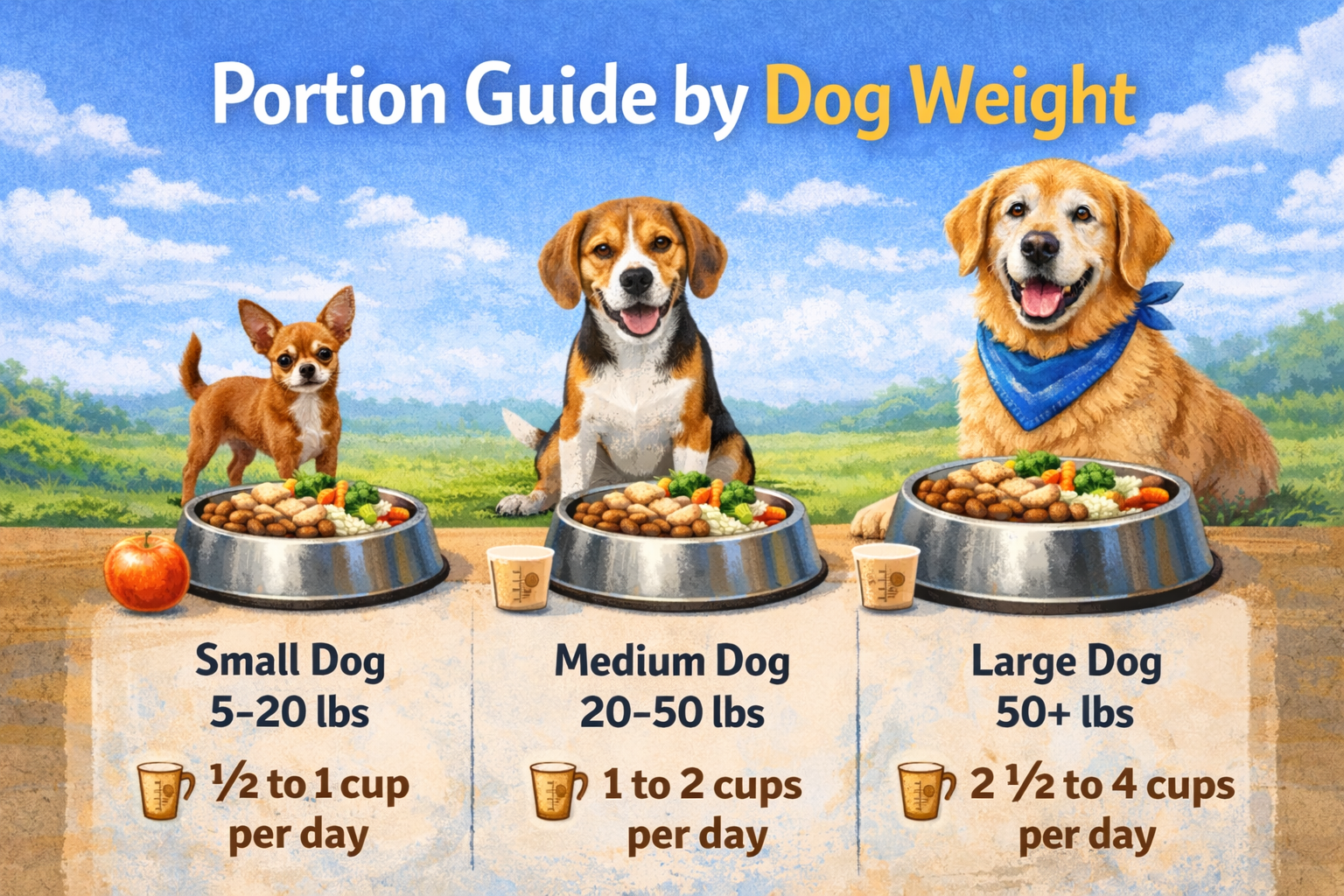
How Much to Feed Dog by Size: Comparison Table
This table provides a general estimate for adult dogs with moderate activity levels eating a standard high-quality commercial dry food (approx. 350-400 kcal per cup).
| Dog Weight (lbs) | Activity Level | Estimated Daily Cups (Kibble) | Estimated Daily Grams (Fresh) |
| 5 – 10 lbs | Moderate | 1/2 to 3/4 Cup | 110g – 180g |
| 11 – 25 lbs | Moderate | 1 to 1 1/2 Cups | 225g – 450g |
| 26 – 50 lbs | Moderate | 2 to 2 1/2 Cups | 500g – 900g |
| 51 – 75 lbs | Moderate | 3 to 4 Cups | 1kg – 1.3kg |
| 76 – 100+ lbs | Moderate | 4 to 5+ Cups | 1.4kg – 1.8kg+ |
Nutritional Breakdown: Calories vs. Volume
It is important to remember that volume (how much space the food takes up) does not always equal calories.
- Kibble: Very calorie-dense because the water has been removed. Small portions contain many calories.
- Fresh/Wet Food: High in moisture. Dogs can eat a larger physical volume of fresh food while consuming the same number of calories as a small bowl of kibble.
- Toppers: Adding 1/4 cup of cooked chicken to a bowl of kibble adds about 60 calories. You must reduce the kibble portion to compensate.
Common Mistakes Dog Owners Make
- Using a Non-Standard Cup: A “coffee mug” or a “big scoop” is not a measuring cup. Even an extra ounce per meal can lead to significant weight gain over a month.
- Feeding the “Back of the Bag” Exactly: Most dog food manufacturers over-estimate portions on their packaging. Always monitor your dog’s body condition.
- Ignoring Treats: If your dog gets a dental chew or training treats, those calories must be subtracted from their main meals.
- Free-Feeding: Leaving a bowl out all day makes it impossible to track exactly how much your dog is eating.
Recommended Products Section
Affiliate Disclosure: This article may contain affiliate links. If you purchase through these links, we may earn a small commission at no extra cost to you.
To manage a dog food portion guide by weight effectively, consider these helpful tools:
- Digital Kitchen Scale: This is the “gold standard” for feeding. Weighing food in grams ensures your dog gets the exact same amount every day.
- Standardized Measuring Scoops: If you prefer cups, use a dedicated set of heavy-duty plastic or stainless steel scoops.
- Slow Feeder Bowls: If your dog’s portion looks small and they eat too fast, a slow feeder can make the meal last longer and increase satisfaction.
- AAFCO-Compliant Food Brands: Choose brands that clearly list the “kcal/kg” or “kcal/cup” on the packaging to make your calculations easier.
Safety Guidelines & Vet Recommendations
Portion control is a tool for health, but it must be used safely.
- The Rib Test: You should be able to feel your dog’s ribs easily under a thin layer of fat, but you shouldn’t see them protruding.
- Life Stage Changes: Seniors often have slower metabolisms and may need a 10% to 20% reduction in food as they age.
- Medical Issues: Dogs with thyroid issues or diabetes have very specific caloric needs. Always consult a professional for a therapeutic feeding plan.
- Gradual Adjustments: If your dog needs to lose weight, never “starve” them. Reduce their portions by no more than 10% at a time and monitor their energy.
FAQ Section
The best way is to monitor their body condition. If they are maintaining a steady, healthy weight and have good energy, your portions are likely correct.
Most adult dogs thrive on two meals a day. This helps keep blood sugar stable and prevents them from getting too hungry and “scavenging” for scraps.
Some breeds (like Labradors) are naturally highly food-motivated. If they are at a healthy weight, you can add “bulk” with low-calorie vegetables like green beans.
No. Puppies need more calories because they are building bone and muscle. They usually need 3 to 4 smaller meals per day.
If you go for a 5-mile hike on Saturday, it is perfectly fine to give your dog a slightly larger portion that evening to help with recovery.
Start by looking for “Senior” formulas which are often lower in calories but higher in specific nutrients like Glucosamine. Monitor for weight gain as their activity levels naturally drop.
Medical Disclaimer: “This content is for informational purposes only and is not a substitute for professional veterinary advice, diagnosis, or treatment.”