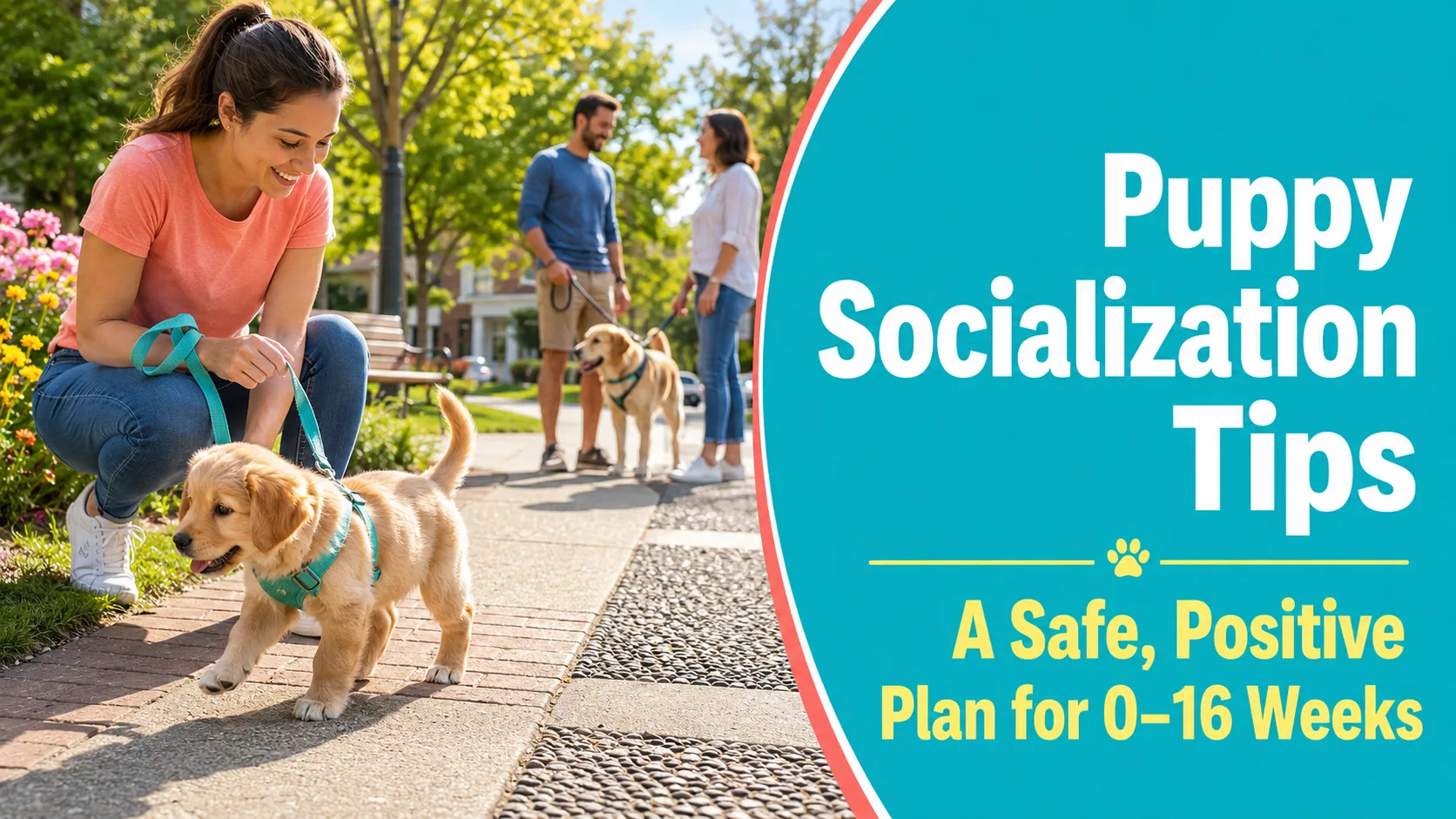
Quick answer: Socialization is the process of helping a puppy form safe, positive or neutral associations with people, animals, handling, sounds, surfaces, places, and everyday events. Begin during the early developmental window with low-intensity, choice-based exposure. Do not wait in total isolation for full vaccination, but avoid high-risk environments and follow your veterinarian’s local disease guidance.
A puppy can be surrounded by novelty and still be poorly socialized. If every encounter is loud, close, unavoidable, or frightening, exposure may create sensitization instead of confidence. Quality matters more than the number of boxes checked.
The aim is a puppy who can notice the world, gather information, and recover. Some individuals need more distance and fewer repetitions. Respecting that difference is not coddling; it is good training.
Why the First Three Months Matter
AVSAB identifies the first three months as the most important socialization period. During this window, carefully planned positive experiences can support future adaptability. Incomplete or frightening exposure can contribute to avoidance and fear.
The window is important, but learning continues for life. A puppy who misses experiences is not doomed, and a socialized puppy still needs maintenance through adolescence. Avoid rushing to compensate; fearful puppies need a slower, individualized plan.
Socialization Is Not Forced Greeting
A puppy does not need to be touched by every stranger or play with every dog. Watching a bicycle from a comfortable distance while eating is socialization. Walking past a calm person without greeting is socialization. Resting on a mat while a delivery arrives is socialization.
Choice protects confidence. Let the puppy approach and retreat. Do not hold them in place, pass them from person to person, or lure them so close that they suddenly realize escape is difficult.
Read the Puppy Before Raising Difficulty
| State | Common signs | What to do |
| Comfortable | Loose body, soft face, sniffing, taking food, easy recovery | Continue briefly, then end on success |
| Uncertain | Leaning away, lowered body, slower eating, scanning, lip licking | Increase distance and reduce intensity |
| Overwhelmed | Freezing, hiding, escape attempts, barking, growling, refusing food | Stop exposure; create safety and recover |
| Overaroused | Frantic pulling, hard biting, unable to orient or settle | Add distance, lower stimulation, protect sleep |
Safe Socialization Before Full Vaccination
Balance behavioral development with infection control. AVSAB supports well-managed socialization before the vaccine series is complete. Your veterinarian can explain local parvovirus risk and which places to avoid.
Low-risk options may include a clean private garden, known healthy vaccinated dogs, being carried in public, car rides, a sanitized class that verifies health requirements, visitors at home, and watching the world from a clean blanket. Avoid communal dog toileting areas, dog parks, unknown dogs, and visible fecal contamination until advised.
0–8 Weeks: The Breeder or Foster Foundation
Early caregivers influence the puppy before adoption. A thoughtful program includes gentle handling, household sounds at safe levels, varied clean surfaces, short separations, age-appropriate play, and positive contact with different people.
Ask what the litter experienced rather than accepting the word ‘socialized.’ Responsible caregivers can describe specific exposures and each puppy’s response without claiming that one test predicts the adult temperament.
8–12 Weeks: Safety, People, Handling, and Home Life
- People of varied age, appearance, movement, voice, clothing, hats, mobility equipment, and facial hair—at the puppy’s chosen distance.
- Household sounds such as vacuum, doorbell, kitchen appliances, traffic, thunder recordings, and children playing—starting softly.
- Surfaces including carpet, tile, grass, gravel, rubber, metal, shallow steps, and wobble-free novel textures.
- Gentle ear, paw, mouth, collar, harness, brush, towel, and veterinary-style handling paired with food.
- Calm time behind a gate, in a pen, and in a crate; short car rides; being carried; settling on a mat.
12–16 Weeks: Expand the Map Carefully
Build on success with busier viewing locations, short lead walks where approved, calm training classes, new buildings, different vehicles, and polite dog interactions. Change one variable at a time. A new place plus a crowd plus a noisy truck plus an exuberant dog may be too much.
Continue pairing novelty with distance, food, play, and exit options. Do not use the approaching end of the early window as a reason to flood the puppy.
Dog-to-Dog Socialization
Select calm, socially skilled, healthy dogs whose vaccination and behavior histories are known. Use space, parallel movement, and short breaks. Good play is mutual and includes role reversals, pauses, and the ability to disengage.
Size and play-style mismatch can be dangerous even when neither dog is aggressive. Dog daycare and dog parks are not required for a socially healthy dog. Neutrality around dogs is often more useful than an expectation to greet all of them.
A 10-Minute Socialization Session
- Choose one exposure and a location where the puppy can stay below threshold.
- Begin far enough away that the puppy can notice and still eat, sniff, or play.
- Mark calm observation and offer a small reward; do not lure the puppy closer.
- Allow retreat, sniffing, and pauses. If the puppy chooses to approach, keep the lead loose.
- End after a few easy repetitions while the puppy is still successful.
- Record the distance, intensity, response, and recovery so the next session can be adjusted.
Common Socialization Mistakes
- Counting exposure without evaluating the puppy’s emotional response.
- Forcing contact because a person or dog is ‘friendly.’
- Using food to lure the puppy past their comfort point.
- Letting strangers reach over the head, hug, corner, or lift the puppy.
- Assuming dog parks are necessary or safe for a young puppy.
- Ignoring sleep; an overtired puppy often processes novelty poorly.
- Punishing growling, which removes a warning without changing the fear beneath it.
When to Get Help
Speak with the veterinarian if fear appears suddenly, worsens rapidly, or may be linked to pain or illness. Seek qualified behavior help when the puppy repeatedly freezes, cannot recover, panics when alone, guards resources, lunges, snaps, or bites.
Early support is not an admission of failure. A professional can create safe distances, management, and counterconditioning before the puppy rehearses a more intense response.
Frequently Asked Questions
Can I socialize my puppy before all vaccines are complete?
Often yes with controlled low-risk exposure. Ask your veterinarian about local disease risk, use known healthy dogs and clean spaces, and avoid high-risk communal areas.
How many people should a puppy meet?
There is no magic number. A few positive, choice-based experiences are better than many overwhelming greetings. Track comfort and recovery, not totals.
Should every puppy attend puppy class?
A well-run class can be valuable. Ask about vaccination and illness policies, cleaning, class size, reward-based methods, play matching, and how instructors protect worried puppies.
What if my puppy is scared of a person?
Increase distance, prevent reaching or staring, and pair calm observation with valued food. Let the puppy choose whether to approach. Do not force contact.
Is growling bad behavior?
Growling communicates discomfort. Punishing it can suppress warning signals without changing fear. Create distance, identify the trigger, and seek qualified help when needed.
Does socialization mean dog play?
No. Socialization includes calm observation, handling, environments, sounds, surfaces, people, and learning to be neutral around dogs. Play is only one possible component.
Can an older puppy still be socialized?
Yes. Learning continues, but proceed at the dog’s pace. Older or fearful dogs may need structured desensitization and counterconditioning with professional guidance.