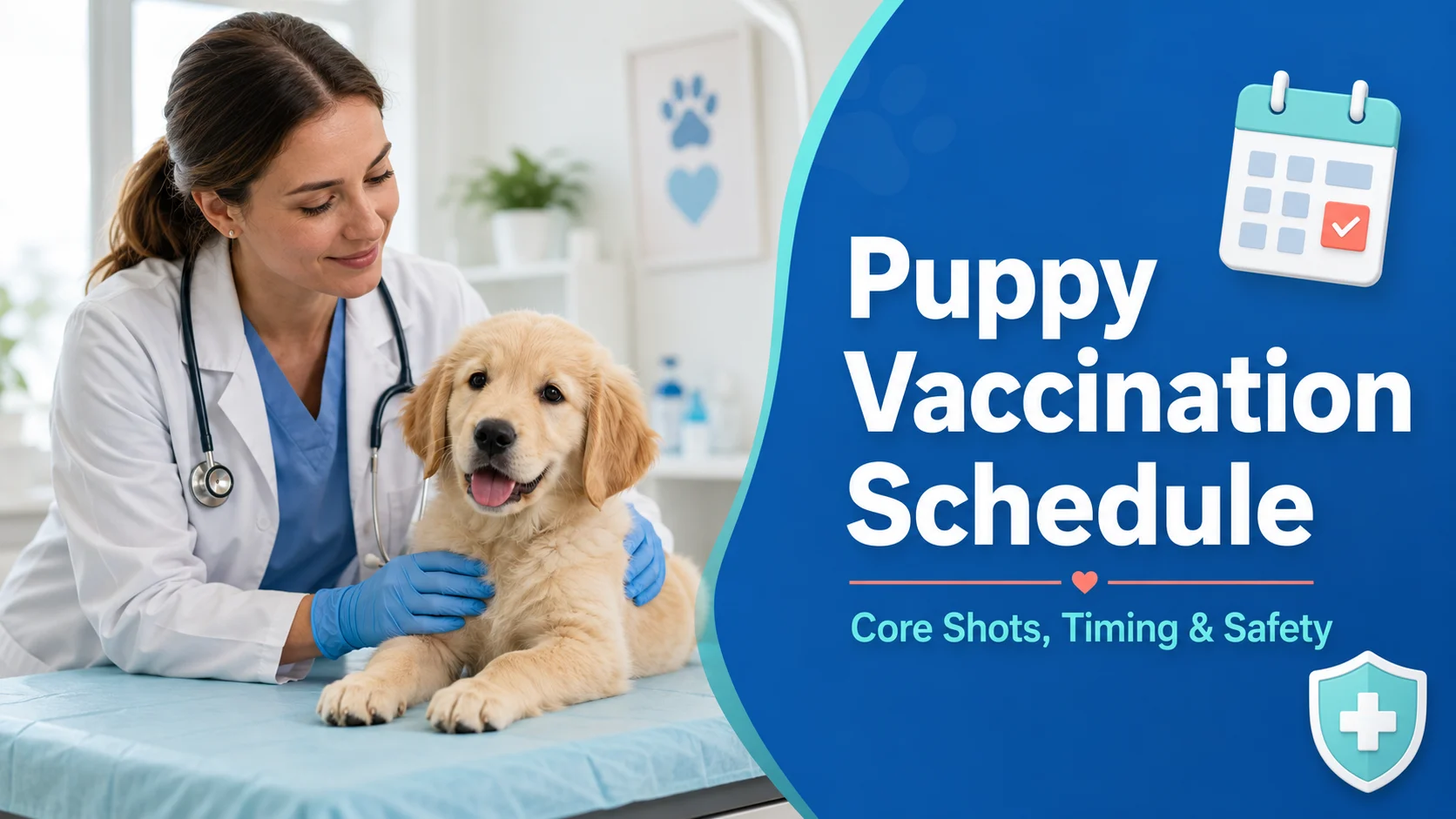
Quick answer: A typical puppy series begins around 6–8 weeks with a core combination vaccine and repeats every 2–4 weeks until the puppy is older than 16 weeks; some high-risk settings use a later final dose. Rabies follows local law. Leptospirosis and other vaccines depend on current guidelines, geography, travel, wildlife, boarding, daycare, and other exposure. Your veterinarian must set the actual schedule.
Owners often expect a single universal puppy shots chart. The sequence is similar in many clinics, but the exact plan changes with age at first dose, maternal antibody interference, local disease prevalence, legal requirements, product label, travel, and lifestyle.
Use this article to understand the questions behind the schedule. It is not a prescription and should never be used to buy or administer vaccines without a veterinarian.
Why Puppies Need a Series Instead of One Shot
Antibodies received from the mother can protect a young puppy but can also block an early vaccine. Because the timing of that decline differs among puppies, repeated doses create opportunities for the immune system to respond after maternal protection has waned.
The goal is not to give every vaccine as early as possible. It is to close the vulnerable window while avoiding unnecessary exposure. This is why missed appointments and undocumented records should be discussed promptly with the clinic.
Typical Puppy Vaccine Timeline
AAHA recommends starting the core combination series at approximately 6–8 weeks and repeating at 2–4 week intervals until the puppy is older than 16 weeks. Rabies is governed by law. Your clinic may use different product names or abbreviations, so ask what each entry in the record protects against.
| Age window | Common discussion | Important caveat |
| 6–8 weeks | Begin core combination series when appropriate | Maternal antibodies may reduce response |
| 9–12 weeks | Continue core series; assess lifestyle and local risks | Product and clinic intervals vary |
| 12–16 weeks | Continue series; rabies timing per law; risk-based vaccines as advised | Do not treat this chart as a prescription |
| >16 weeks | Final puppy core dose at or after the veterinarian’s target age | Some high-risk areas may use 18–20 weeks |
| Within 1 year | Booster visit after the initial series | The exact timing and products depend on the plan |
| Adult years | Core boosters and risk-based vaccines at guideline/product intervals | Lifestyle should be reassessed at every visit |
Core and Risk-Based Vaccines
Core vaccination protects against severe, widely important disease. The combination often called DAPP or DHPP covers canine distemper, adenovirus, and parvovirus, with parainfluenza included in many products. Rabies is core and legally regulated in many places.
The rest of the conversation is driven by exposure. Leptospirosis risk can arise from wildlife, rodents, standing water, and urban environments—not only rural living. Bordetella, canine influenza, Lyme disease, and other vaccines may be appropriate for some dogs. Ask the veterinarian to explain why each vaccine is recommended for this puppy.
| Vaccine topic | Why it may be discussed | Decision owner |
| DAPP/DHPP | Core protection against major viral diseases | Veterinarian-guided series |
| Rabies | Fatal zoonotic disease and legal requirement | Veterinarian + local law |
| Leptospirosis | Exposure through contaminated water/soil and infected animals | Veterinarian based on current guidance and risk |
| Bordetella/influenza | Boarding, daycare, grooming, shows, group classes | Veterinarian + facility requirements |
| Lyme disease | Tick exposure in relevant regions | Veterinarian based on geography and prevention plan |
Can a Puppy Socialize Before Being Fully Vaccinated?
Yes, when exposure is controlled. Waiting in total isolation until the series is complete can waste an important developmental period. The AVSAB socialization statement supports safe socialization before full vaccination and notes that well-run puppy classes may begin after initial vaccination and deworming requirements are met.
Choose known healthy vaccinated dogs, clean private homes or gardens, sanitized class spaces, car rides, being carried in public, people of varied appearance, household sounds, and surfaces that your veterinarian considers low risk. Avoid dog parks, unknown dogs, pet-store floors, and areas heavily contaminated with dog feces until advised.
Before and After a Vaccine Appointment
- Bring every record, including breeder/rescue labels, dates, product stickers, and previous reactions.
- Tell the clinic about vomiting, diarrhea, coughing, fever, lethargy, medications, travel, boarding, wildlife exposure, and prior vaccine reactions.
- Plan a quiet day afterward and observe the puppy according to the clinic’s instructions.
- Ask which reactions are expected, which are urgent, and whom to call after hours.
- Book the next dose before leaving and store a digital copy of the updated record.
Possible Reactions and Emergency Signs
Mild tiredness, temporary soreness, or reduced appetite can occur, but the clinic should define what is normal for the vaccine used. Contact the clinic if symptoms are concerning, persistent, or worsening.
Facial swelling, hives, repeated vomiting, breathing difficulty, collapse, severe weakness, or pale gums can indicate a serious reaction. Treat those signs as urgent and seek emergency veterinary care.
What If the Schedule Is Late or Records Are Missing?
Do not guess and do not restart or skip doses on your own. Give the veterinarian every document you have, including photos of labels or foreign records. The plan will depend on the puppy’s current age, the reliability of the documentation, prior products, disease risk, and local rules.
A verbal assurance that a puppy ‘had all shots’ is not a usable medical record. Responsible transfers should include dated documentation that identifies the vaccine and the administering clinic or provider.
Vaccines Do Not Replace Other Prevention
- Fecal testing and veterinarian-selected treatment for intestinal parasites.
- Heartworm prevention where relevant, plus flea and tick prevention appropriate to age, size, and geography.
- Avoiding feces, standing water, sick animals, wildlife contact, and high-risk group settings when advised.
- Microchipping, visible ID, safe transport, and rapid veterinary attention when illness appears.
Questions to Ask at the Appointment
- Which vaccines are core for this puppy, and which are based on lifestyle or local risk?
- What is the planned date and minimum age for each remaining dose?
- Which locations and socialization activities are safe right now?
- What reactions should I watch for, and what number should I call after hours?
- What parasite prevention and testing schedule fits this puppy?
- What documentation will boarding, training class, travel, or licensing require?
Frequently Asked Questions
At what age do puppy vaccinations start?
Core combination vaccination commonly begins around 6–8 weeks, but age, health, prior records, product, and local disease risk determine the actual start.
How many shots does a puppy need?
There is no single count because products, intervals, age at first dose, legal requirements, and lifestyle vaccines differ. Focus on completing the veterinarian-designed series, not a number.
When is a puppy fully vaccinated?
Ask the veterinarian who administered the series. Protection is not instantaneous, and the answer depends on the final dose, vaccine, health, and local risk.
Can a puppy meet vaccinated dogs?
Often yes in a controlled setting with known healthy vaccinated dogs. Avoid high-risk communal areas and ask your veterinarian about local parvovirus and other disease risk.
Is leptospirosis only a rural risk?
No. Wildlife, rodents, contaminated soil, and water can occur in urban and suburban areas. Ask your veterinarian how current guidance applies locally.
What if my puppy misses a vaccine appointment?
Call the clinic. Do not assume the series must restart or that the puppy remains protected. The veterinarian will adjust the plan based on age, prior doses, and product.
Can vaccines make a puppy tired?
Temporary tiredness can occur, but the clinic should explain expected reactions. Breathing difficulty, facial swelling, repeated vomiting, collapse, or severe weakness is urgent.
Disclaimer
Medical and behavior disclaimer: This article is for general educational purposes and cannot diagnose or treat an individual dog. A puppy’s vaccine, nutrition, medication, exercise, and behavior plan should be tailored by a licensed veterinarian who knows the dog’s age, health, breed, environment, and local disease risks. Seek prompt veterinary care for breathing difficulty, collapse, repeated vomiting or diarrhea, marked lethargy, pain, a swollen abdomen, toxin exposure, a sudden behavior change, or any symptom that concerns you. For fear, aggression, or persistent training problems, ask your veterinarian for a referral to a qualified, reward-based behavior professional.