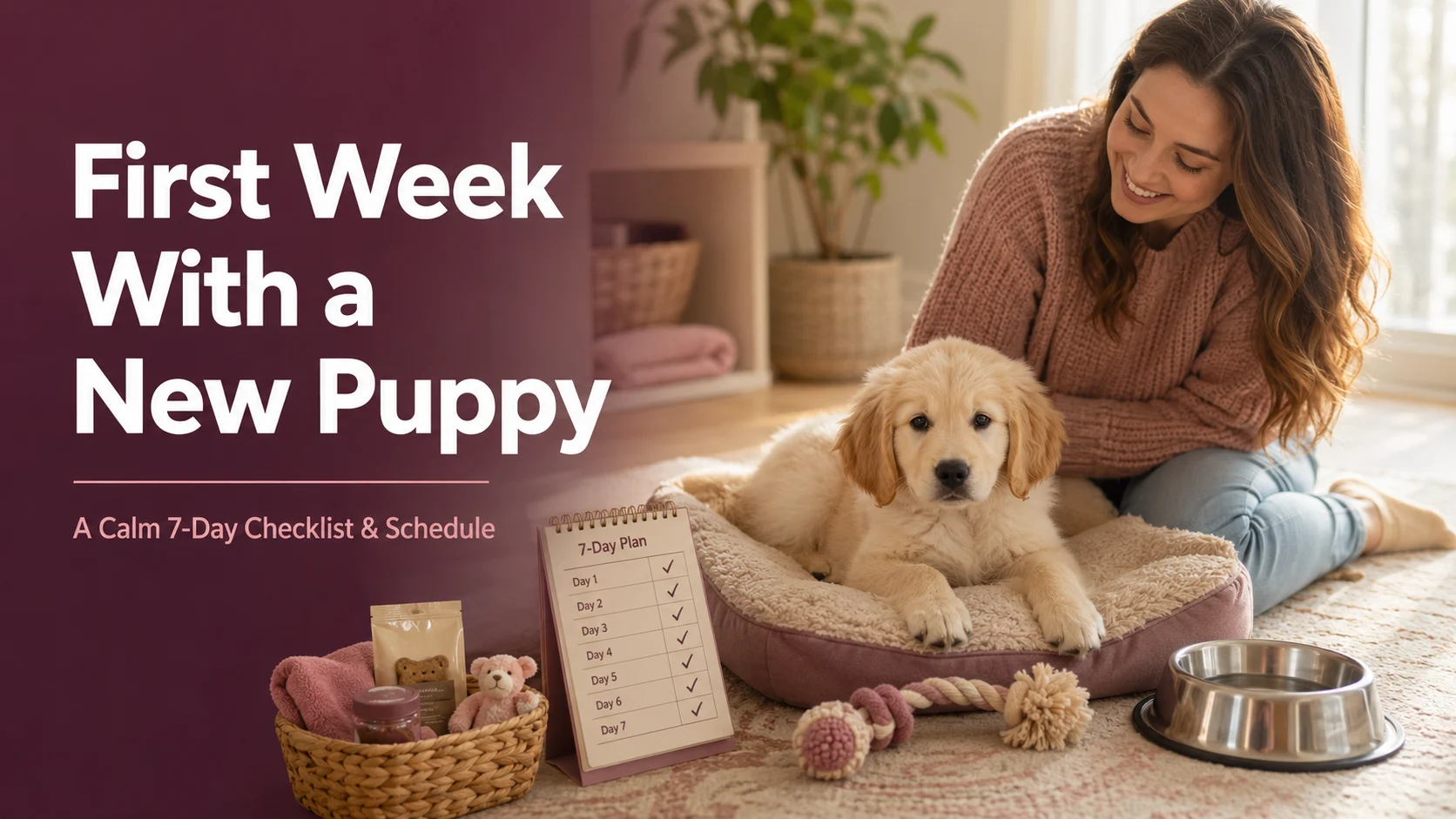
Quick answer: During the first week, keep the puppy’s world predictable: use the familiar food, schedule a veterinary check, limit access to one puppy-proofed zone, take frequent toilet trips, protect sleep, begin brief reward-based training, and introduce new people, sounds, surfaces, and alone time in tiny positive doses. The goal is safety and trust—not seeing everything or teaching every command in seven days.
The first week is emotionally intense for a puppy. They have lost familiar littermates, smells, people, and routines while entering a home full of new rules. A packed welcome party can feel like love to humans and like unavoidable pressure to the puppy.
This plan deliberately does less. It uses repetition and observation to establish eating, sleeping, toileting, handling, and safe exploration. Adjust the pace for the individual; a confident puppy and a worried rescue puppy should not be pushed through the same timetable.
Prepare Before Pickup
- Puppy-proof one room and set up a crate or pen, bed, water, safe chews, and toilet route.
- Buy the same food used by the breeder or rescue and confirm the portion and meal times.
- Collect dated vaccine/deworming records, microchip details, health history, contract, and emergency contacts.
- Book a veterinary appointment and confirm how to transport the puppy safely.
- Set household rules for supervision, cue words, sleeping location, children, and resident pets.
Day 1: Arrival and the First Night
Take the puppy to the toilet area before entering. Let them explore one safe zone, offer water, and provide the familiar meal at the usual time. Keep voices low and visitors minimal. Introduce family members one at a time and allow the puppy to approach.
For the first night, place the sleeping area close enough to hear restlessness and provide toilet trips appropriate to age. Quiet reassurance is not ‘rewarding fear.’ Avoid exciting play in the middle of the night; keep trips boring, safe, and brief.
- Photograph or scan every record before paperwork can be lost.
- Check that the collar or harness cannot snag in an unsupervised crate; follow product instructions.
- Note eating, drinking, urination, stool, cough, vomiting, itching, energy, and sleep.
Day 2: Build the Toilet and Feeding Rhythm
Take the puppy out after waking, after each meal, after drinking, after play, after excitement, and before confinement or sleep. Stay with the puppy and reward immediately after they finish. Indoor accidents mean the gap or supervision was too ambitious.
Keep the same food for now unless a veterinarian directs otherwise. Measure the daily amount and divide it according to the puppy feeding schedule. Sudden food changes, rich chews, and many new treats can make stool changes impossible to interpret.
Day 3: Veterinary Check and Health Baseline
Bring the puppy, all records, the food label, a fresh stool sample if requested, and a written question list. Ask about vaccines, parasite control, microchip registration, nutrition, safe socialization, grooming, dental care, reproductive planning, and signs that require urgent care.
The appointment also creates a baseline for weight, body condition, heart, lungs, skin, ears, mouth, joints, and behavior. Do not describe a source as ‘vet checked’ unless documentation supports it.
Day 4: Name Response and Handling
Say the puppy’s name once. When they orient toward you, mark with ‘yes’ and reward. Repeat only a few times, then stop. A name should predict useful information, not become background noise.
Pair one-second touches to collar, ears, paws, mouth, and body with food. Stop before struggling. This cooperative-care foundation is more valuable than forcing a complete grooming session.
Day 5: Safe Socialization
Offer two or three low-intensity experiences: a person in a hat at a distance, a different floor surface, a car ride around the block, household sounds played softly, or seeing a known healthy dog through a barrier. Pair with food and allow retreat.
Socialization is not a checklist of forced greetings. Use the 0–16 week socialization plan and ask the veterinarian which locations are low risk before the vaccine series is complete.
Day 6: Practice Very Short Alone Time
After toilet, food, and a little calm activity, give a safe chew in the pen or crate and step away for a few seconds. Return before distress escalates. Repeat at an easy duration. The lesson is that calm separation is ordinary and people return.
If the puppy immediately panics, drools, screams, soils, or attempts to escape, do not use a cry-it-out plan. Reduce the challenge and seek professional help if distress persists.
Day 7: Review Instead of Adding More
Review the week: When does the puppy usually toilet? How long can they stay calmly behind a gate? Which foods and toys are valuable? What causes fear or overarousal? How much sleep precedes the easiest behavior? Use those observations to design week two.
Increase access to the home only when supervision and toilet success support it. Freedom is earned gradually through management; it should not depend on the puppy making adult decisions.
Sample First-Week Daily Schedule
| Part of day | Core routine | Flexible addition |
| Early morning | Toilet, meal, toilet, short interaction | Name game or gentle handling |
| Mid-morning | Nap, toilet, supervised exploration | One easy socialization exposure |
| Midday | Meal if age requires, toilet, nap | Short alone-time repetition |
| Afternoon | Toilet, play, training, rest | Known healthy visitor or surface game |
| Evening | Meal, toilet, calm family time | Stuffed toy or sniffing game |
| Night | Final toilet and quiet sleep routine | Age-appropriate overnight toilet trip |
Resident Dogs, Cats, and Children
Use barriers and short sessions. Feed animals separately, remove high-value items, and give the resident pet escape routes and individual attention. A tolerant adult dog should not be expected to parent an exhausting puppy.
An adult must supervise children and dogs actively. Teach children to leave the puppy alone while eating or sleeping, avoid hugging and climbing, and call an adult instead of taking items from the puppy. Supervision means being close enough to intervene, not watching from another room.
Common First-Week Mistakes
- Inviting many visitors and taking the puppy to crowded places before they have settled.
- Changing food immediately, then adding chews, toppers, and treats when stool becomes loose.
- Giving full-house freedom and punishing accidents that management could have prevented.
- Keeping the puppy awake for entertainment and mistaking overtired biting for a training failure.
- Forcing crate isolation for long periods before building positive associations.
- Allowing every person to use different cues, rules, and responses.
Call a Veterinarian Promptly If You See
- Repeated vomiting or diarrhea, blood, refusal of food with lethargy, or inability to keep water down.
- Breathing difficulty, collapse, pale or blue gums, swollen abdomen, toxin exposure, or severe pain.
- Straining without urinating, marked weakness, seizures, or a rapidly worsening condition.
- Coughing, nasal discharge, persistent itch, lameness, or any concern in a very young puppy.
Frequently Asked Questions
Should a puppy sleep in the bedroom the first week?
Keeping the sleeping area nearby can help caregivers hear toilet needs and reduce abrupt isolation. The long-term location can be changed gradually once the puppy is settling.
Is it okay to comfort a crying puppy?
Calm reassurance does not create fear. First check toilet, temperature, pain, hunger, and safety. Avoid turning nighttime waking into exciting play, and build comfortable separation during the day.
When should visitors meet a new puppy?
Wait until the puppy is eating, sleeping, and exploring comfortably, then invite calm visitors one at a time. Let the puppy choose whether to approach.
Can I change puppy food during the first week?
Keeping the familiar food initially reduces variables. If a change is needed, ask the veterinarian and transition gradually when practical unless medical advice says otherwise.
How often should I take a puppy out to toilet?
Take the puppy after waking, meals, drinking, play, excitement, and before sleep or confinement, plus frequent age-appropriate trips. Record results and shorten gaps after accidents.
When can I leave a puppy alone?
Begin with seconds or minutes while the puppy is calm and build gradually. Very young puppies need frequent care and cannot be expected to handle a full workday alone.
What should I teach in the first week?
Prioritize name response, recall games, toilet location, calm handling, crate or pen comfort, and rewarding four paws on the floor. Formal perfection can wait.