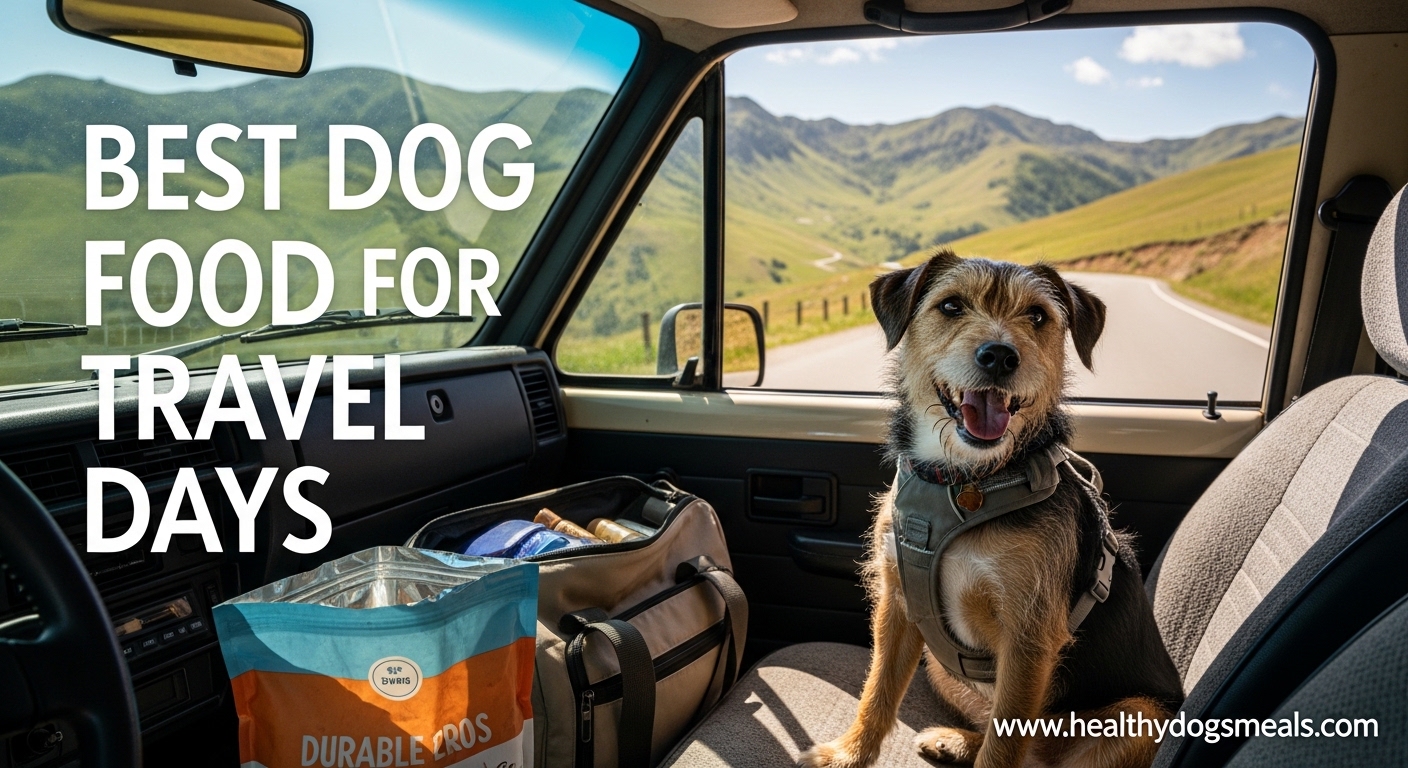
The best dog food for travel days is a shelf-stable, nutrient-dense option such as air-dried kibble, freeze-dried raw bites, or high-quality wet food in single-serve pouches. These portable dog food for trips solutions ensure your dog receives consistent nutrition without the need for refrigeration, minimizing digestive upset during road trips, flights, or camping.
Quick Facts: Portable Dog Food for Trips
- Portability: Freeze-dried and air-dried foods are 75% lighter than wet food, making them ideal for hiking.
- Shelf-Life: Ready-to-eat dog food travel options can stay fresh for months without refrigeration.
- Digestibility: High-protein, limited-ingredient diets reduce the risk of “travel tummy” or car sickness.
- Convenience: Single-serve travel friendly dog food packs prevent overfeeding and mess.
- Hydration: Many travel foods are designed to be rehydrated, helping your dog stay hydrated in transit.
- Safety: Sealed pouches protect food from pests and moisture during camping or road trips.
Introduction: Why Travel Meal Planning Matters
Traveling with your canine companion is a rewarding experience, but it presents unique challenges for their digestive system. Whether you are heading out on a cross-country road trip or a weekend camping excursion, the best dog food for travel days must balance three things: convenience, nutrition, and stability.
In 2026, the pet industry has moved far beyond bulky 15kg bags of kibble. Modern pet parents now have access to lightweight dog food for travel that provides the benefits of raw nutrition with the convenience of a snack bag. This guide will walk you through the top dog travel meal solutions, helping you keep your pup happy and healthy while on the move.
What Is the Best Dog Food for Travel Days?
The best dog food for travel days refers to any nutritionally complete meal that is easy to transport, store, and serve in non-traditional environments. Unlike your dog’s everyday meal, which might involve fresh meat or large bowls of heavy kibble, travel food focuses on “shelf-stability.”
This includes:
- Freeze-Dried Raw: Raw meat that has had moisture removed, making it lightweight and bacteria-safe.
- Air-Dried Kibble: Slowly dried meat that retains its shape but doesn’t require a fridge.
- Wet Food Pouches: Easier to pack than heavy metal cans and perfect for ready to eat dog food travel.
Why Is Portable Dog Food Important?
Feeding your dog during a trip isn’t just about stopping at a gas station. Changing a dog’s diet suddenly or feeding them heavy meals before a long car ride can lead to vomiting, diarrhea, and general discomfort.
Using portable dog food for trips is important because:
- Stability: It eliminates the need for dog food without refrigeration travel, which is essential for camping or long drives.
- Consistency: Travel is stressful. Keeping their food familiar but in a more portable format helps maintain their gut health.
- Space Efficiency: Lightweight dog food for travel allows you to pack more gear for yourself while ensuring your dog has enough calories.
What Ingredients Should You Look For?
When selecting dog food for road trips or camping, the ingredient list should prioritize high energy and easy digestion.
1. Concentrated Animal Proteins
Look for “Chicken,” “Beef,” or “Lamb” as the first ingredient. Since travel food is often served in smaller portions, the protein must be high-quality and bioavailable to keep their energy up.
2. Natural Prebiotics
Ingredients like Chicory Root or Beet Pulp are essential for travel. They help “firm up” stools, which is exactly what you want when you are staying in a hotel or a tent.
3. Low Fat Content
While fat is energy, highly fatty meals can trigger motion sickness in some dogs. For travel days, a moderate fat level (12%–15%) is often better than a “high-performance” 20% fat diet.
4. Ginger or Pumpkin
Some premium travel packs include ginger to naturally soothe the stomach or pumpkin to provide extra fiber for digestive regularity.
What Should You Avoid During Travel?
To ensure easy dog feeding during travel, stay away from these common pitfalls:
- Raw Meat (Fresh): Unless you have a high-end portable freezer, fresh raw meat is a major safety risk for salmonella and spoilage.
- High-Fiber “Fillers”: Too much corn or soy can cause gas and bloating—something you definitely don’t want in a small car or airplane cabin.
- New Proteins: Never introduce a brand-new protein (like switching from Chicken to Venison) on the day of a big trip.
- Heavy Grains: These can make some dogs feel lethargic or “heavy” during long periods of sitting.
Are There Vet-Recommended Options?
Most veterinary professionals recommend sticking as close to your dog’s regular diet as possible but switching the format. For example, if your dog eats a specific brand of kibble, check if that brand offers travel friendly dog food packs or smaller, resealable bags.
Vets also suggest ready to eat dog food travel options that meet AAFCO standards for “All Life Stages.” If your dog has a sensitive stomach, your vet might recommend a “Gastrointestinal” specific wet pouch for the duration of the trip to prevent stress-related colitis.
Nutritional Breakdown: Travel Options Compared
| Feature | Freeze-Dried Raw | Air-Dried Kibble | Wet Food Pouches |
| Weight | Extremely Light | Moderate | Heavy (contains water) |
| Hydration | Needs water added | Can be fed dry | Provides hydration |
| Storage | Shelf-stable | Shelf-stable | Shelf-stable (until open) |
| Price | High | Moderate | Moderate |
| Best For | Hiking & Camping | Long Road Trips | Short Trips / Picky Eaters |
Safety Guidelines: Feeding on the Road
To prevent emergencies while away from your local vet, follow these dog travel meal solutions safety rules:
- The 2-Hour Rule: Feed your dog at least 2 hours before hitting the road to prevent motion sickness.
- Water is Priority: Travel can be dehydrating. Always use bottled or filtered water if you are in a new area to avoid “local water” stomach bugs.
- Small Portions: Give smaller, more frequent meals rather than one large dinner. This is easier on the digestive tract during stress.
- Seal It Tight: Use airtight containers for portable dog food for trips to keep out ants and prevent the food from smelling up your vehicle.
Recommended Products Section: 2026 Travel Picks
These products are selected for their high-quality ingredients and “travel-friendly” packaging.
1. Ziwi Peak Air-Dried Dog Food
This is the ultimate lightweight dog food for travel. It is 96% meat, seafood, and bone. Because it is air-dried, it is nutrient-dense; a small bag lasts a long time.
- Why it wins: No refrigeration needed and no mess.
2. Stella & Chewy’s Freeze-Dried Raw Patties
Perfect for best dog food for camping trips. You can crumble these over water to create a fresh, raw-style meal in seconds.
- Why it wins: Extremely lightweight and helps with hydration.
3. Royal Canin Wet Food Pouches
If your dog prefers “gravy” styles, these ready to eat dog food travel pouches are excellent. They are portion-controlled and easy to squeeze into a travel bowl.
- Why it wins: Great for picky eaters who get stressed and stop eating during travel.
Affiliate Disclosure: This article may contain affiliate links. If you purchase through these links, we may earn a small commission at no extra cost to you. We only recommend products that meet AAFCO nutritional standards.
Common Mistakes Dog Owners Make
- Feeding the “Last Minute” Meal: Feeding right before getting in the car is the #1 cause of car sickness.
- Leaving Wet Food Out: If you use ready to eat dog food travel cans or pouches, discard what isn’t eaten within 30 minutes. In a warm car or tent, bacteria grow rapidly.
- Forgetting the Measuring Cup: Don’t guess the portion sizes. Use a collapsible silicone measuring cup to keep your dog’s weight stable.
- Using a New Water Source: Sudden changes in mineral content in water can cause diarrhea. Bring a few gallons of your home water or use bottled water.
Comparison: Fresh Food vs. Travel-Ready Formats
| Feature | Home-Cooked / Fresh | Travel-Ready (Freeze/Air Dried) |
| Refrigeration | Mandatory | Not Required |
| Mess Factor | High | Low |
| Nutrient Density | Moderate | Very High |
| Preparation Time | 10–20 Minutes | 0–1 Minute |
| Risk of Spoilage | High | Very Low |
FAQ Section: Travel Feeding Tips
Dry kibble or air-dried meat is best. They don’t require refrigeration and won’t spoil in a warm car. Avoid heavy, wet meals right before driving.
No. Most road snacks (jerky, chips, crackers) are too high in salt and may contain garlic or onion powder, which are toxic to dogs.
Use an airtight, bear-proof (if necessary) container. Dog food without refrigeration travel options like freeze-dried are best because they don’t attract as many pests as smelly wet food.
Dogs should have access to water every 2–3 hours. If they aren’t drinking, try mixing a little ready to eat dog food travel gravy into their water bowl.
It is best to skip the meal immediately before the ride. Feed a smaller meal once you have reached your destination and the dog has settled.
Yes, as long as the bag is labeled for “Growth” or “All Life Stages.” It is a great way to provide the high calories puppies need in a lightweight dog food for travel format.
Summary and Final Checklist
Planning your dog travel meal solutions ahead of time is the secret to a happy trip. By choosing travel friendly dog food packs that are high in protein and shelf-stable, you ensure your dog has the energy for adventure without the risk of an upset stomach.
Travel Day Checklist:
- Airtight container for food.
- Collapsible silicone bowls.
- Bottled water from home.
- High-value (but simple) treats for positive reinforcement.
Medical Disclaimer: This content is for informational purposes only and is not a substitute for professional veterinary advice, diagnosis, or treatment.