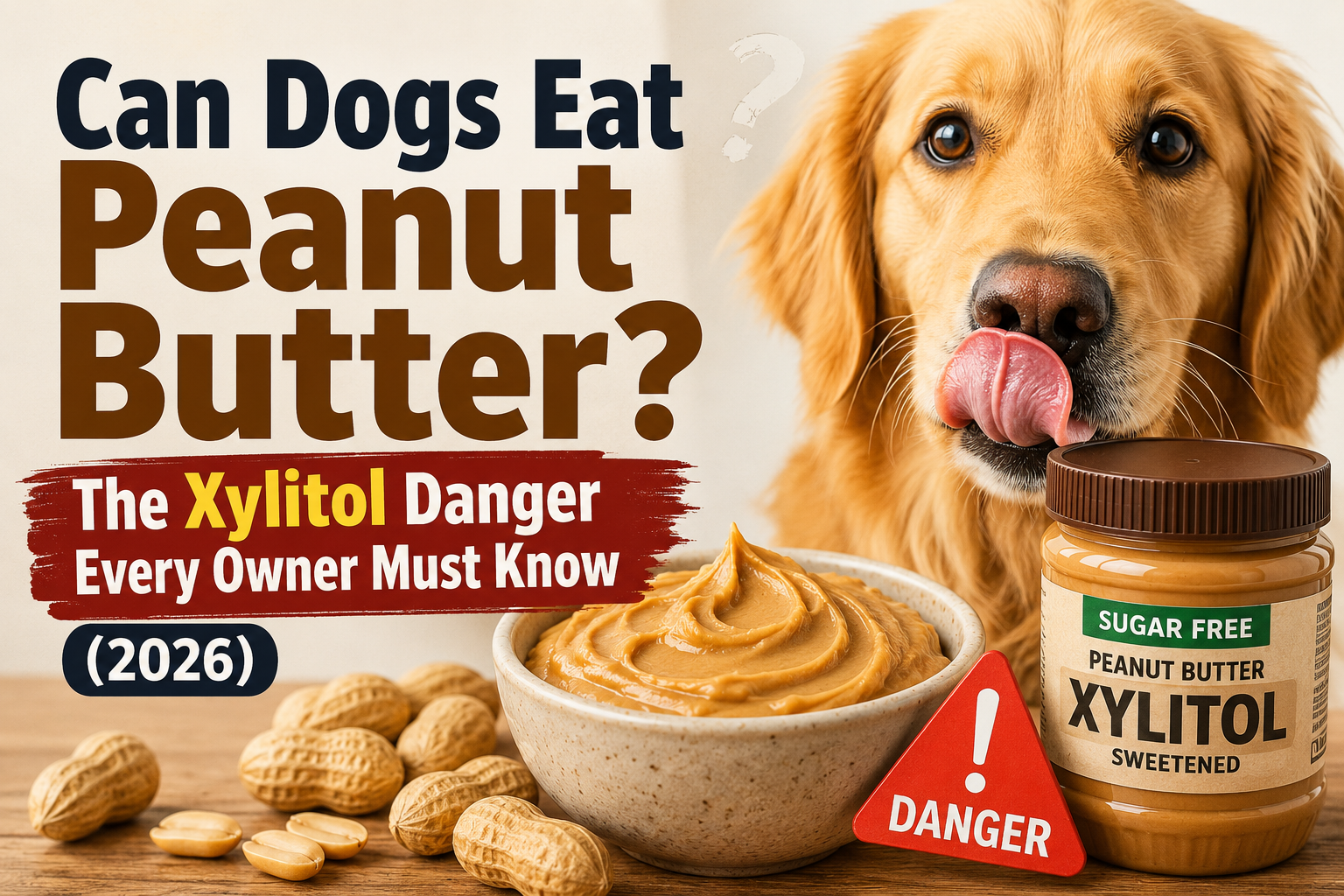
Quick Answer (AI Overview): Yes, dogs can eat peanut butter — but ONLY if it is 100% xylitol-free. Xylitol (sometimes labelled “birch sugar” or “wood sugar”) is a sweetener in some peanut butters that can cause fatal hypoglycemia and liver failure in dogs within 10–60 minutes. Choose plain, unsalted, unsweetened peanut butter and feed it in strict moderation: about 1/2 teaspoon per serving for small dogs and up to 1 tablespoon for large dogs, a few times per week. Skip it entirely for dogs with pancreatitis, obesity, or kidney issues.
Affiliate Disclosure: This post may contain affiliate links. If you purchase through these links, Healthy Dogs Meals may earn a small commission at no extra cost to you. We only recommend products we genuinely believe can help your dog. Read our full Affiliate Disclosure.
Peanut butter is practically a love language between humans and dogs. It hides pills, fills enrichment toys, rewards nail trims, and makes lick mats worth living for. So the question “can dogs eat peanut butter?” has a happy answer — yes — but it comes with one of the most serious label warnings in all of dog nutrition. A single ingredient, hiding in a growing number of jars, turns this beloved treat into a medical emergency.
This guide covers the xylitol danger in detail (including the sneaky alternative names it hides behind), how to choose a safe jar, exact portion sizes by body weight, the best ways to serve it, which dogs should never have peanut butter, and what to do if your dog gets into the wrong jar. It joins our safe-foods library alongside Can Dogs Eat Cheese? and the rest of our Can Dogs Eat hub.
Is Peanut Butter Safe for Dogs? The Short Answer
Plain peanut butter — just peanuts, maybe a little salt — is safe for most healthy dogs in moderation. Peanuts themselves are not toxic to dogs, and organizations like the American Kennel Club confirm that xylitol-free peanut butter fed in sensible amounts is a perfectly acceptable treat, even offering protein, healthy fats, niacin, and vitamins B and E.
The safety question is therefore never really about peanuts. It’s about what manufacturers add: xylitol (deadly), sugar (unhealthy), excess salt (problematic), and hydrogenated oils (unnecessary fat). Master the label, and peanut butter becomes one of the most useful treats in your toolkit.
The Xylitol Danger: What Every Dog Owner Must Know
Xylitol is a sugar alcohol used as a low-calorie sweetener in human foods. For people it’s harmless. For dogs it is one of the most dangerous substances in the average kitchen — gram for gram, it’s far more toxic to dogs than chocolate.
Why Xylitol Is So Dangerous to Dogs
In dogs (unlike humans), xylitol triggers a massive, rapid release of insulin. Blood sugar can crash to dangerous lows within 10 to 60 minutes of ingestion — a condition called hypoglycemia that causes weakness, collapse, seizures, and death without treatment. At higher doses, xylitol also causes acute liver failure, sometimes a day or more after the dog seemed to recover. The FDA has issued specific warnings about xylitol in peanut butter for exactly this reason.
The Label Trap: Names Xylitol Hides Behind
Manufacturers increasingly list xylitol under alternative names. Before any jar goes near your dog, scan the ingredients for all of these:
- Xylitol — the standard name
- Birch sugar / birch sap / birch bark extract — the trendy “natural” rebrand
- Wood sugar
- Sugar alcohol (when unspecified — verify which one before trusting the jar)
- E967 — the European additive code
Xylitol-containing peanut butters are typically marketed as “sugar-free,” “keto,” “diabetic-friendly,” “low-carb,” or “naturally sweetened.” Treat every jar carrying those phrases as guilty until the ingredient list proves otherwise.
Symptoms of Xylitol Poisoning
| Timeframe | Symptoms | What’s Happening |
| 10–60 minutes | Vomiting, weakness, stumbling, lethargy | Blood sugar crashing |
| 1–12 hours | Collapse, tremors, seizures | Severe hypoglycemia |
| 12–72 hours | Jaundice, black tarry stool, repeat vomiting | Possible liver failure |
| Any time | Apparent recovery then decline | Delayed liver injury — still see a vet |
| If your dog eats anything containing xylitol, treat it as an emergency. Do not wait for symptoms. Call your veterinarian, an emergency clinic, or the ASPCA Animal Poison Control Center (888-426-4435) immediately. Bring the jar so staff can calculate the dose. Do not induce vomiting unless a professional instructs you to. |
Nutritional Profile: What Peanut Butter Actually Gives Your Dog
Once the xylitol question is settled, peanut butter is a moderately nutritious — and seriously calorie-dense — treat. Knowing the numbers explains why portion control matters so much.
| Nutrient (per 1 tbsp / 16 g) | Amount | Notes for Dogs |
| Calories | ~94 kcal | A LOT — half a small dog’s daily treat budget |
| Fat | 8 g | Mostly healthy fats, but pancreatitis-relevant |
| Protein | 3.5–4 g | Decent quality plant protein |
| Sugar (regular brands) | 1–3 g | Choose no-added-sugar jars |
| Sodium (salted brands) | 60–80 mg | Choose unsalted where possible |
| Niacin (B3) | 2.1 mg | Energy metabolism, skin health |
| Vitamin E | 1.5 mg | Antioxidant support |
| Magnesium | 27 mg | Muscle and nerve function |
The calorie line is the one to remember. One innocent tablespoon is nearly 100 calories — roughly a quarter of a Chihuahua’s entire daily requirement. Peanut butter earns its place as a high-value training and enrichment tool precisely because it should be rare and small, not a daily spoonful habit. For dogs on a diet, our Best Dog Food for Weight Loss guide explains how fast treat calories sabotage progress.
How to Choose a Safe Peanut Butter (Checklist)
- Read the full ingredient list — not the front label. “Natural” and “no added sugar” mean nothing about xylitol.
- Reject any jar listing xylitol, birch sugar, wood sugar, or E967.
- Prefer one-ingredient jars: “Ingredients: peanuts.” That’s the gold standard.
- Choose unsalted (or low-salt) and skip honey-roasted, chocolate-blended, or flavoured varieties — chocolate is toxic to dogs in its own right.
- Skip hydrogenated-oil and added-sugar formulas — needless fat and sugar.
- Consider dog-specific peanut butters if label-checking stresses you, but apply the same ingredient scrutiny; “made for dogs” is marketing, not regulation.
- Re-check the label every repurchase. Recipes change; the jar that was safe last year may not be this year.
How Much Peanut Butter Can a Dog Have? Portions by Weight
Apply the 10% treat rule — all treats combined under 10% of daily calories — and remember peanut butter is the most calorie-dense treat most owners use. These are conservative, vet-aligned serving sizes for healthy adult dogs; your dog’s overall daily intake should follow our Portion Guide by Dog Weight.
| Dog Size | Example Weight | Max Per Serving | Max Frequency |
| Extra-small (Chihuahua, Yorkie) | 2–5 kg | 1/4 – 1/2 tsp | 2–3x per week |
| Small (Frenchie, Shih Tzu) | 6–11 kg | 1/2 – 1 tsp | 2–3x per week |
| Medium (Beagle, Border Collie) | 12–25 kg | 1–2 tsp | 3x per week |
| Large (Labrador, GSD) | 26–40 kg | 2 tsp – 1 tbsp | 3–4x per week |
| Giant (Great Dane, Mastiff) | 40+ kg | 1 tbsp | 3–4x per week |
Two practical notes. First, measure — peanut butter portions creep when scooped freehand. Second, when using it for pills or enrichment, count those servings too; a pill pocket morning and a Kong evening can quietly double the intended weekly amount.
5 Smart Ways to Serve Peanut Butter to Dogs
- Enrichment toy stuffing: smear a thin layer inside a rubber toy (a thin coating beats a full cavity — same joy, fraction of the calories). Freeze for 20–30 minutes of calm licking, which is naturally soothing for anxious dogs — useful context in How Stress and Anxiety Can Affect a Dog’s Appetite.
- Lick mats: spread half a teaspoon thinly for bath-time, grooming, or nail-trim distraction.
- Pill delivery: a pea-sized blob defeats most pill-spitters. (Check with your vet — some medications shouldn’t be given with fatty food.)
- Training jackpot: a lick of peanut butter from a spoon is a premium reward for breakthrough moments — recall off a distraction, calm vet-table behaviour.
- Stuffed and frozen with fillers: mix a small amount with plain pumpkin or mashed banana to stretch flavour across more volume with fewer calories.
When Dogs Should NOT Eat Peanut Butter
- Pancreatitis (current or historical): peanut butter’s fat content is exactly what an inflamed pancreas cannot handle. Hard no without explicit vet approval.
- Obesity or weight-loss plans: at ~94 kcal per tablespoon, it’s among the least diet-friendly treats that exist.
- Kidney disease: salted peanut butter’s sodium load is inappropriate; even unsalted should be vet-cleared.
- Peanut allergy: rarer in dogs than humans, but real — watch for itching, hives, face rubbing, ear infections, or digestive upset after eating it.
- Dogs on prescription or elimination diets: any off-plan treat invalidates the protocol.
- Puppies under 12 weeks: their digestive systems don’t need this much fat; wait, then introduce in tiny amounts.
My Dog Ate a Whole Jar — Now What?
Xylitol-free jar: a whole-jar raid is rarely poisoning, but it is a serious fat bomb. Expect vomiting or diarrhea; for small dogs, dogs with pancreatitis history, or any dog showing abdominal pain (hunched back, restlessness, refusal to eat), call your vet — high-fat binges are a classic pancreatitis trigger. Also check whether the dog ate plastic jar fragments, which create a blockage risk.
Any jar containing xylitol: this is a now-emergency regardless of amount — go back to the red box above and call immediately.
Peanut Butter vs Other Treat Spreads
| Spread | Safe for Dogs? | Calories (per tbsp) | Notes |
| Plain peanut butter (xylitol-free) | Yes ✓ | ~94 | The benchmark — portion strictly |
| Almond butter (plain) | Yes, in tiny amounts | ~98 | Harder to digest; same xylitol check applies |
| Cashew butter (plain) | Yes, sparingly | ~94 | High fat; no added ingredients |
| Chocolate / hazelnut spreads | NEVER ✗ | — | Chocolate is toxic to dogs |
| Sugar-free spreads of any kind | NEVER ✗ | — | Xylitol risk by definition |
| Plain pumpkin purée | Yes ✓ | ~10 | The diet-friendly stuffing alternative |
| Plain Greek yogurt | Usually ✓ | ~20 | Check lactose tolerance; never sweetened |
For lower-calorie lick-mat and Kong alternatives, plain pumpkin is the standout — it features heavily in our 7 Safe Fibre Sources for Dogs guide and costs a tenth of the calories.
The Safest Option of All: Make It Yourself
If label anxiety lingers, homemade peanut butter removes every doubt for about two minutes of effort. Blitz plain, unsalted, dry-roasted peanuts in a food processor for three to five minutes, scraping the sides down a few times, until it turns from crumbs to paste to spreadable butter. That’s the entire recipe — one ingredient, zero sweeteners, zero salt, and it keeps for a month refrigerated in a sealed jar. Because nothing is added, you control exactly what your dog gets, and the cost per jar usually undercuts premium “dog-safe” brands considerably.
Homemade also unlocks simple treat baking: mix a tablespoon of your peanut butter with mashed banana and oat flour, roll into pea-sized balls, and bake at 160°C for 12–15 minutes for training treats whose every ingredient you can name. Just remember that homemade or not, the calorie math doesn’t change — portion the finished treats into your dog’s 10% budget like anything else, and introduce any new recipe gradually while watching for the allergy signs covered above.
Frequently Asked Questions
Weaned puppies over about 12 weeks can have a tiny lick of xylitol-free peanut butter as an occasional high-value reward. Keep it to fingertip amounts — puppy calorie budgets are small and growth nutrition should come almost entirely from a complete puppy food.
We don’t recommend it. Daily peanut butter normalises a calorie-dense habit that quietly drives weight gain, and fat adds up fast. Two to four small servings a week keeps it special, useful for training, and harmless.
Smooth is the safer default — easier to lick from toys and no peanut chunks for tiny dogs to gulp. Crunchy isn’t dangerous for medium and large dogs; the ingredient list matters far more than the texture.
Plain, unsalted, shelled peanuts are non-toxic in small numbers, but they’re a choking risk for small dogs and just as fatty. Never feed salted, flavoured, or in-shell peanuts — and never other mixed nuts, since macadamias are genuinely toxic to dogs.
It hits a trifecta dogs are wired for: fat, protein, and a little salt, in a sticky format that rewards extended licking. That stickiness is also why it’s such an effective enrichment and distraction tool.
Often, yes — powdered versions are defatted, dramatically cutting calories. The same rule applies: read every ingredient and reject anything sweetened, especially with xylitol.
Treat xylitol-containing products (peanut butter, gum, mints, some protein bars) like medications: cupboard height, closed doors, never in bags or coat pockets a dog can reach. Many xylitol emergencies start with a raided handbag, not a kitchen jar. If both safe and sugar-free jars live in your house, label the dog-safe one clearly so every family member — and every dog-sitter — grabs the right jar without thinking.
Final Verdict: Should You Share Peanut Butter With Your Dog?
Yes — peanut butter remains one of the best high-value treats in dog ownership, provided you become a ruthless label-reader. The rules are short: xylitol-free always (check for “birch sugar” too), one-ingredient jars preferred, portions measured by body weight, a few servings a week at most, and a hard pass for dogs with pancreatitis, weight problems, kidney disease, or peanut allergies. Get those right and the Kong stays a source of joy, never an emergency.
Keep building your safe-foods knowledge with Can Dogs Eat Cheese?, the master list of Foods That Are Toxic for Dogs, or the full Can Dogs Eat archive.
| Medical Disclaimer: The information in this article is for educational purposes only and is not a substitute for professional veterinary advice, diagnosis, or treatment. Always consult your veterinarian before changing your dog’s diet, especially if your dog has health conditions, allergies, or is on medication. See our full Disclaimer. |