A weekly feeding plan for adult dogs is a structured schedule that outlines exactly what, when, and how much a dog should eat over seven days. A balanced plan ensures consistent intake of proteins, healthy fats, and fiber, helping maintain an ideal weight and supporting long-term digestive and immune health.
Quick Facts: Adult Dog Feeding Strategy
- Consistency is Key: Feed at the same times daily to regulate digestion and metabolism.
- Two Meals Daily: Most adult dogs thrive on two smaller meals rather than one large one.
- Caloric Control: Base portions on activity level, age, and ideal weight, not just appetite.
- Protein First: Look for whole meat sources like chicken, beef, or fish as the primary ingredient.
- Safe Additions: Fresh toppers like steamed carrots or blueberries add antioxidants without high calories.
- Hydration Matters: Always ensure fresh water is available, especially if feeding dry kibble.
Introduction
Feeding your dog isn’t just about filling a bowl; it’s about providing the fuel they need to thrive. For many dog owners, the transition from puppyhood to adulthood brings questions about how much and how often to feed.
A well-organized weekly feeding plan for adult dogs removes the guesswork. By establishing a routine, you can monitor your dog’s health more effectively and ensure they receive a diverse range of nutrients. Whether you use high-quality kibble, fresh cooked meals, or a hybrid approach, structure is the foundation of canine wellness.
What Is a Weekly Feeding Plan for Adult Dogs?
A weekly feeding plan for adult dogs is a pre-determined schedule that specifies the types of food and portion sizes for every day of the week. It serves as a roadmap for nutritional consistency.
Unlike puppies who require frequent small meals, most adult dogs benefit from a dog weekly diet chart that focuses on maintenance. This plan often includes a “base” diet—such as a balanced commercial food—complemented by healthy, fresh toppers to provide variety and extra hydration.
Why Is an Adult Dog Feeding Schedule Important?
Maintaining a strict adult dog feeding schedule offers several benefits for both the pet and the owner. Dogs are creatures of habit and thrive on predictability.
- Weight Management: Scheduled feedings prevent “grazing,” which is a leading cause of canine obesity.
- Digestive Health: Regular meal times help the body establish a predictable elimination schedule.
- Behavioral Benefits: Food-motivated dogs are often calmer when they know exactly when their next meal is coming.
- Early Detection: If your dog has a set schedule and suddenly refuses a meal, you’ll notice immediately, which can be an early sign of health issues.
Benefits of a Structured Diet
A structured diet does more than just stop the “begging” at the dinner table. It provides a biological rhythm that supports every system in your dog’s body.
- Stable Energy Levels: By splitting meals into morning and evening sessions, you prevent the energy crashes associated with once-a-day feeding.
- Improved Nutrient Absorption: Consistent portions allow the gut to process nutrients efficiently without being overwhelmed.
- Metabolic Support: Regular meals keep the metabolism active, helping dogs stay lean and muscular.
What Ingredients Should You Look For?
When following a weekly feeding plan for adult dogs, the quality of ingredients is more important than the quantity. Focus on “bioavailable” ingredients that the dog’s body can easily use.
High-Quality Proteins
Look for specific meats like “Deboned Chicken,” “Beef,” or “Salmon.” Avoid generic terms like “meat by-products” which can be inconsistent in quality.
Healthy Fats
Fats are essential for brain function and coat health. Look for Omega-3 and Omega-6 fatty acids, often found in fish oil, flaxseed, or chicken fat.
Digestible Carbohydrates
Ingredients like sweet potatoes, oats, and brown rice provide steady energy. These are generally easier on the stomach than corn or soy fillers.
What Should You Avoid?
To keep your dog safe, certain ingredients should never find their way into the feeding bowl. Some are toxic, while others simply offer “empty calories.”
- Artificial Preservatives: Avoid BHA, BHT, and Ethoxyquin.
- Fillers: High amounts of corn, wheat, or soy often provide little nutritional value and can trigger allergies in some dogs.
- Toxic Human Foods: Never include onions, garlic, grapes, raisins, or chocolate in your dog’s meal plan.
- Excessive Sodium: Salty treats can lead to dehydration and kidney strain over time.
Nutritional Breakdown: The “Balanced Bowl”
For most healthy adult dogs, a balanced meal should roughly follow these percentages (on a dry matter basis):
| Nutrient Group | Recommended Range | Purpose |
| Protein | 18% – 25% | Muscle repair and immune support |
| Fats | 10% – 15% | Energy and skin/coat health |
| Fiber | 2% – 5% | Digestive regularity |
| Carbohydrates | Variable | Source of glucose for energy |
Comparison: Kibble vs. Fresh vs. Hybrid Feeding
| Feeding Style | Pros | Cons |
| Dry Kibble | Convenient, budget-friendly, good for dental health. | Low moisture content, often contains fillers. |
| Fresh/Cooked | High moisture, highly palatable, whole ingredients. | More expensive, shorter shelf life, harder to balance. |
| Hybrid (Mixed) | Best of both worlds; adds nutrients and hydration. | Requires careful calorie counting to prevent overfeeding. |
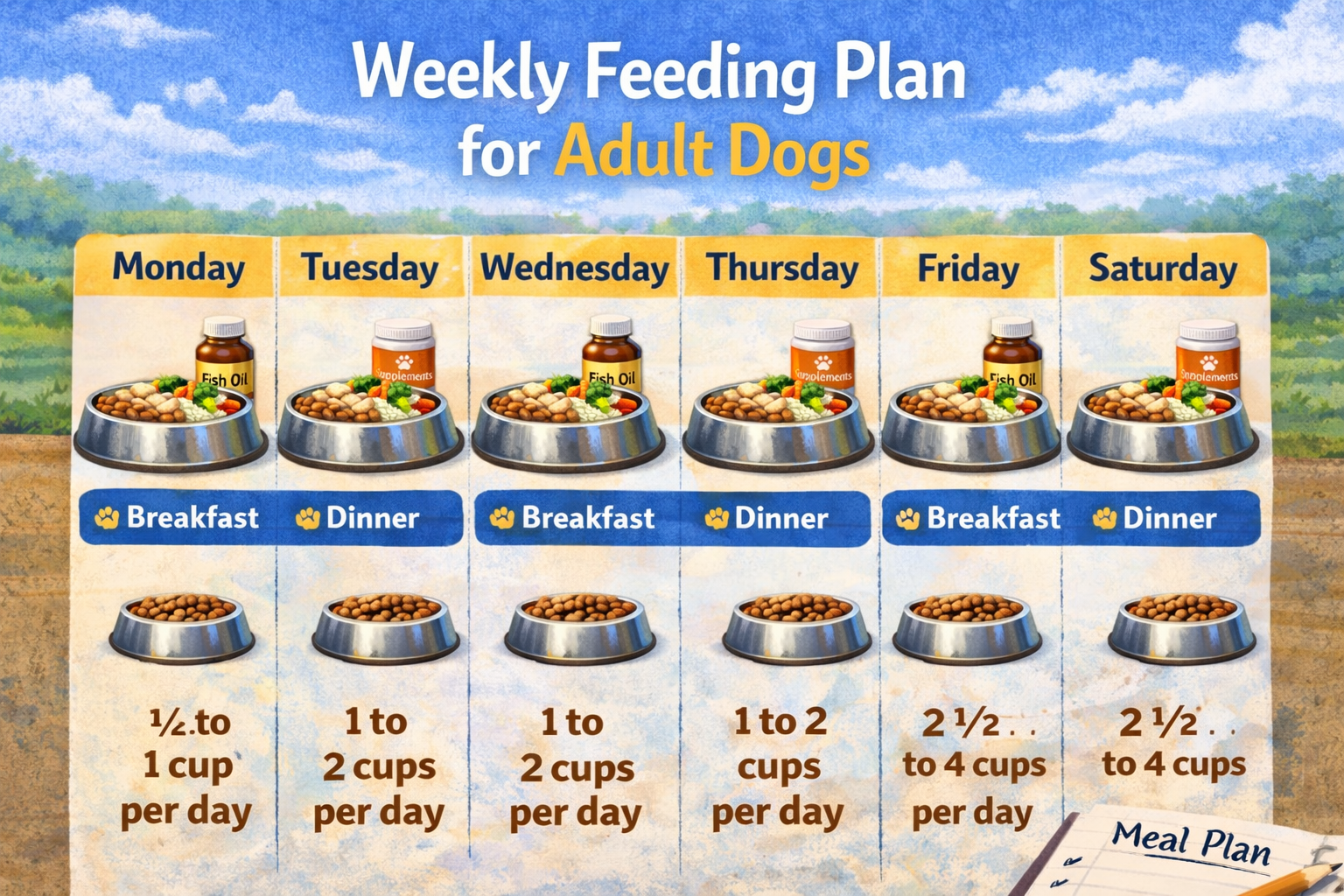
Sample 7-Day Dog Weekly Diet Chart
This chart assumes a “Hybrid” approach, using a high-quality base mixed with safe, fresh additions for variety.
- Monday: Base Meal + 1 tbsp Plain Pumpkin Puree (Digestive support)
- Tuesday: Base Meal + Small piece of cooked, unseasoned Chicken
- Wednesday: Base Meal + Steamed Green Beans (Crunchy fiber)
- Thursday: Base Meal + 1 tsp Fish Oil (Joint and coat health)
- Friday: Base Meal + 2-3 Blueberries (Antioxidants)
- Saturday: Base Meal + Scrambled Egg (Plain, no oil/salt)
- Sunday: Base Meal + Shredded Carrots (Vitamin A)
Common Mistakes Dog Owners Make
- Using a Measuring Cup… for Humans: Not all measuring cups are created equal. Use a standard kitchen scale or the specific scoop provided by the food manufacturer for accuracy.
- Feeding for the Wrong Weight: If your dog needs to lose weight, feed them for their target weight, not their current weight.
- Forgetting the Treats: Treats are part of the daily calorie count. If you give a lot of treats during training, reduce the size of the evening meal.
- Leaving Food Out: “Free feeding” makes it impossible to track how much your dog is actually eating and can lead to pest issues.
Recommended Products
Affiliate Disclosure: This article may contain affiliate links. If you purchase through these links, we may earn a small commission at no extra cost to you.
Choosing the right foundation for your weekly feeding plan for adult dogs is vital. We recommend looking for products that meet the following standards:
- AAFCO Compliant: This ensures the food is “complete and balanced” for adult maintenance.
- Transparent Sourcing: Brands that list exactly where their proteins come from.
Our Top Picks for Adult Dog Bases
- Premium Grain-Inclusive Kibble: Look for brands that use ancient grains like quinoa or sorghum instead of corn.
- Dehydrated Base Mixes: These are excellent for owners who want to add their own fresh meat but want to ensure the vitamin/mineral balance is correct.
- Omega-3 Supplements: A high-purity salmon oil is a great addition to any dry food diet to boost skin health.
Safety Guidelines & Vet Recommendations
While a dog weekly diet chart is a great tool, it is not a “one size fits all” solution.
- Consult Your Vet: Before switching diets, especially for dogs with pre-existing conditions like kidney issues or diabetes, always seek professional advice.
- Gradual Transitions: When moving to a new feeding plan, mix the new food with the old food over 7–10 days to prevent stomach upset.
- Monitor Body Condition: Use the “Rib Test.” You should be able to feel your dog’s ribs easily but not see them protruding.
FAQ Section
Most adult dogs do best with two meals a day, spaced about 8–12 hours apart. This keeps their energy levels stable.
It is better to keep the “base” food consistent and only rotate the “toppers” (like veggies or fish oil) to avoid digestive distress.
Caloric needs depend on weight and activity. A sedentary “couch potato” needs significantly fewer calories than a working dog of the same weight.
Not necessarily. Unless your dog has a diagnosed grain allergy, whole grains provide essential nutrients and fiber.
If a healthy dog skips one meal but acts normally, don’t panic. If they skip two meals or seem lethargic, contact your veterinarian.
Yes! Adding water or low-sodium broth is an excellent way to increase hydration and make the food more aromatic.
Medical Disclaimer: “This content is for informational purposes only and is not a substitute for professional veterinary advice, diagnosis, or treatment.”