Can Dogs Eat Rice? White vs Brown Rice & Safe Portions
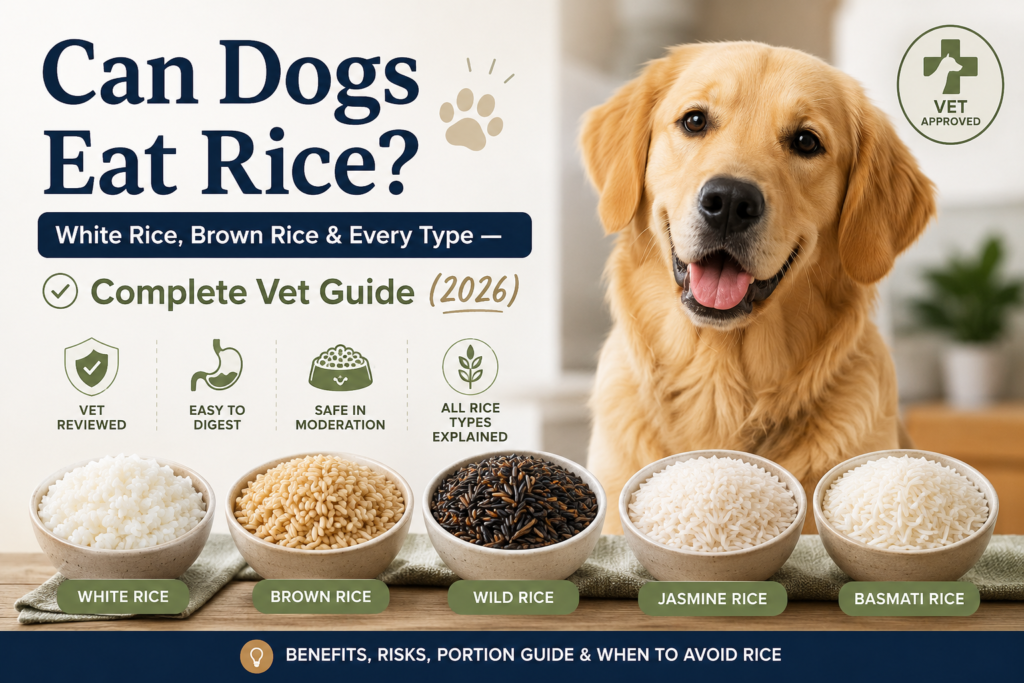
AI Overview: Can Dogs Eat Rice?
Sometimes. Plain rice may be appropriate for some dogs in small amounts, but preparation, portion size, added ingredients and the individual dog's health can change the answer. The safest answer depends on the exact form eaten, how much was consumed, your dog’s size and health, and whether the food contained unsafe ingredients or non-food parts.
Key Takeaways
- Check the exact preparation and full ingredient list before sharing human food.
- Plain food is different from restaurant food, desserts, sauces and packaged snacks.
- Remove pits, cores, shells, hard seeds, rinds or other hazardous parts where relevant.
- Keep appropriate extras small so they do not displace a complete and balanced dog diet.
- For known toxins, a large accidental ingestion, choking or concerning symptoms, contact a veterinarian promptly.
Dog owners asking can dogs eat rice usually want one of two things: a quick answer before sharing a bite, or practical guidance after their dog has already eaten something. Those situations are not the same. Planned treats can be checked, prepared and portioned carefully. Accidental ingestion requires you to identify the exact food, amount, time and any added ingredients before deciding what to do next.
Can Dogs Eat It? Quick Verdict
Sometimes. Plain rice may be appropriate for some dogs in small amounts, but preparation, portion size, added ingredients and the individual dog's health can change the answer.
Plain, fully cooked rice is commonly used as a carbohydrate ingredient in dog foods, but rice alone is not a complete diet. Avoid butter, salt, sauces and seasoned rice dishes.
| Situation | Practical guidance |
|---|---|
| Plain form | Evaluate the food itself, portion size and whether it is appropriate for your individual dog. |
| Seasoned or processed form | Check every ingredient. Onion, garlic, xylitol, chocolate, raisins, caffeine, alcohol, macadamia nuts, excess salt and rich fats can change the risk. |
| Puppy | Keep extras especially limited because growth diets need careful nutritional balance. |
| Medical condition | Ask the veterinarian managing the condition before adding regular extras to a therapeutic diet. |
| Accidental ingestion | Record what was eaten, how much, when it happened and the dog’s approximate weight. |
Why Preparation and Ingredients Matter
The phrase “can dogs eat rice?” sounds simple, but the finished food matters as much as the ingredient name. A plain bite may have a completely different safety profile from a fried, salted, sweetened, smoked, seasoned or sauce-covered version. Foods prepared for people can also contain ingredients that are not obvious from the name of the dish.
Read the full label whenever one exists. Pay special attention to sugar-free and reduced-sugar products because some contain xylitol, sometimes labeled birch sugar. Check savory products for onion and garlic. Desserts can combine chocolate, raisins, macadamia nuts, alcohol or caffeine with an otherwise ordinary ingredient. Restaurant meals are harder to evaluate because seasoning blends and sauces may not be visible.
Texture matters too. Pits, bones, shells, skewers, wrappers, hard seeds, tough rinds and large chunks can create choking, dental or gastrointestinal hazards independent of toxicity. A food does not have to be poisonous to cause a problem.
Plain vs processed versions
When an appropriate food is offered, the easiest version to assess is usually plain and minimally prepared. Adding butter, oil, salt, sugar, cheese sauce, spice mixes or rich toppings adds calories and may introduce ingredients your dog does not tolerate. “Natural,” “organic,” “homemade” and “healthy for humans” do not automatically mean safe or nutritionally useful for dogs.
How to Offer a New Human Food More Safely
- Confirm the food is not a known toxin. Do not intentionally test a food that veterinary poison resources advise against.
- Choose the simplest form. Plain, unseasoned food is easier to assess than a recipe containing many ingredients.
- Remove unsafe parts. Pits, cores, shells, hard seeds, bones and tough rinds can be separate hazards.
- Cut it for the dog’s size. A safe bite for a large dog can still be too large for a toy breed.
- Start with a small taste. Even non-toxic foods can cause vomiting, loose stool or gas when introduced suddenly.
- Count it as a treat. Extras still contribute calories and should not crowd out nutritionally complete food.
- Watch the dog. Stop the new food if you notice vomiting, diarrhea, itching or another unusual reaction.
How much is reasonable?
There is no universal gram amount that works for every dog. A dog’s calorie requirement varies with body size, age, neuter status, activity, body condition and health. A few bites that seem trivial to a person can represent a meaningful share of a small dog’s daily calories.
For an appropriate food, begin with a taste-sized amount rather than a bowlful. Treats and extras should remain a small part of the overall diet. If you plan to use rice frequently, especially as part of a home-prepared diet, discuss the overall recipe and calorie contribution with your veterinarian or an appropriately qualified veterinary nutrition professional.
What about puppies?
Puppies need enough energy and carefully balanced calcium, phosphorus, protein and other nutrients for growth. A food can be safe as a tiny occasional extra yet still be a poor substitute for complete puppy food. Large amounts of table food can make a balanced growth diet less balanced.
What about senior dogs?
Age alone does not decide whether a food is appropriate. Senior dogs are more likely to have conditions such as obesity, kidney disease, dental disease, pancreatitis or diabetes that may change what fits their diet. The veterinarian managing those conditions should take priority over a general internet serving suggestion.
Nutrition: Useful Food Does Not Mean Complete Food
Many human foods provide protein, carbohydrate, fiber, water, vitamins, minerals or plant compounds. That does not make them complete dog meals. Dogs need specific amounts and ratios of essential nutrients, and a bowl assembled from individually wholesome ingredients can still be deficient or unbalanced.
If your dog already eats a complete and balanced commercial diet, rice is best thought of as an optional extra when it is appropriate—not something that must be added for health. If you feed a home-prepared diet, use a properly formulated recipe rather than building meals from online ingredient lists.
Calories still count
Weight gain usually happens through small repeated calorie surpluses, not one dramatic snack. Training rewards, chews, table scraps, toppers and family members sharing bites all count. If you use human food for training, make the pieces very small or reserve part of the dog’s normal daily food for rewards.
When This Food Is a Poor Choice
Even a generally non-toxic food may be inappropriate for an individual dog. Dogs with pancreatitis or fat-sensitive digestion may need to avoid rich foods. Dogs with diabetes may need consistent meal timing and carbohydrate intake. Dogs with kidney, urinary or heart disease may have specific mineral or sodium targets. Dogs with confirmed food allergies or those undergoing an elimination diet should not receive random extras.
Dogs that swallow food without chewing also need extra care with size and texture. A hard chunk, pit or large piece can be a mechanical hazard even if the ingredient itself is harmless.
What If My Dog Already Ate It?
First, identify exactly what was eaten. Save the package, ingredient list or recipe if possible. Estimate the amount consumed, when it happened and your dog’s approximate body weight. Check whether wrappers, skewers, pits, bones, shells or other objects may also have been swallowed.
Next, look for dangerous co-ingredients. Chocolate, grapes or raisins, xylitol, onion, garlic, macadamia nuts, caffeine and alcohol deserve particular attention. A mixed food may be more concerning because of another ingredient than because of rice itself.
Do not induce vomiting or give salt, hydrogen peroxide, milk, oil, activated charcoal or another home treatment unless a veterinary professional specifically tells you to do so. The right response depends on the substance, dose, timing and dog, and an inappropriate home treatment can create additional harm.
Symptoms that deserve veterinary attention
Contact a veterinarian for repeated vomiting, persistent or severe diarrhea, marked lethargy, weakness, tremors, agitation, breathing difficulty, abdominal pain, bloating, pale gums, collapse, seizures, choking, difficulty swallowing or an inability to keep water down. For a known toxin, seek advice even if the dog appears normal because some effects can be delayed.
Puppies, toy breeds, elderly dogs and dogs with existing medical problems may be affected by smaller amounts or dehydration more quickly, so use a lower threshold for professional advice.
Safer Alternatives and Practical Swaps
If rice is unsuitable, you do not need to replace it with another human snack. Your dog’s regular complete food can be used for training and enrichment. Appropriate low-calorie foods can sometimes be used in tiny portions, but the right choice depends on the dog’s diet and medical history.
For enrichment, consider using part of the normal meal in a puzzle feeder, snuffle activity or training session. This provides novelty without automatically adding extra calories. For dogs on prescription diets, ask whether a portion of the prescribed food can be reserved for rewards.
Make treats intentional
Instead of feeding from the table, decide in advance what the dog will receive and place the portion in a small container. This makes it easier to control quantity and prevents several household members from unknowingly giving the same dog multiple extras.
Common Questions and Misconceptions
“My dog ate it before and was fine, so it must be safe.”
One uneventful exposure does not prove that every amount, preparation or dog will have the same outcome. Dose, added ingredients and individual sensitivity matter.
“It is healthy for people, so it is healthy for dogs.”
Human nutrition claims cannot simply be transferred to dogs. Dogs have different calorie needs, tolerances and toxicities, and they usually already receive required nutrients from complete food.
“Natural means harmless.”
Natural foods can still be toxic, high in fat, choking hazards or inappropriate for a medical condition. Safety should be based on the specific food and evidence, not a marketing label.
“If a little is okay, more is better.”
More food means more calories and potentially more gastrointestinal upset. Nutrients are beneficial in appropriate amounts, not unlimited amounts.
Related Healthy Dogs Meals Guides
- Can Dogs Eat Yogurt?
- Can Dogs Eat Salmon?
- Can Dogs Eat Chocolate?
- Can Dogs Eat Peanut Butter?
- Can Dogs Eat Pumpkin Seeds?
- Can Dogs Eat Bread?
- Can Dogs Drink Tea?
- Can Dogs Drink Coffee?
- Can Dogs Eat Onions?
- Can Dogs Eat Cherries?
- Browse all Can Dogs Eat? guides
- Dog Nutrition guides
Frequently Asked Questions
Can puppies eat rice?
If the food itself is appropriate, a tiny occasional amount may be different from feeding it regularly. Complete puppy food should remain the nutritional priority.
Can senior dogs eat rice?
Possibly, but health conditions and calorie needs matter more than age alone. Ask the veterinarian managing any therapeutic diet.
Can dogs eat rice every day?
Daily feeding is usually unnecessary. Regular extras should be counted as part of the dog’s total diet and calories rather than treated as “free” food.
Can dogs eat flavored or seasoned rice?
Plain is easier to evaluate. Seasonings and sauces can add unsafe ingredients, sodium, sugar or fat.
What should I do if my dog ate a large amount?
Identify the exact food and ingredients, estimate the amount and time, and contact a veterinarian when a significant exposure, toxin, foreign object or symptoms are possible.
Bottom Line
Sometimes. Plain rice may be appropriate for some dogs in small amounts, but preparation, portion size, added ingredients and the individual dog's health can change the answer. Focus on the exact preparation, remove hazardous parts, keep appropriate treats small, and take accidental toxic exposures seriously. A simple food can become a very different question once seasonings, sauces, pits, shells or other ingredients are involved.
How We Check Food-Safety Information
We compare food-safety guidance with established veterinary and animal-poison information and focus on practical details that matter at home: the exact food, preparation method, portion, added ingredients and the individual dog. Recommendations can change as evidence develops, so urgent or dog-specific concerns should always be discussed with a licensed veterinarian.