Best Dog Food for Chihuahua (2026): Small Bites, Big Nutrition — Complete Guide
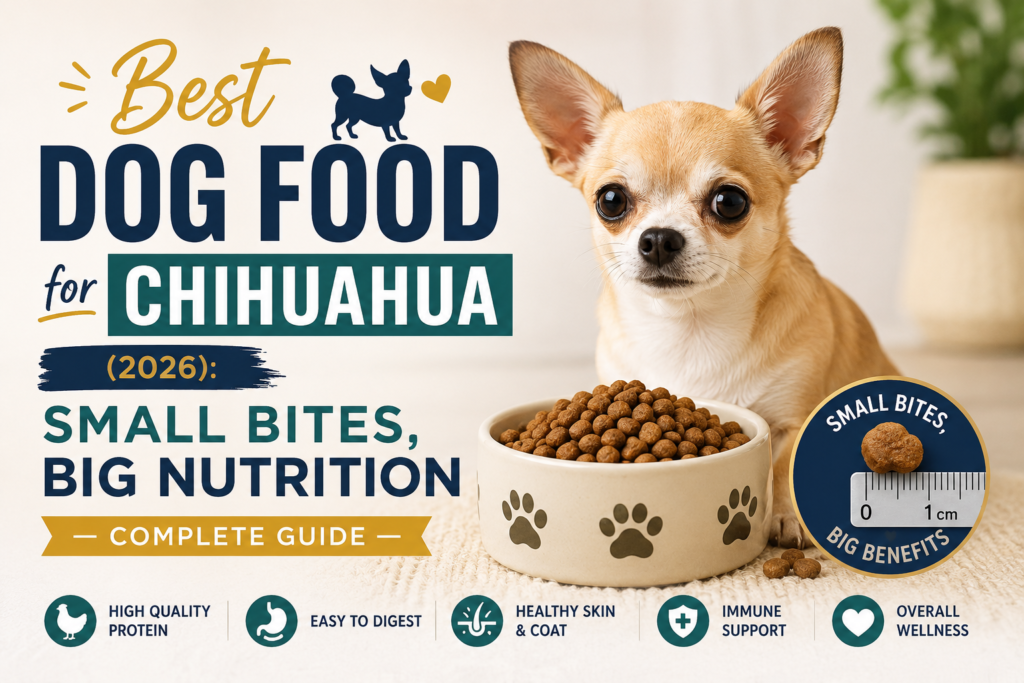
| Quick Answer (AI Overview): The best dog food for a Chihuahua is a small- or toy-breed formula with high-quality named animal protein (25–30%), energy-dense calories (~380–450 kcal/cup), tiny kibble pieces, and dental-supportive design — because Chihuahuas have fast metabolisms, miniature mouths, and the worst dental statistics in dogdom. Puppies need toy-breed puppy food fed 3–4 times daily to prevent hypoglycemia (low blood sugar), a genuine emergency in tiny dogs. Feed adults 2–3 small measured meals, guard the treat budget ferociously (a 2 kg dog’s daily “extra” allowance is about 20 calories), and weigh monthly. |
| Affiliate Disclosure: This post may contain affiliate links. If you purchase through these links, Healthy Dogs Meals may earn a small commission at no extra cost to you. We only recommend products we genuinely believe can help your dog. Read our full Affiliate Disclosure. |
Chihuahuas run on different mathematics from every other dog in this series. The smallest recognised breed — often 1.5 to 3 kg of opinionated loyalty — needs proportionally more calories per kilogram than a Labrador, in a stomach the size of a walnut, through teeth crowded into a mouth that barely fits them. Feed a Chihuahua like a scaled-down big dog and you’ll meet the breed’s three classic problems fast: blood-sugar crashes in puppies, dental disease by toddlerhood, and a picky-eating dynamic that has the household hand-feeding chicken by lamplight.
This guide covers what the best dog food for Chihuahua ownership actually looks like: nutrient and kibble-size targets, the hypoglycemia survival rules every toy-puppy owner must know, dental-first feeding, honest picky-eater fixes, feeding charts from puppyhood to the breed’s famously long senior years, and the foods to avoid. It joins our breed library alongside the Best Dog Food for Labrador and Best Dog Food for Beagle guides.
Why Chihuahuas Have Unique Nutritional Needs
1. A Furnace-Fast Metabolism in a Tiny Tank
Small dogs burn dramatically more energy per kilogram than large ones — a Chihuahua may need 60–100+ kcal/kg daily where a giant breed needs a fraction of that. Combine that burn rate with a stomach that holds only a few tablespoons, and the feeding answer writes itself: energy-dense food in multiple small meals. Diluted, filler-heavy foods force impossible volumes; toy-breed formulas exist precisely to pack complete nutrition into tiny servings.
2. Hypoglycemia: The Toy-Breed Emergency
Chihuahua puppies (and small adults under stress, illness, or missed meals) can’t store much glucose. Skip meals or burn hard, and blood sugar can crash into hypoglycemia — weakness, wobbling, trembling, glassy eyes, and in severe cases seizures or collapse. It is a genuine emergency, and it is almost entirely preventable with feeding frequency. Every Chihuahua household should know the signs and the first-aid response; we cover both below.
3. The Worst Teeth in Dogdom
Toy breeds crowd full-size tooth sets into miniature jaws, and Chihuahuas top veterinary charts for periodontal disease — many show tartar and gum trouble before age two. Diet can’t replace brushing, but kibble texture, dental-formula design, and avoiding sticky sugary treats all slow the decline. Unmanaged dental disease isn’t cosmetic: it seeds bacteria toward the heart and kidneys and shortens lives.
4. Luxating Patellas and the Weight Lever
Slipping kneecaps run through the breed, and every extra hundred grams — a rounding error on a Labrador — is meaningful load on a 2 kg frame. A Chihuahua just 300 g overweight is carrying the proportional equivalent of several kilos on a human. Lean body condition is joint medicine here, exactly as it is for the big breeds in our Best Dog Food for Joint Support guide — only the margins are tighter.
5. Long Lives to Feed For
Chihuahuas routinely live 14–18 years. Nutrition decisions compound across that span: the dental habits, weight discipline, and food quality of year two are still paying dividends (or charging interest) in year sixteen.
What to Look For: Nutrient & Design Targets
| Factor | Adult Target | Puppy (Toy-Breed) Target | Why It Matters for Chihuahuas |
| Protein | 25–30% (dry matter) | 28–32% | Muscle on a tiny, active frame |
| Fat | 14–18% | 15–20% | Energy density for fast metabolisms |
| Calories | ~380–450 kcal/cup | High density, frequent meals | Complete nutrition in walnut-stomach volumes |
| Kibble size | Mini/toy pieces (≤8 mm) | Extra-small | Big kibble gets swallowed whole or refused |
| Dental design | Texture or dental formula | — | The breed’s number-one health battle |
| DHA (omega-3) | Beneficial | Essential for development | Brain, eyes, coat |
| AAFCO statement | Adult maintenance | Growth (toy/small breed) | Non-negotiable completeness proof |
| Named protein first | Always | Always | Quality you can verify on the label |
Label literacy does the heavy lifting: a named animal protein (chicken, lamb, salmon, “chicken meal”) leading the list, an AAFCO complete-and-balanced statement for the right life stage, and no reliance on vague “meat derivatives” — the decoding skills from Fresh vs Rendered: What’s Really in Premium Dog Food? apply at every size. Wet food deserves special mention for this breed: its softness suits compromised teeth and its aroma defeats pickiness, making a kibble-base-plus-wet-topper blend a popular Chihuahua compromise — the full trade-offs are in our Wet vs Dry Dog Food comparison.
Feeding a Chihuahua Puppy (8 Weeks – 12 Months): The Hypoglycemia Rules
Toy-breed puppyhood is governed by one principle: never let the tank run empty. Chihuahua puppies should eat 4 small meals daily until about 12 weeks, then 3 meals until roughly 6 months, on a toy- or small-breed puppy formula whose calorie density and tiny kibble suit their physiology. Free-feeding measured daily amounts is sometimes acceptable for the very smallest puppies on vet advice — one of the few contexts where we’d ever say so — because the hypoglycemia risk outweighs the portion-discipline concern at this size.
| Puppy Age | Typical Weight | Daily Amount (toy-breed puppy kibble) | Meals/Day |
| 2–3 months | 0.5–1 kg | 1/4 – 1/2 cup | 4 |
| 3–6 months | 1–2 kg | 1/2 – 2/3 cup | 3–4 |
| 6–9 months | 1.5–2.5 kg | 1/2 – 2/3 cup | 3 |
| 9–12 months | 2–3 kg | 1/2 – 2/3 cup | 2–3 |
| ~12 months | Adult weight | Transition to adult food | 2–3 |
Hypoglycemia: Signs and First Aid
- Signs: sudden weakness or wobbliness, trembling, lethargy, glassy or unfocused eyes, head tilting, twitching, collapse, or seizure — often after a missed meal, hard play, or stress.
- Immediate first aid: rub a small amount of corn syrup, honey, or sugar-water on the gums (never pour liquid into the mouth of a woozy dog — aspiration risk). Improvement is usually visible within minutes.
- Then: feed a small meal once alert, and call your vet the same day — repeated episodes need investigation, and severe episodes need immediate emergency care even if first aid worked.
- Prevention: frequent meals, snacks before vigorous play, never skipping breakfast, and keeping honey or corn syrup in the puppy kit and the travel bag.
Switch to adult food around 12 months — toy breeds mature far earlier than the giants — using the slow transition protocol later in this guide, and lean on our Puppy Feeding Schedule Guide for routine-building.
Feeding an Adult Chihuahua (1 – 9 Years)
Adults do best on two to three small measured meals daily — the third meal remains genuinely useful for the tiniest individuals and for dogs with any blood-sugar history. The numbers below assume a quality small-breed food around 400 kcal/cup; verify your bag, and anchor the maths with our Dog Food Calculator and Portion Guide by Dog Weight.
| Adult Weight | Activity | Approx. Daily Calories | Typical Kibble Amount |
| 1.5–2 kg (teacup-range) | Moderate | 120–160 kcal | 1/3 – scant 1/2 cup |
| 2–2.5 kg | Moderate | 150–190 kcal | ~1/2 cup |
| 2.5–3 kg (breed standard top) | Moderate | 180–220 kcal | 1/2 – generous 1/2 cup |
| 3–4 kg (larger/mix) | Moderate | 210–260 kcal | 1/2 – 2/3 cup |
| Any size, very active | High | +15–25% | Adjust by body condition |
Sit with that table a moment, because it explains every Chihuahua weight problem: the entire daily ration is half a cup of food, and the 10% treat allowance is roughly 15–25 calories — one small training treat, or three green beans. A single human biscuit can exceed a Chihuahua’s whole treat budget; a few cubes of cheese can exceed the whole *meal* budget. Weight creeps invisibly at this scale, so weigh monthly on a kitchen or baby scale (bathroom scales can’t resolve 100 g changes that matter here) and run the rib-and-waist body check from our weight guides. Already over? The deficit approach in Best Dog Food for Weight Loss scales down perfectly — just move slowly, because tiny dogs have no reserves for crash diets.
The Picky Chihuahua: Breaking the Hand-Feeding Cycle
Chihuahua pickiness is usually taught, not born: a skipped meal triggers worried upgrades — a topper, then chicken, then hand-feeding — and a very intelligent small dog learns that refusing kibble is how you order room service. The fix is structure with warmth, never starvation games (which this breed cannot safely play given hypoglycemia risk).
- Vet check first if pickiness is new — dental pain is the great masquerader in this breed, and a dog dropping kibble, chewing one-sided, or preferring soft food may be hurting, not fussy.
- Fixed mealtimes, 15–20 minutes, then the bowl lifts. Calm, no commentary. (For adults; puppies and hypoglycemia-history dogs get gentler versions with a vet’s guidance.)
- Make the bowl worth attending: warm water or low-sodium broth splash, a measured teaspoon of wet food stirred through — flavour strategies that don’t surrender the menu.
- Stop competing with yourself: audit treats and table scraps; a Chihuahua “not eating dinner” after 60 calories of daytime snacks is simply full.
- Rotate within structure if needed — a planned rotational approach between two or three accepted recipes beats reactive menu-hopping.
- Mind the emotional weather: this sensitive breed eats worse amid household stress — context we unpack in How Stress and Anxiety Can Affect a Dog’s Appetite.
Feeding a Senior Chihuahua (9+ Years)
With luck and good care, the senior chapter is the breed’s longest. Priorities shift to protein maintenance (muscle loss is the quiet thief of senior mobility — keep quality protein up unless a diagnosed condition says otherwise), dental accommodation (softened kibble, wet-forward mixes, smaller pieces as teeth are lost), joint and heart support (omega-3s; this breed’s seniors are prone to mitral valve disease, so sodium-modest diets and vet-guided choices matter), and usually modestly fewer calories as zoomies shorten. Hydration deserves attention too — wet food’s moisture quietly supports aging kidneys. Our Best Dog Food for Senior Dogs guide covers the transition; for Chihuahuas, start those conversations around age nine rather than seven.
Foods and Practices to Avoid for Chihuahuas
- Large or standard kibble — refusal, whole-swallowing, or choking in a tiny mouth.
- Free-feeding adults — the express lane to invisible weight gain (toy puppies are the narrow exception, vet-guided).
- Human-food “just a bite” culture — at this scale, bites are meals; toxic foods are also proportionally deadlier, so the household list in Foods That Are Toxic for Dogs deserves fridge-door status. Grapes, chocolate, onions, and xylitol gum in a handbag are all small-dog emergencies at crumbs-and-sticks quantities.
- Sticky, sugary, or dental-hostile treats — the teeth can’t afford them.
- Unnamed meat sources and artificial colours — quality matters most where every gram counts.
- Crash diets or fasting — no reserves; all weight change happens slowly and supervised.
Switching Foods: The Tiny-Stomach Transition
| Days | Old Food | New Food |
| 1–3 | 75% | 25% |
| 4–6 | 50% | 50% |
| 7–9 | 25% | 75% |
| 10+ | 0% | 100% |
Small dogs feel diet changes proportionally harder, so stretch any stage where stools soften — and during transitions, keep meals frequent enough that a fussy reaction to the new blend never becomes a skipped-meal blood-sugar problem.
Frequently Asked Questions
Most adults need roughly 120–260 kcal daily — typically a third to two-thirds of a cup of quality small-breed kibble split across 2–3 meals, scaled to weight and activity. Measure with spoons and cups, not eyes: at this size, “a little extra” is a percentage, not a rounding error.
Often it’s cold, excitement, or anxiety — the breed trembles recreationally. But trembling with weakness, wobbliness, or glassy eyes is the hypoglycemia picture, especially in puppies or after missed meals: apply the gum-honey first aid above and call your vet. New or frequent shaking always deserves a check-up.
Toy- or small-breed pieces, generally 8 mm or smaller. If you watch your dog swallowing kibble whole or nudging it around the bowl, the pieces are too big — a remarkably common, remarkably fixable cause of “pickiness.”
Around 12 months — toy breeds finish growing far earlier than large ones. Transition over 7–10 days onto a small-breed adult formula, holding the multi-meal schedule for any dog with a hypoglycemia history.
A blend serves most: a dry small-breed base for dental texture and precision, a measured wet topper for moisture, aroma, and aging teeth. All-wet feeding is perfectly viable (and affordable at this size) if dental care is diligent — the full comparison lives in our Wet vs Dry Dog Food guide.
Yes — the safe-foods rules apply at miniature scale: a teaspoon of cooked egg or a single flake of plain cooked salmon is a Chihuahua-sized serving. The discipline is arithmetic, not ingredient lists: every shared bite comes out of a 15–25 calorie treat budget.
Because Chihuahuas develop periodontal disease earlier and more severely than almost any breed, and dental infection taxes the heart and kidneys across a 15+ year lifespan. Dental-design kibble helps; daily brushing, vet dental checks, and tooth-safe chews do the real work. Persistent bad breath in a Chihuahua is a vet appointment, not a quirk.
Final Verdict
The best dog food for a Chihuahua is a small- or toy-breed, AAFCO-complete formula with named protein, energy-dense calories, genuinely tiny kibble, and dental-conscious design — fed in 2–4 small measured meals with a treat budget guarded like the tiny treasure it is. Master the breed’s big three — blood sugar in the early years, teeth in every year, and the gram-scale weight maths throughout — and you set up what Chihuahuas do best: outliving every other dog at the park, opinionated to the last.
Comparing brands next? Our Royal Canin review and Hill’s Science Diet review cover two lines with strong small-breed offerings, and the rest of the breed series lives in the Dog Breed archive.
| Medical Disclaimer: The information in this article is for educational purposes only and is not a substitute for professional veterinary advice, diagnosis, or treatment. Always consult your veterinarian before changing your dog’s diet, especially if your dog has health conditions, allergies, or is on medication. |