ADVANCE Dog Food Review: Range, Ingredients & Label Guide
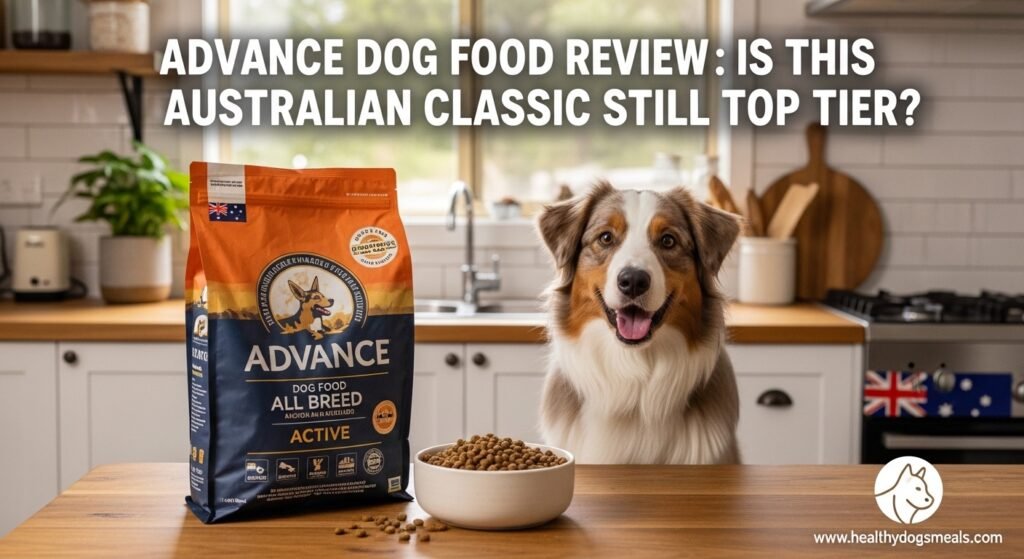
AI Overview
This ADVANCE review is a neutral label-reading guide, not a veterinary recommendation. The brand has multiple formulas, so assess the exact recipe, life stage, calorie density, ingredient list, nutrient information and feeding directions before deciding whether it belongs on your shortlist.
Key Takeaways
- This article does not name a “best” food or tell you that your dog should eat a particular brand.
- Compare the exact recipe, not just the logo on the bag.
- Check the life-stage or nutritional-adequacy statement, calorie information, ingredient list and feeding guide.
- Marketing phrases such as “premium,” “natural,” “high meat” or “grain free” should not replace label reading.
- If your dog has a diagnosed medical condition, food allergy, repeated digestive problems or needs a therapeutic diet, use your veterinarian’s individualized advice.
If you searched for Advance dog food review, you are probably trying to decide whether this brand deserves a place on your shortlist. This page is designed to help you evaluate the food rather than sell it to you. Healthy Dogs Meals is not a veterinary clinic, and we do not choose a diet for your individual dog. Instead, we show you what to check on the current label and which questions are worth asking before buying.
ADVANCE Dog Food Review: What to Know First
ADVANCE sells dry and wet dog foods across different life stages and needs in Australia. The range includes formulas with different protein sources and energy profiles, so conclusions about one recipe should not automatically be applied to the whole range.
Pet-food ranges change. A manufacturer may add a recipe, change pack sizes, update ingredients or alter feeding directions. That is why the current package and current manufacturer information should take priority over an old screenshot or a review written about a different recipe.
Our Review Approach
| What we examine | Why it matters | What it does not prove |
|---|---|---|
| Life-stage / adequacy statement | Shows what type of feeding the product is represented for. | It does not prove that the food is ideal for every individual dog. |
| Ingredient list | Shows ingredients in the order declared on the label. | Ingredient order alone does not reveal overall diet quality or digestibility. |
| Nutrient analysis | Lets you compare declared protein, fat, fibre, moisture and other listed nutrients. | Numbers on different moisture bases should not always be compared directly. |
| Calories / energy | Helps estimate portions and price per day. | A higher or lower calorie food is not automatically better. |
| Feeding guide | Provides a manufacturer starting point. | It is not a personalized calorie prescription. |
| Range and formats | Shows whether the brand offers options for different life stages and preferences. | A large range does not guarantee that every formula suits your dog. |
1. Start With the Exact Recipe
A common problem with dog-food reviews is treating a brand as though it were one formula. It is not. Puppy, adult, senior, small-breed, large-breed, weight-management, wet, dry, fresh and air-dried products can have very different calorie densities and nutrient profiles. Even two chicken recipes from the same company may not be interchangeable.
Write down the complete product name and pack size you are considering. When comparing two foods, use the labels for those exact products. This prevents a review of one formula from accidentally becoming a claim about every food made by the company.
2. Check the Nutritional-Adequacy and Life-Stage Information
Before getting distracted by front-of-pack claims, look for the statement explaining the intended life stage or nutritional purpose. A growing puppy has different requirements from a typical adult dog. Large-breed puppies also deserve particular attention to appropriate growth nutrition. A product intended for intermittent or supplemental feeding is not the same as a complete everyday diet.
If you cannot tell from the packaging whether a food is intended as a complete diet for your dog’s life stage, ask the manufacturer or retailer for clarification before relying on it as the main food.
3. Read the Ingredient List Without Turning It Into a Scorecard
Ingredient lists are useful, but they are easy to overinterpret. Ingredients are generally listed by weight before processing, and ingredients contain different amounts of water. That means the first ingredient alone cannot tell you everything about the finished food.
Look for ingredients your dog must avoid, identify the major protein and carbohydrate sources, and note added fats, fibres and supplements. If your dog is undergoing a veterinarian-directed elimination diet, do not use a general internet ingredient review as a substitute for the diet plan.
Meat first does not answer every question
A prominent meat ingredient may be attractive to buyers, but overall nutritional adequacy depends on the complete formulation. Conversely, seeing grains or plant ingredients does not automatically make a food poor quality. The relevant question is whether the complete formula meets the dog’s needs and is tolerated well.
Grain-free is a feature, not a universal advantage
Some dogs may need a particular ingredient avoided for an individually established reason, but “grain free” should not be treated as an automatic upgrade. Choose a diet based on the whole formulation and your dog’s needs rather than one marketing attribute.
4. Compare Protein, Fat, Fibre and Moisture Carefully
The guaranteed or typical analysis provides useful numbers, but comparisons need context. Wet food naturally contains much more moisture than dry food, so comparing the printed protein percentages directly can be misleading. Air-dried foods can also be much more calorie-dense per gram than fresh or wet foods.
For an everyday buyer, the most useful first questions are: how calorie-dense is the food, what portion does the feeding guide suggest, and how does that fit the dog’s body condition and activity? If you need a technical nutrient comparison for a medical reason, ask a veterinary professional to interpret the full nutritional information.
5. Calories Matter More Than Many Buyers Expect
Two foods can recommend very different gram amounts because their energy density differs. This affects both weight management and cost. Comparing bag price alone can therefore be misleading.
A practical comparison is estimated cost per day. Take the current price of the pack, the pack weight and the approximate daily amount suggested for your dog’s size. This does not make the feeding guide a prescription; it simply gives you a more useful budget comparison than price per bag.
6. How to Read the Feeding Guide
Manufacturer feeding tables are starting points. Real dogs vary in metabolism, activity, age, neuter status and body condition. Monitor body weight and body condition and adjust with professional guidance when necessary rather than assuming the printed number is perfect forever.
Measure food consistently. Cups can vary depending on kibble size and how they are filled, so weighing portions in grams can make intake easier to track.
7. Marketing Claims: What to Treat Carefully
Words such as “premium,” “holistic,” “natural,” “superfood,” “ancestral,” “high meat” and similar phrases can help explain how a product is positioned, but they do not by themselves answer whether it is appropriate for your dog. Treat those phrases as marketing information and return to the measurable details on the label.
Likewise, a long ingredient list is not automatically bad, and a short ingredient list is not automatically good. Some complete diets require added vitamins and minerals to achieve the intended nutrient profile.
8. Price and Value
Value is not simply the cheapest price per kilogram. Consider the approximate daily feeding amount, pack size, storage requirements, availability, whether your dog eats it consistently, and whether switching causes waste. A more expensive bag can occasionally have a similar daily cost if the feeding amount is lower—but calculate rather than assume.
Prices change frequently, so this article intentionally avoids presenting one temporary retailer price as the permanent cost of the brand.
9. Palatability and Your Dog’s Response
A food can look excellent on paper and still not work well for a particular household. Watch appetite, stool consistency, body condition, coat condition and general wellbeing over time. Those observations do not diagnose disease, but they can tell you whether a discussion with your veterinarian is worthwhile.
Do not interpret every loose stool after a food change as proof that an ingredient is “bad.” Rapid transitions themselves can cause digestive upset. Persistent vomiting, diarrhea, itching, weight loss, appetite change or other symptoms deserve veterinary assessment rather than repeated trial-and-error switching.
10. Changing Foods: Go Gradually
For dogs without a veterinary reason to transition differently, owners often introduce a new food gradually rather than replacing the entire diet overnight. The exact transition can vary by dog and product. If your dog has a sensitive stomach, medical condition or a history of diet-related problems, ask your veterinarian how to make the change.
Who Might Want to Investigate This Range Further?
ADVANCE may be worth further investigation if the exact formula matches the life stage and format you are shopping for, the label provides the information you need, the food is realistically available within your budget, and your dog can eat the ingredients involved. That is a shortlist criterion—not a recommendation.
Who Should Get Individual Advice Before Choosing?
Talk with your veterinarian before making diet decisions for dogs with pancreatitis, kidney disease, diabetes, urinary disease, significant gastrointestinal disease, confirmed food allergies, poor growth, unexplained weight loss, obesity requiring a structured plan, or another condition where nutrition is part of treatment. Puppies with growth concerns and dogs prescribed therapeutic diets also need more individualized guidance than a general brand review can provide.
A Simple In-Store or Online Checklist
- Exact recipe and life stage
- Complete-feeding / adequacy information
- Current ingredient list
- Declared nutrient analysis
- Energy or calorie information where provided
- Daily feeding guide
- Pack size and realistic cost per day
- Storage requirements after opening
- Ingredients your individual dog must avoid
- Manufacturer contact details if you need more information
How to Compare ADVANCE With Another Food
Create a two-column comparison using the exact formulas. Compare life stage first, then calories, protein and fat information, key ingredients, feeding amount, pack price and estimated daily cost. Add practical factors such as availability and storage. Do not award points simply because one formula has a fashionable ingredient or a longer marketing claim.
If the two foods use different formats—for example dry versus wet or air-dried—remember that printed nutrient percentages are affected by moisture. For a technical comparison, dry-matter or calorie-basis calculations can be more informative, but those numbers still do not create a universal winner.
Our Neutral View
Healthy Dogs Meals does not give ADVANCE a blanket “recommended” or “not recommended” label. A brand can contain multiple recipes designed for different dogs, and we are not examining your dog’s medical history, body condition, laboratory results or full diet. The useful outcome of this review is a better shortlist and better questions—not a prescription.
Related Healthy Dogs Meals Guides
- Dog Food Reviews
- Dog Nutrition Guides
- Meals for Mutts Dog Food Review
- Prime100 Dog Food Review
- Black Hawk Dog Food Review
- ADVANCE Dog Food Review
- Ivory Coat Dog Food Review
- LifeWise Dog Food Review
- SavourLife Dog Food Review
- ACANA Dog Food Review
- ORIJEN Dog Food Review
- Royal Canin Dog Food Review
Frequently Asked Questions
Is ADVANCE the best dog food?
We do not rank one brand as best for every dog. Compare the exact recipe with your dog’s life stage, calorie needs, health, tolerance and practical household needs.
Does an expensive dog food mean it is better?
No. Price reflects many factors and does not by itself establish suitability or nutritional quality. Compare the actual formula and estimated daily cost.
Should I avoid grains?
Not automatically. Grain-free is not a universal requirement. If your dog needs a specific ingredient avoided for a medical reason, follow individualized veterinary advice.
Can I switch foods immediately?
Many dogs are transitioned gradually, but individual circumstances vary. Dogs with medical or gastrointestinal issues may need a veterinarian-directed transition.
How do I know whether a food suits my dog?
Use the label as a starting point and monitor body condition, appetite, stool and general wellbeing. Persistent symptoms or medical concerns should be assessed by a veterinarian.
Bottom Line
This ADVANCE review is a neutral label-reading guide, not a veterinary recommendation. The brand has multiple formulas, so assess the exact recipe, life stage, calorie density, ingredient list, nutrient information and feeding directions before deciding whether it belongs on your shortlist. Use this review as a framework for comparing labels and narrowing your options, not as individualized feeding advice.
How We Review Dog Food
Healthy Dogs Meals separates manufacturer claims from our own editorial explanation and focuses on information a reader can check on the current product label. We avoid blanket rankings and medical-suitability claims that a general brand review cannot establish. Product ranges and formulas can change, so readers should verify the current package before buying.